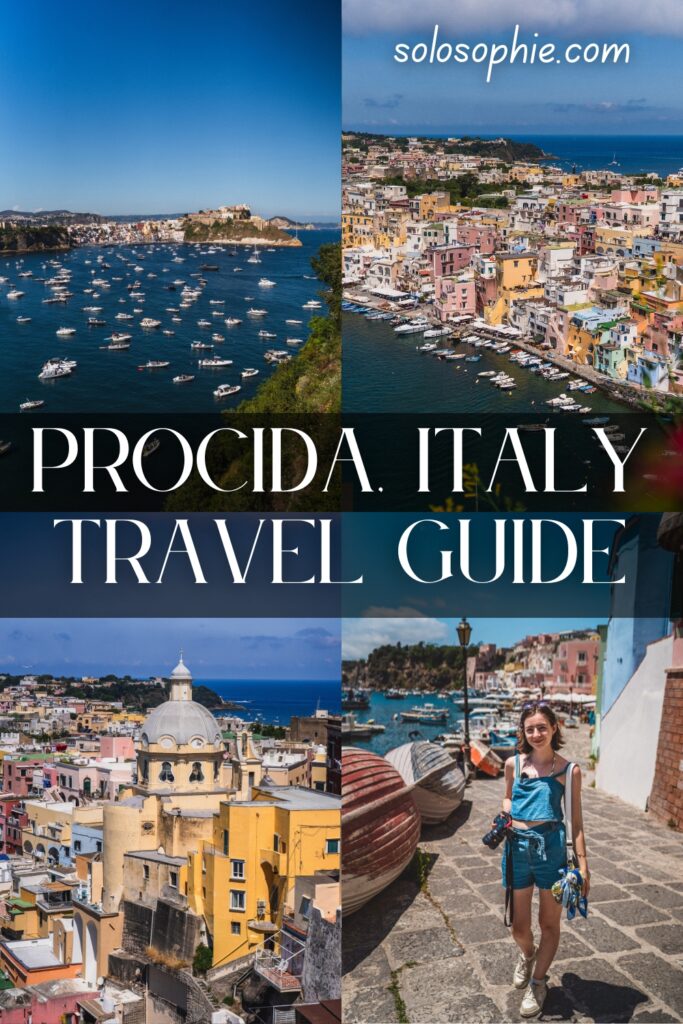
Cats & Pastel Hues: How to Visit Procida in the Bay of Naples
Last Updated on 30th July 2025 by Sophie Nadeau
This post may contain affiliate links. Please check out my privacy policy and disclosure for more information.
Nestled in the Bay of Naples, you’ll find a speck of an island, so beautiful that it was named the European Capital of Culture in 2022. Where pastel-hued homes sprawl across the landscape and countless cats roam freely, Procida makes for the perfect day trip from Naples. Here’s your ultimate guide on how to visit Procida!
Contents
What is Procida?
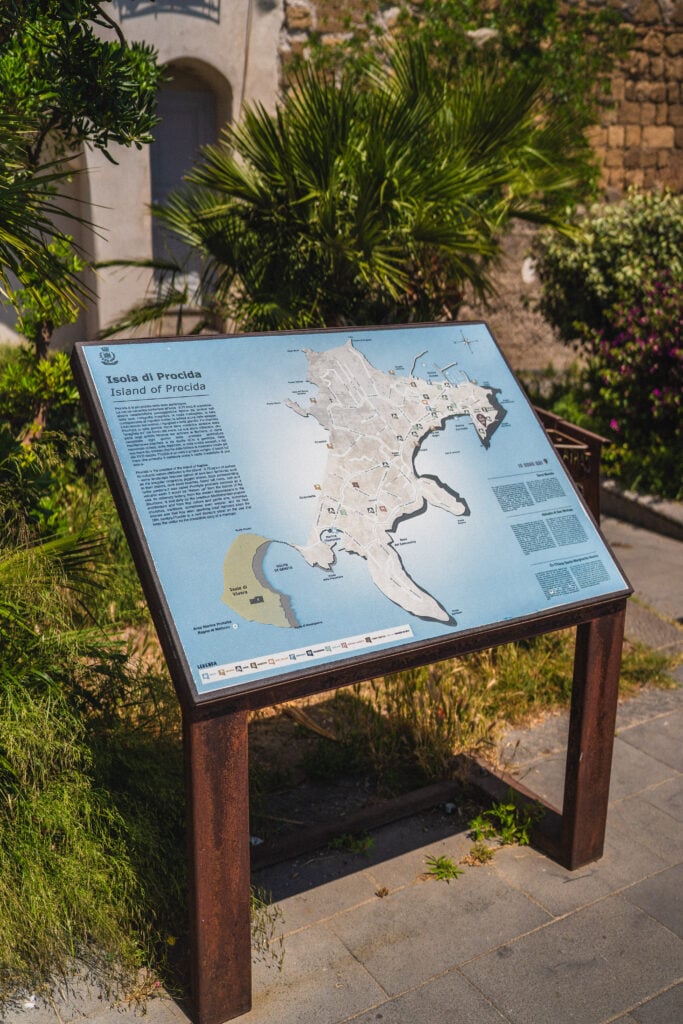
Procida is the smallest inhabited island in the Bay of Naples. It’s only 4 km square in size and is home to just under 10,000 residents. This small, yet mighty island, takes its name from ‘Procyta’ which means ‘thrown up from the sea’, referencing the volcanic activity which created the islet in the first place.
There’s plenty of history and intrigue to be explored on Prodica, from the Mycenaeans to the Bourbons, along with beautiful architecture at every turn. One of the main differences between here and some of the other islands in the Bay (such as Capri) is that Procida’s primary industry is still fishing.
As a result, you’ll spy out plenty of colourful boats bobbing in the harbours, and its that traditional working, lived-in charm that sets it apart from the other destinations.
Getting around Procida
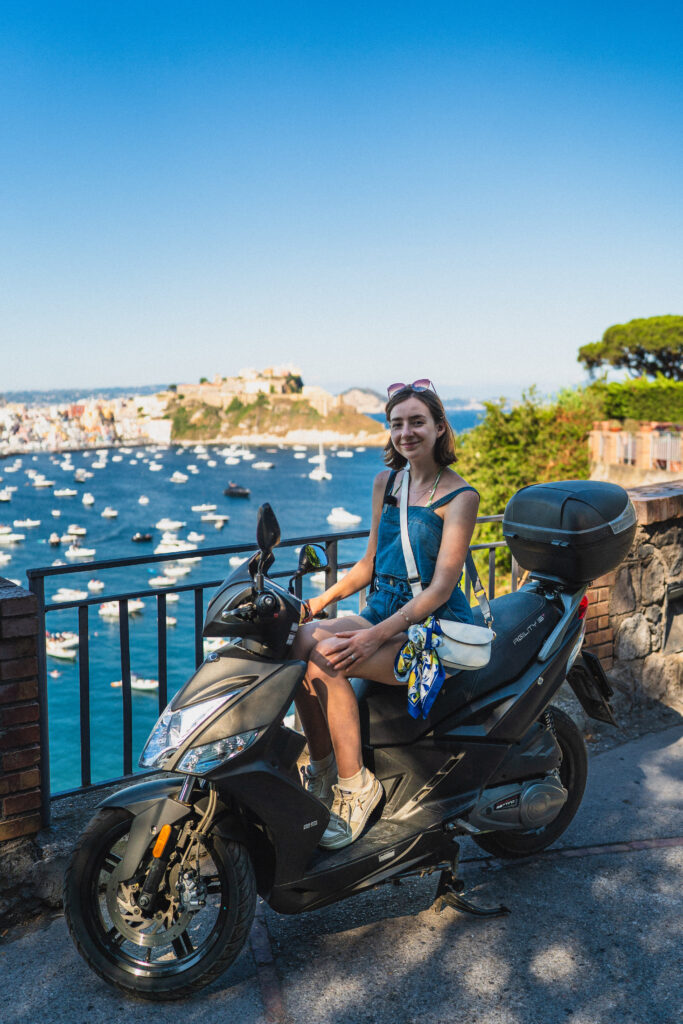
Thanks to the fact that Procida is so small, it makes for the perfect day trip from Naples. If you’re renting a scooter, it only takes around 2 hours to see all of the attractions on the island. If travelling by foot, which is easily done, it takes around 1 hour to walk from one end of the island to the other. There’s also a bus which can take you to various points of the island.
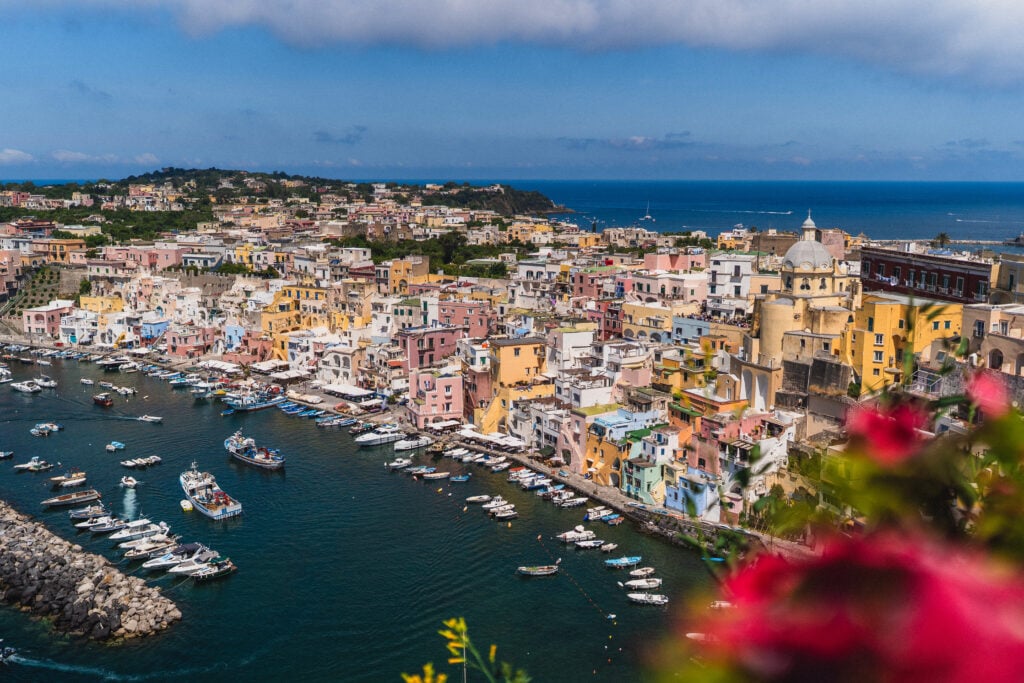
Things to see and do on Procida
Terra Murata
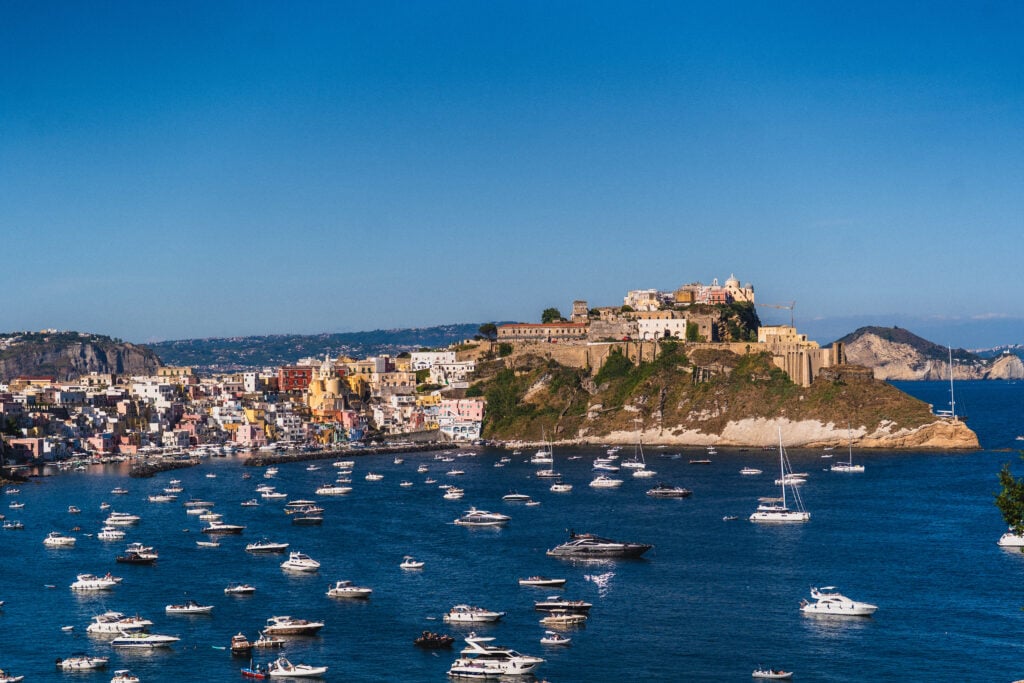
On the highest point of Procida, you’ll findTerra Murata, which translates from Italian as “walled land”. This historical and cultural centre of the island takes its name from the Middle Ages, when the area was completely fortified against potential invaders.
Today, Terra Murata is only accessible via a very steep climb (which is absolutely worth it!) At the top, you can see the medieval layout of the town still intact, and you’ll be greeted by breathtaking views overlooking the Bay of Naples and the rest of the island.
There are also several landmarks which should not be missed, as they offer a glimpse into the rich cultural history of this tiny island…
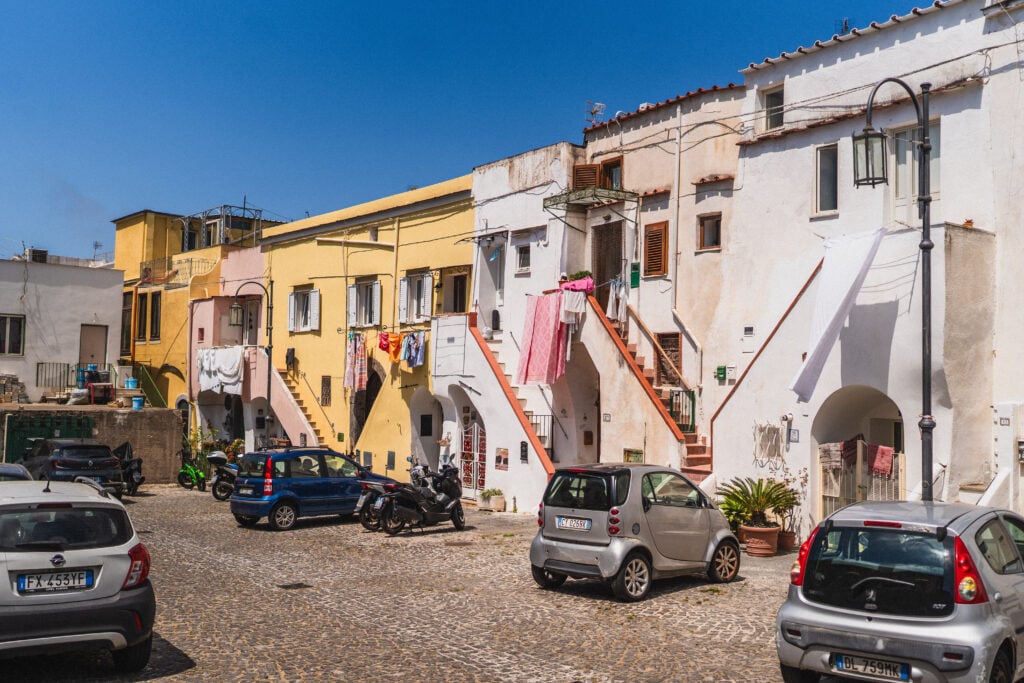
Abbey of San Michael
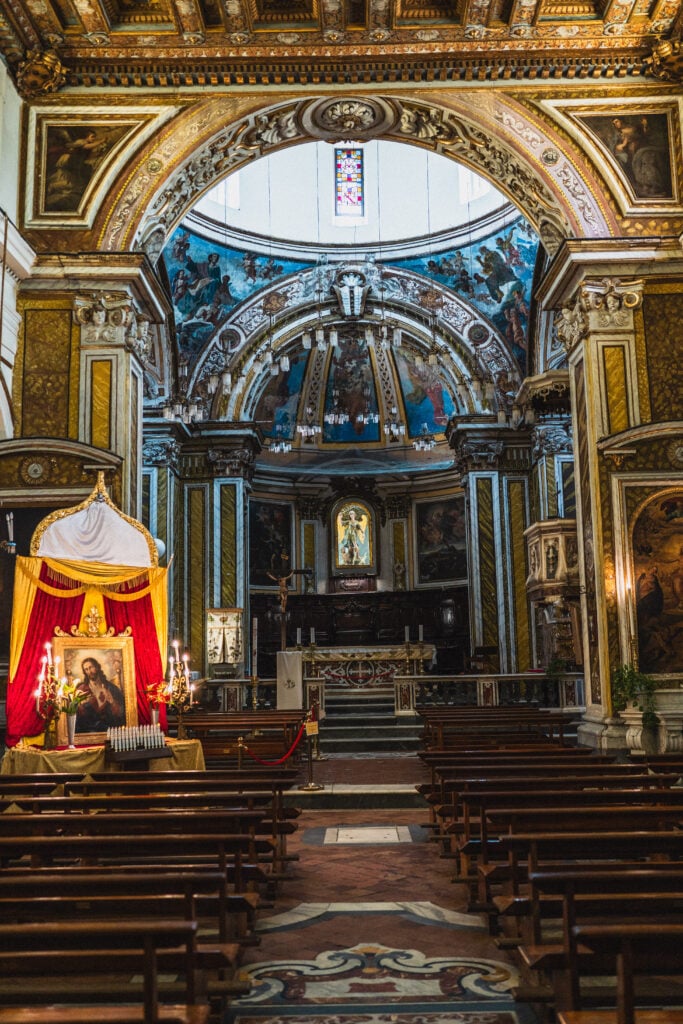
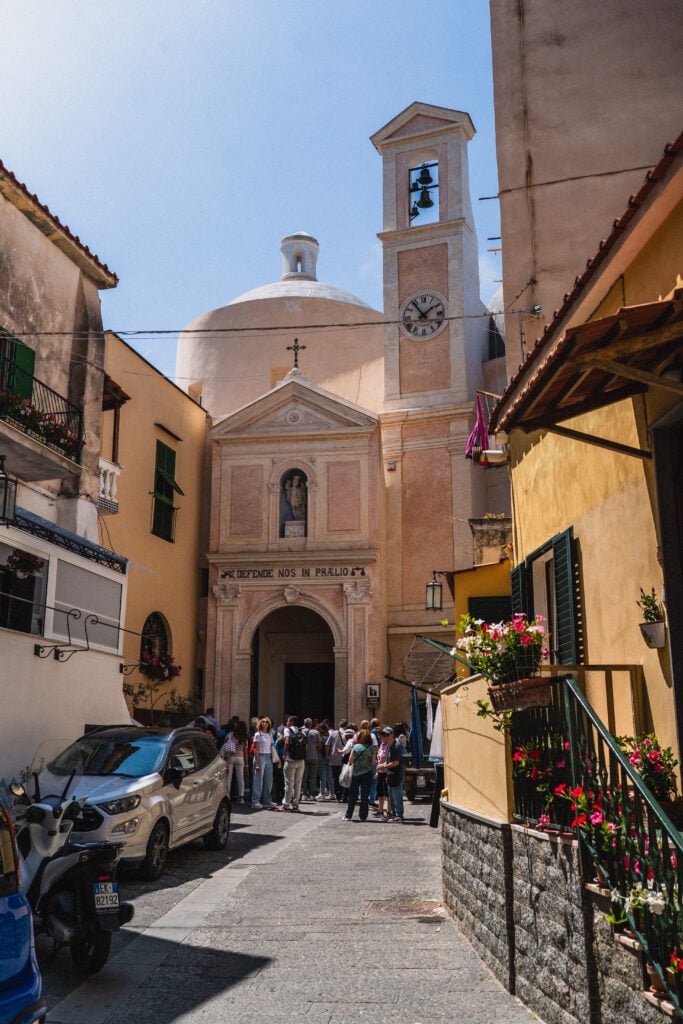
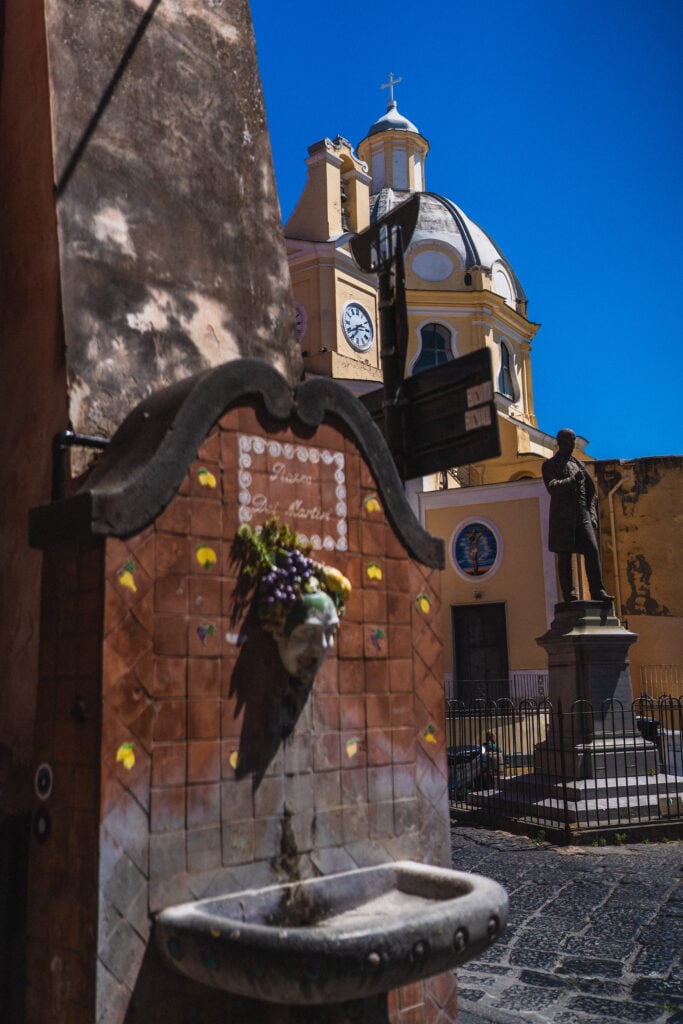
Dedicated to St Michael the Archangel, the Abbey of San Michael (Abbazia di San Michele Arcangelo) is the heart of the village and one of the most prestigious and richest churches in all of southern Italy.
The ecclesial building dates back to between the 11th and 14th centuries and was originally constructed as a Benedictine monastery. However, during the 15th century, the monks who resided here ended up abandoning the monastery after a series of pirate attacks. And so, it ended up serving as a church instead.
Imposing and ancient, the abbey has undergone several transformations and been rebuilt over the centuries, with its history layered in stone and time. Today, you can enter and see the ornate decorative interior, a painting depicting St Michael the Archangel protecting Procida from Saracen attack, and an impressive coffered ceiling. For an extra fee, you can head down to the crypt.
The secret chapel…
The oldest part of the Abbey of San Michael is shrouded in mystery, with no one quite agreeing on its exact age and origins. The “segreta” or “secret” chapel is situated on the lower levels of the ecclesial site and is also home to an ossuary.
Santa Margherita Nuova monastery
From the belvedere, you can spy views overlooking the Santa Margherrita Nuova monastery. This monastery was constructed later on during the latter half of the 16th century as the Dominican monks decided they needed to move further up the hill in order to avoid Saracen invasions. From here, you can also see beautiful views overlooking the neighbouring island Ischia.
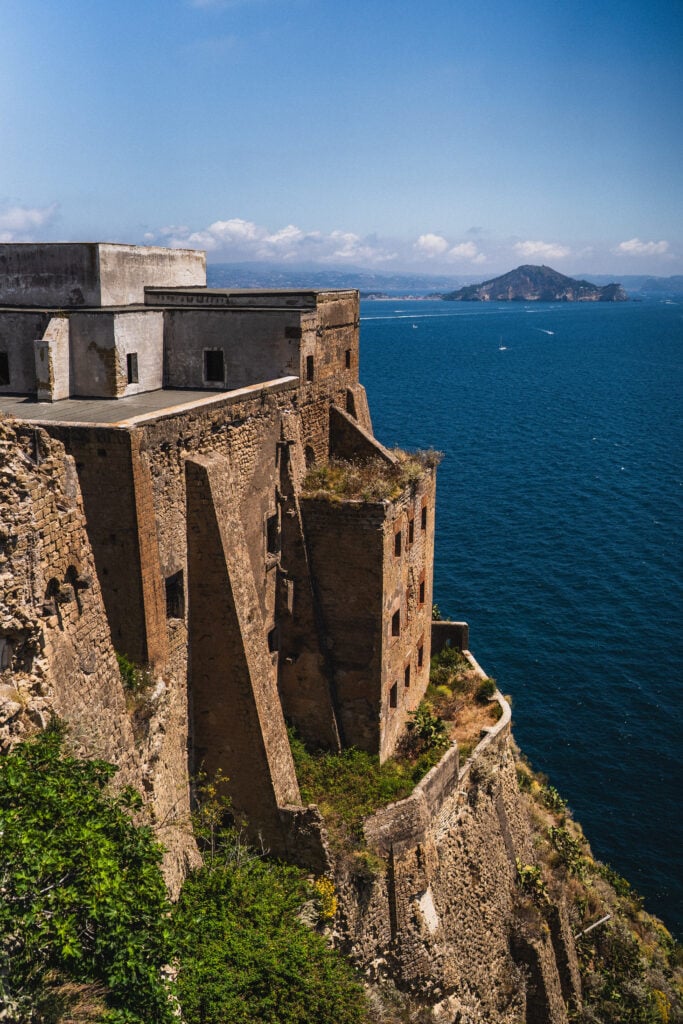
Palazzo d’Avalos, “the prison overlooking the sea”
As its name suggests, this structure was originally built in the 16th century to serve as a Renaissance palace. It was commissioned by a powerful Spanish–Neapolitan family, d’Avalos, who ruled Procida at the time.
The palace was initially built to reinforce the island’s defences against Saracen pirate raids. By the 1830s, the interiors of this once royal residence, were stripped and it was transformed into a political prison by the late 20th century.
Today, the prison overlooking the sea remains completely abandoned and somewhat overgrown. There’s a small fee to visit the abandoned site, and while it holds a haunting beauty, there isn’t all that much to see inside.
Cats!
Around the island, (particularly in the area of Terra Murata) you’ll have the opportunity to meet plenty of cats. The felines of Procida were actually brought in during the time that Palazzo d’Avalos served as a prison, with hopes that they could control the local mouse population. Today, they pretty much rule the island!
Marina di Corricella
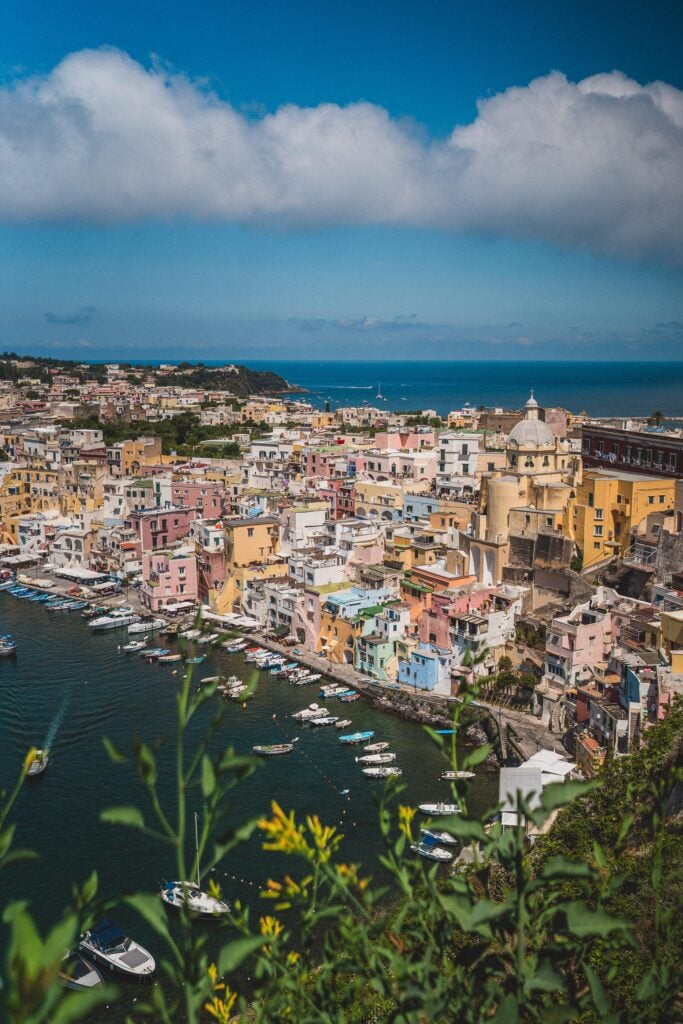
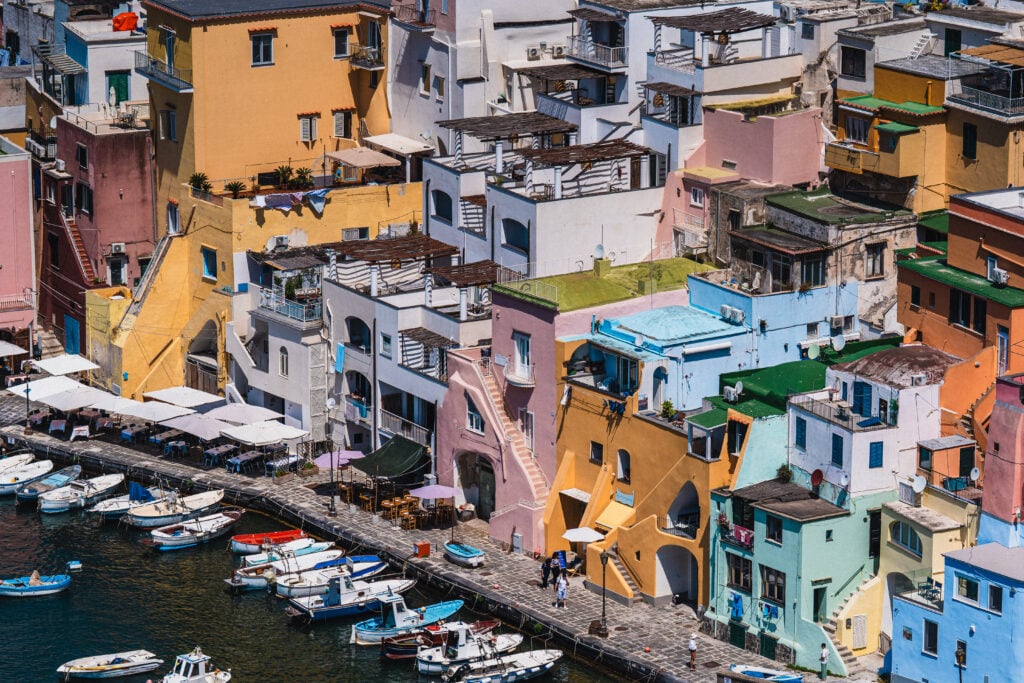
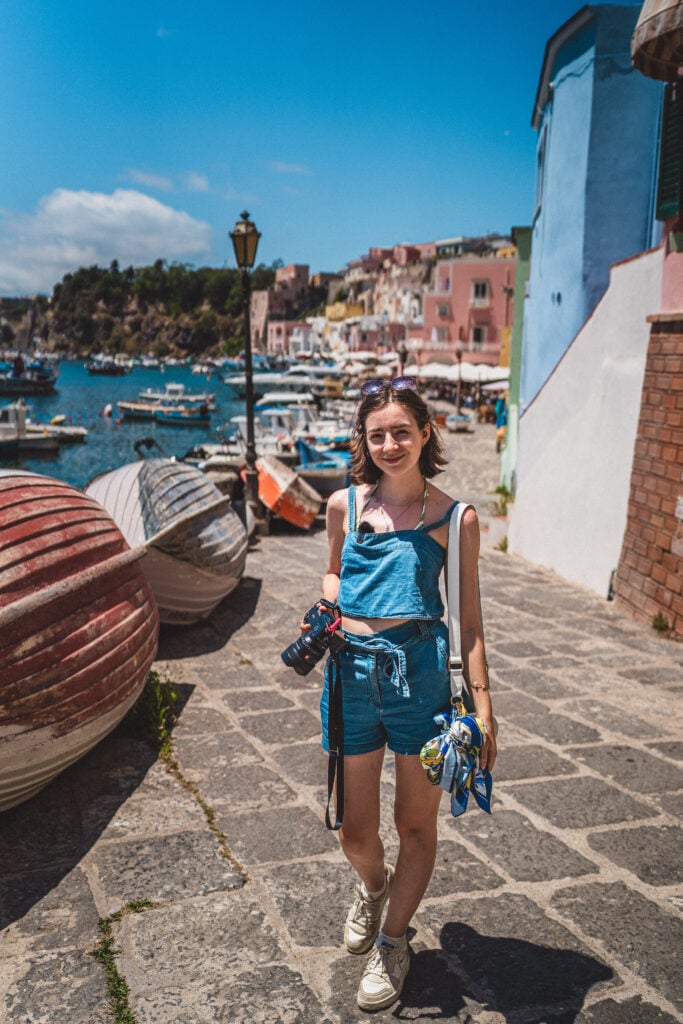
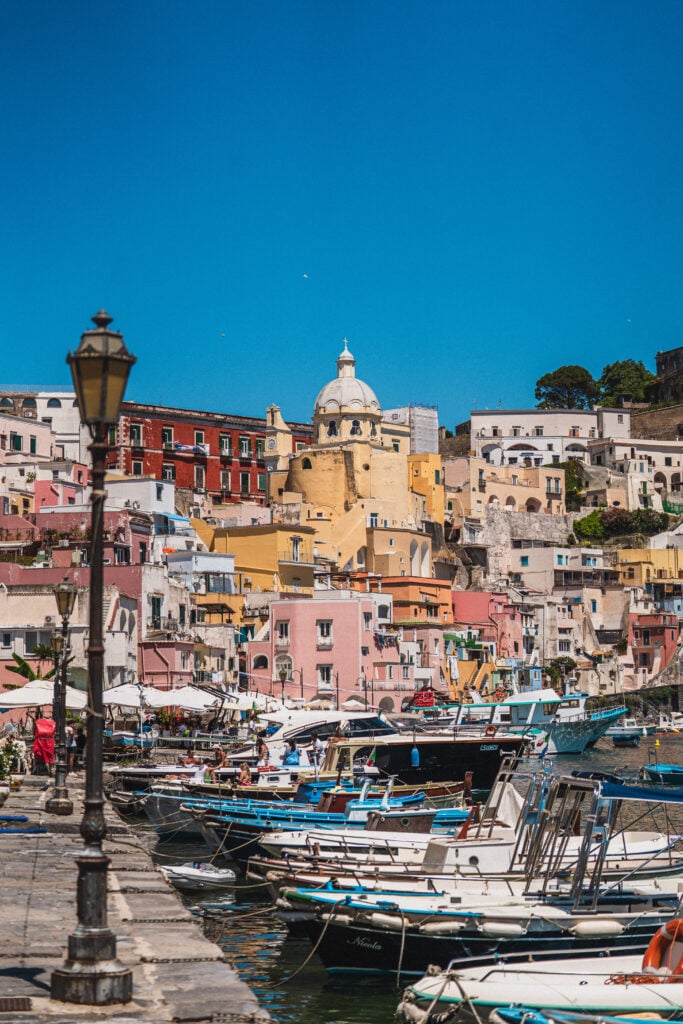
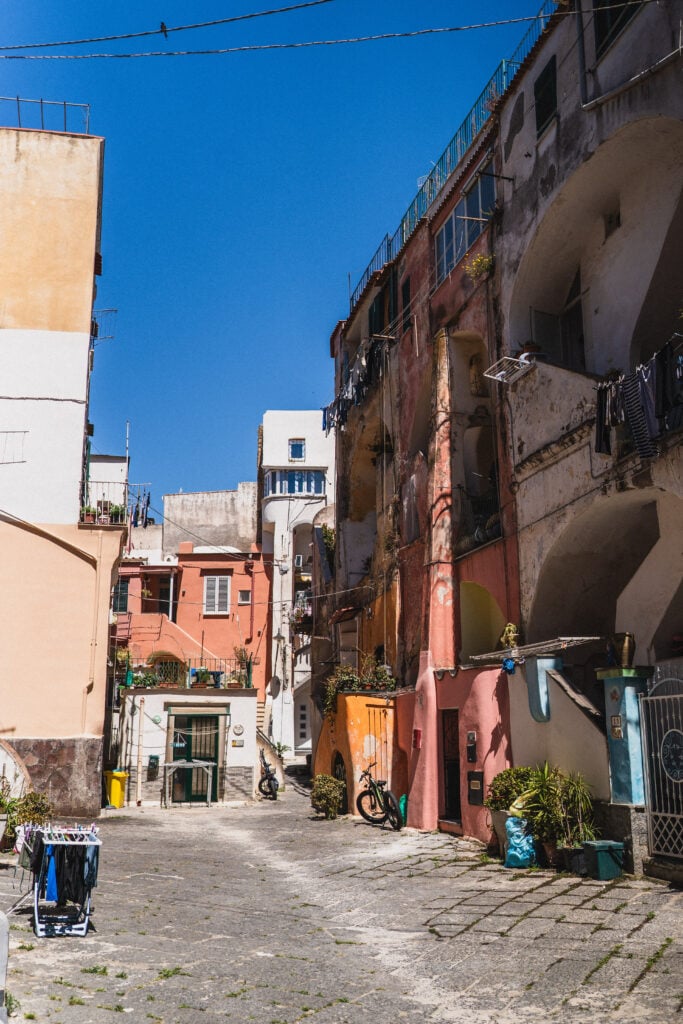
With its stunning houses rising steeply out of the water, Marina di Corricella is probably the most famous place to visit on the island. This ancient fishing village is the oldest of Procida, and its iconic pastel-hued houses are arranged like an amphitheatre on the sea.
Down by the waterfront, the streets are blissfully free of cars and scooters, meaning you can wander at your own leisure and take in the vivid colours of the houses. Each one is painted in a specific shade, a tradition born from the island’s fishing heritage, when sailors needed to spot their homes when venturing far out at sea.
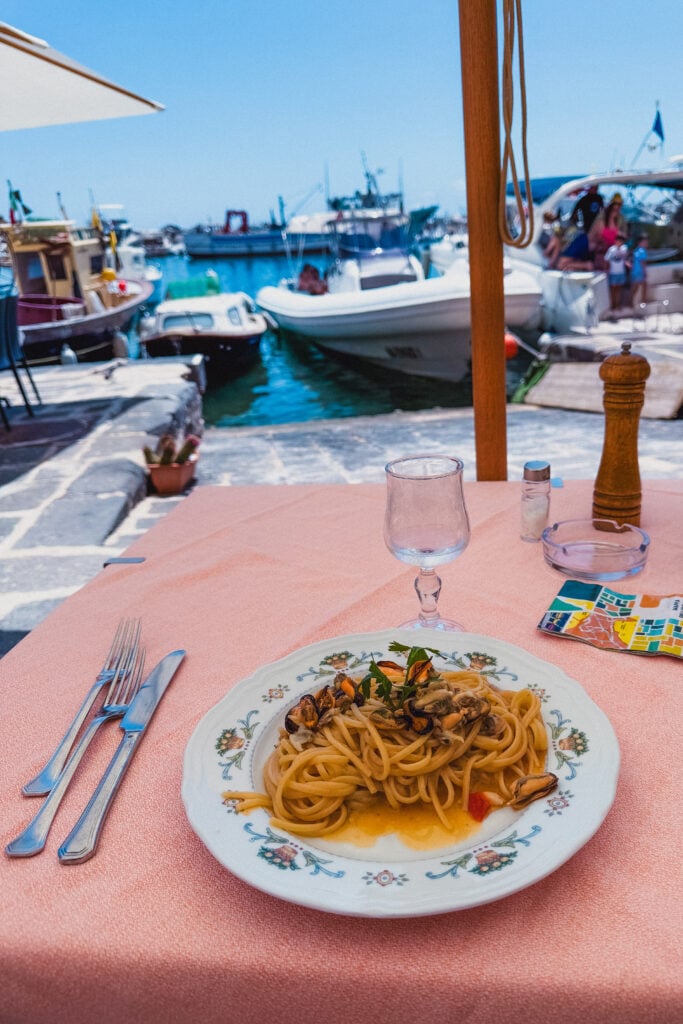
While there isn’t a lot to do at the Marina, it’s one of the best places on the island to find a spot to grab lunch, sample local seafood, and relax. We enjoyed lunch on the waterfront at Gorgonia (they have a few vegetarian options too).
Casale Vascello
Located at the foot of Terra Murata is another ancient fortified village. Casale Vascello was built during the 16th century at a time when the Saracen invasions weren’t as prominent. As a result, this was one of the first places on the island to be inhabited outside of Terra Muratta after that period.
Here, you’ll find a peaceful courtyard, where, in the Summer, they host theatre performances. While it’s now predominantly a residential area, its fortified layout can still be traced through its lack of entrances, carefully designed so they could be sealed off quickly if the Saracens did arrive.
Postman’s Beach
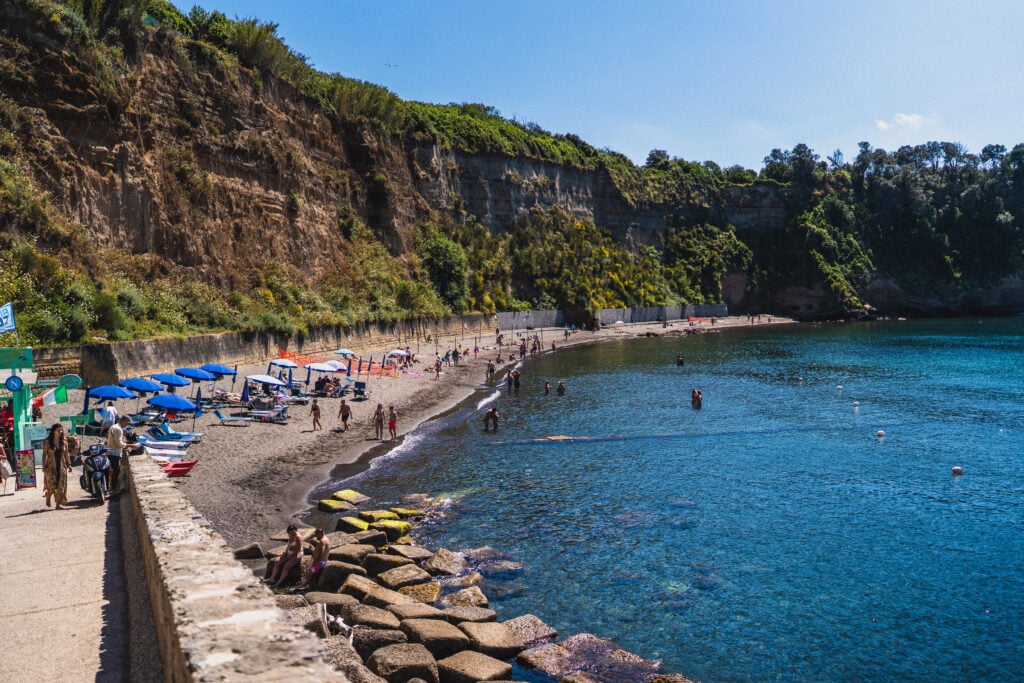
Procida isn’t primarily known as a beach destination. However, there are several black sand beaches, composed of volcanic minerals. One of the most popular among locals is that of Spiaggia del Pozzo Vecchio, which is also known as “Postman’s Beach” named after the famous 1994 film where some its most intense scenes were shot.
In classic Italian style, there’s a beach club where you can get all the refreshments to keep you hydrated throughout your sun lounging. However, for a chair on the beach, you’ll need to pay a fee to the club to spend time here.
Chiaiolella
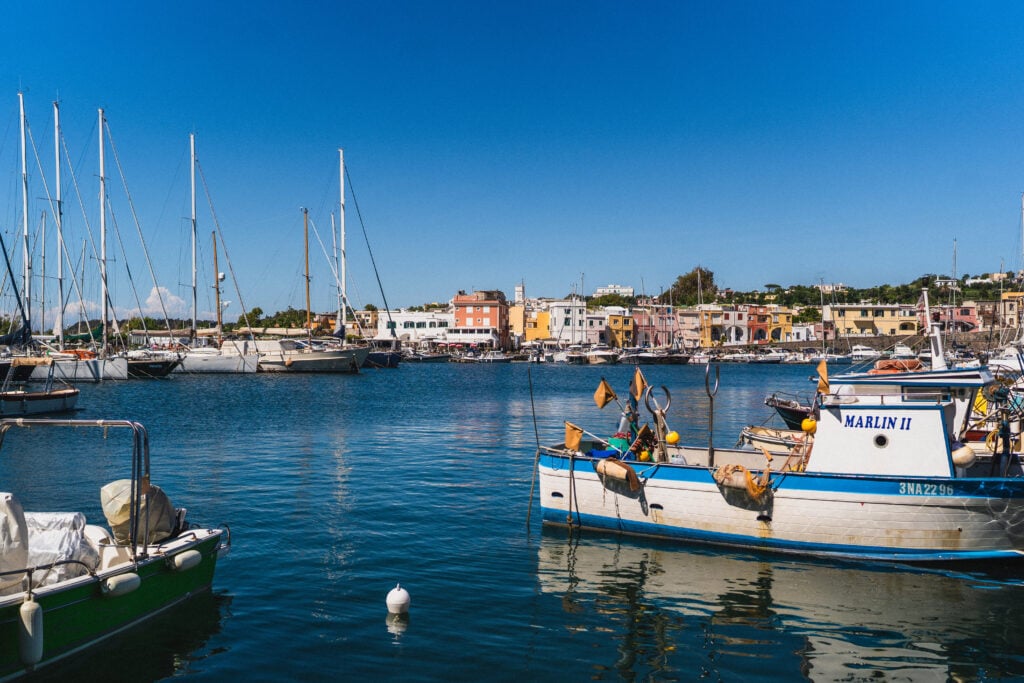
Located on the west of the island is Chiaiolella, which is a popular place to visit thanks to its pastel-hued homes and quaint harbour area. The marina here is formed out of an extinct volcanic crater, and the rock faces are fascinating. In the area, you’ll also find several beach bars to lounge at.
Ponte de Vivara
Ponte the Italian for ‘bridge’, refers to the 362-meter-long pedestrian bridge that connects Procida to the small island, Vivara. This natural reserve is completely uninhabited and is the sister of Procida.
Vivara is home to some crumbling farmhouses, left to the weather, and of course, an abundance of wildlife. Unfortunately, it has remained closed for the last few years due to a legal dispute…but hopefully it will reopen.
Belvedere Elsa Morante
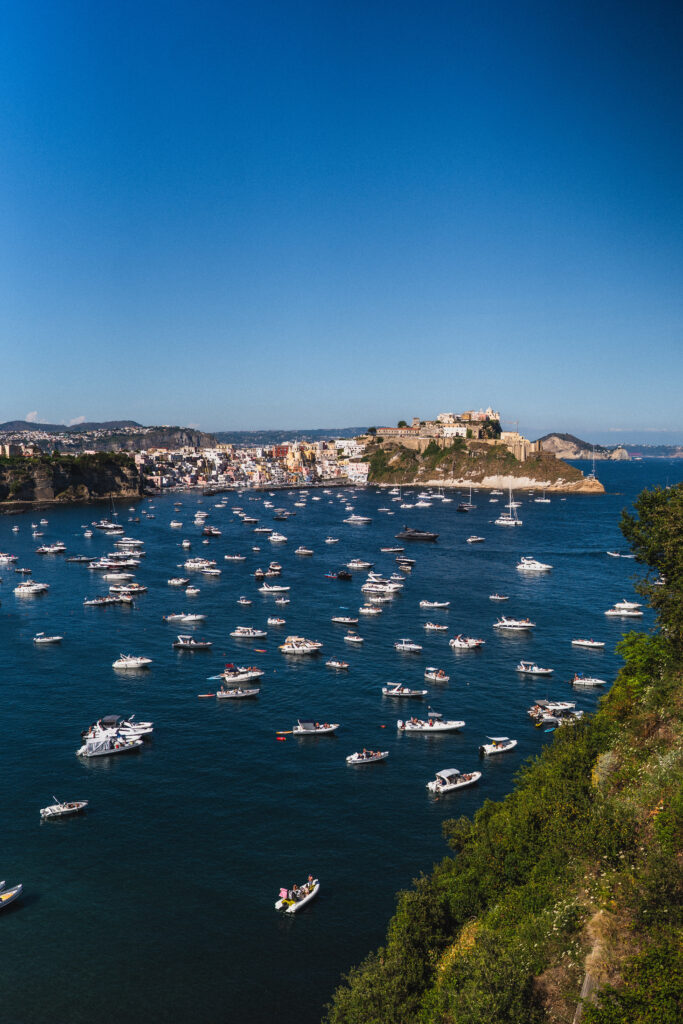
For one of the best views of Procida, head to the viewpoint named after the 20th-century Italian novelist and poet, Elsa Morante. Inspired by the islet, Morante based one of her books here, “Arturo’s Island” (L’isola di Arturo).
Marina Grande
Marina Grande is the first port of call for most visitors as it’s the main port of the island, and it’s also the economic and social centre of Procida. In the area, besides the enchanting views of the pastel-hued homes, you’ll find small shops selling crafts and local souvenirs, restaurants, and guest houses to stay in.
Where to stay in Procida
We didn’t choose to stay on the island; instead, we visited as a day trip from Naples. For those who are looking for a charming and quieter destination, Procida makes for an authentic Italian retreat. It’s also more affordable than some of the surrounding islands, but is much smaller.Here are a few suggestions of where to stay (based on web-reviews):
La Tonnara Hotel – Located in the natural bay of Marina Chiaiolella, this hotel is minutes walk away from the sea, offering the perfect opportunity to grab an early morning spot in the sun. The hotel also has a private garden to relax in. Check prices and availability here.
Maresia – Featuring views overlooking the islands of Vivara and Ischia, this laid-back hotel is situated a short walk from Ciraccio Beach. Guests have commented on the comfort of the rooms, describing them as a very good size. Check prices and availability here.
Enjoyed reading our guide to Procida and how to visit? Pin this article now, and read it again later: