A Guide to the Best of Pitres, La Alpujarra
Last Updated on 3rd March 2024 by Sophie Nadeau
This post may contain affiliate links. Please check out my privacy policy and disclosure for more information.
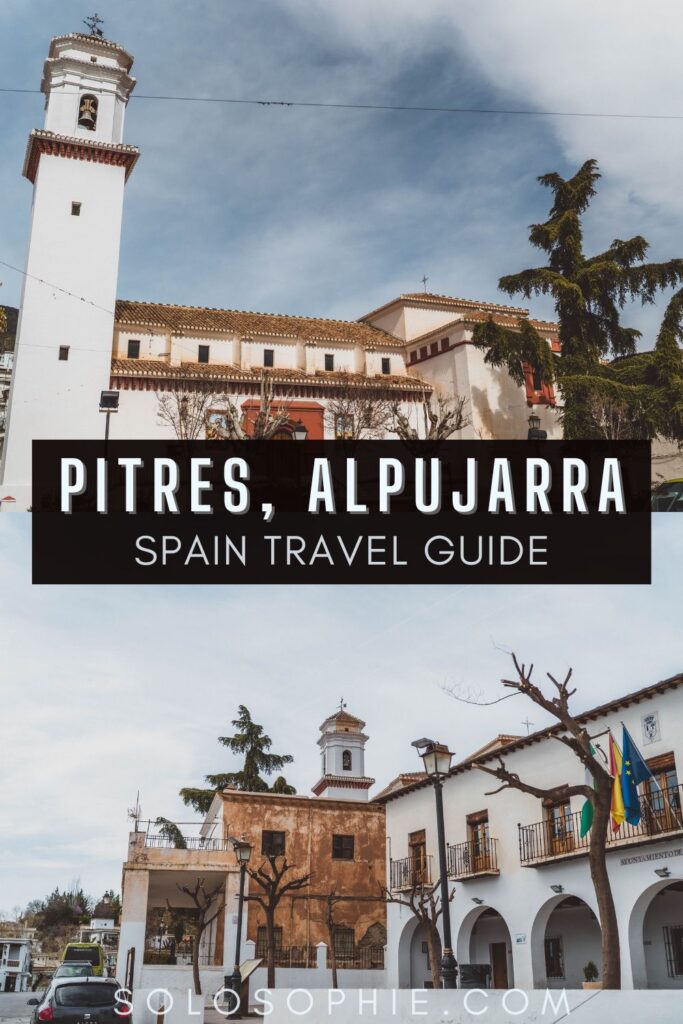
Pitres is a small town nestled within the Alpujarra pocket of the Sierra Nevada mountain range on a natural balcony in southern Spain, just under two hours away from Granada. Here’s your guide to the best of Pitres, as well as travel tips to know before you go.

Contents
Introducing Pitres, gem of La Alpujarra
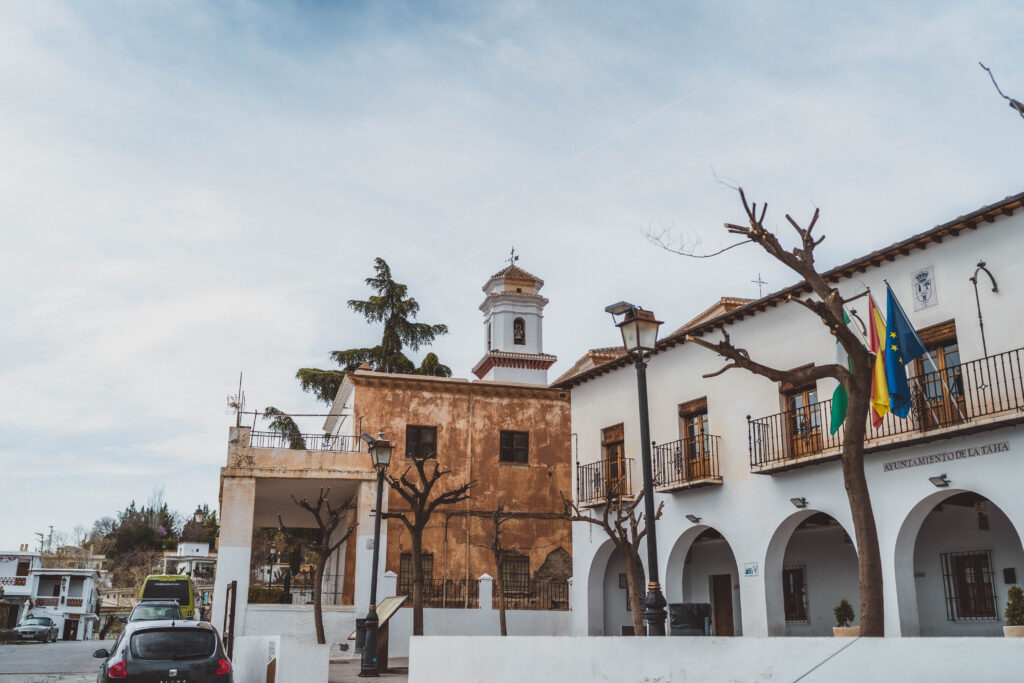
Pitres is the capital of La Tahá municipality, a group of four small villages of which Pitres is the largest, though it still only has a population of just over 400 residents. As such, this is where you’ll find the town hall (ayuntamiento) for La Tahá. The other settlements are Mecina, Fondales, and Ferreirola.
Pitres has always had a fiercely independent spirit and only became capital of La Tahá in 1975. On the side of the town hall, there’s a small ceramic plaque showing the various villages that make up La Tahá.
The joy of Pitres as opposed to the nearby towns of the Poqueira ravine (Bubión, Capileira, and Pampaneira) is that it’s much less known about and so often much quieter than its neighbouring counterparts.

Pueblos Blancos de Granada
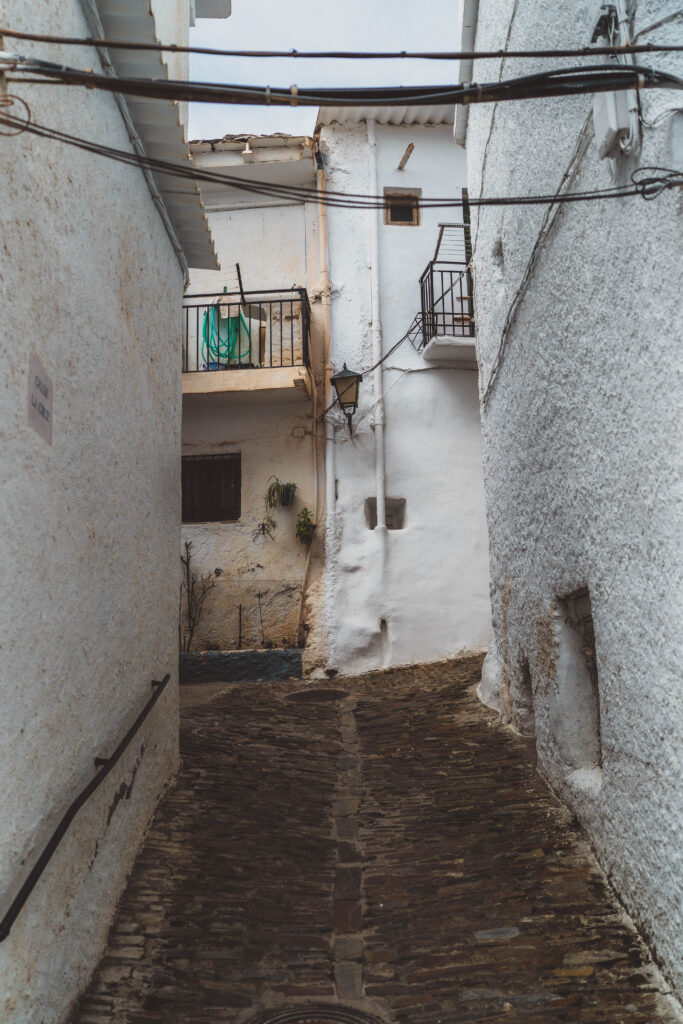
The town is one of the white towns (pueblos blancos) of the Alpujarras. Not much has changed in these villages in over 500 years as these small settlements were the last place where the moors lived before being driven out of Spain in the 16th century.
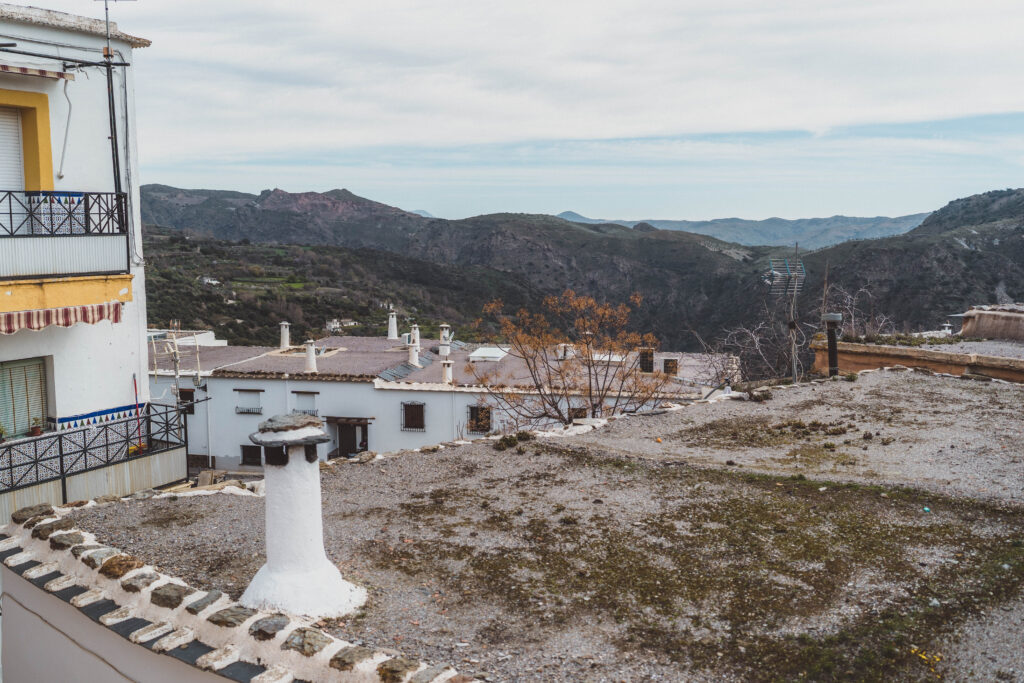
The architecture wouldn’t look at all out of place in Morocco and one of the defining features of towns in this area is the presence of Tinaos. These are arcades running between buildings with a roof of wooden beams. Flat roofs and large chimney pots are also typical architecture here.
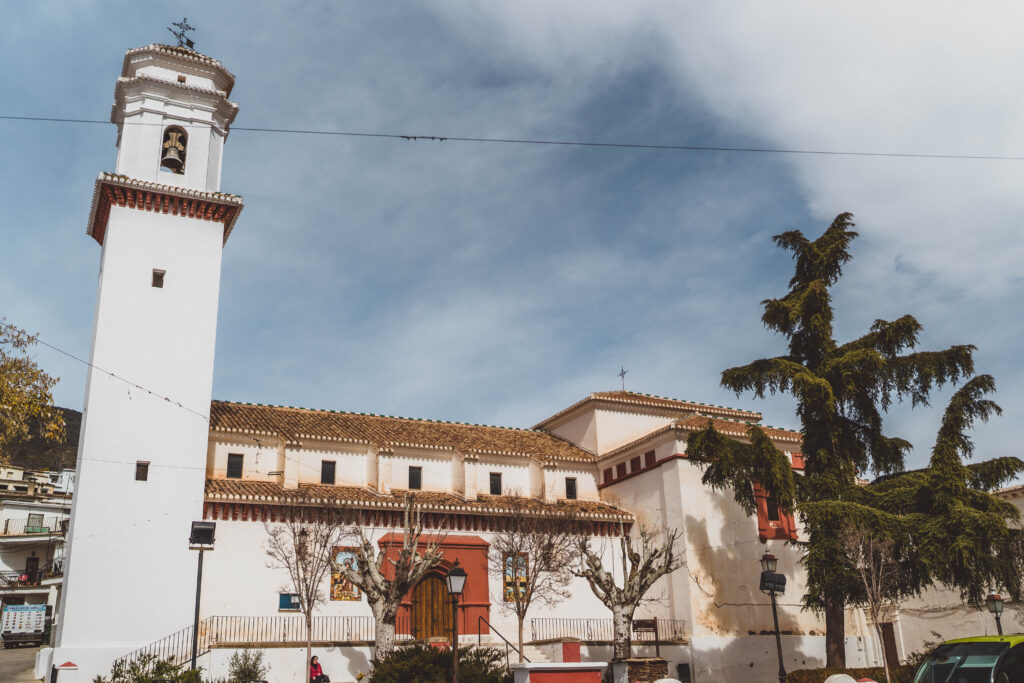
Unfortunately, large swathes of the town (including most of the church) were damaged during the Spanish Civil War and so a lot of what you see today was actually reconstructed in the 1940s.
Like other towns in the surrounding area, Pitres is characterised by its whitewashed houses and its elevation above sea level. Pitres itself is set at an impressive 1295 metres above sea level, leading to impressive views of the surrounding mountains from almost all directions. The village is just over 50 km away from the Mediterranean coastline.
Things to do in Pitres
The town doesn’t have a great deal by way of attractions and the best pleasure of a visit to town is simply to stroll around and allow the town to reveal itself to you. As the village only comprises of a few simple streets, you won’t need more than half an hour or so to explore.
Most of the town is set around a central town square, which dates back to Roman times. It’s on this central square where you’ll find the main church (Iglesia Parroquial de San Roque) which dates back to the 16th-century and a fountain.
The main attraction in town is Jardín de la Alpujarra, a mesmerising botanical garden rich with local blooms and plant species. The best time to visit the garden is in May or June when most of the flowers are in bloom!
On the outskirts of town, you’ll find the hermitage of Ermita de la Virgen de las Angustias together with its accompanying natural spring (fuente Agria). The water here is so rich in iron deposits that the river flows a bright orange!
A market is held every Friday morning and people come from far and wide to buy all kinds of local produce like fresh fruits and vegetables and honey.
Things to know before visiting
Know a little bit of Spanish: Something which particularly surprised me when visiting the town is that no one really spoke any English and so we had to use our Spanish to get directions and even buy things in the shops! Don’t worry too much though as the internet signal is great and so you can use Google translate and search if needed!
Have some cash handy: Most of the bars, restaurants, and even some of the convenience stores (with the exception of the supermarket) only accept cash.
Amenities
One of the most important things to note about this town is that it has a few amenities which could be prove to be pretty handy if you’re staying in the region. There’s a small yet well stocked supermarket (Corivan) just off the town square.
We found this to be the best supermarket in the region and would drive there from where we were staying in Capileira to stock up on snacks and groceries. There is also a delightful bakery where you can buy sweet snacks, fresh bread, and freshly made empanadas that make for the perfect lunch food!
Pitres also has a health centre, butchers, ATM (useful if you need cash for visiting other towns in the region), a hardware store, and a pharmacy. There is even an independent chocolate shop, Chocolates Sierra Nevada.
There is a free car park just off the main road running the entire length of the village so you won’t be able to miss it and should be able to park up quite easily even during peak season (i.e. July and August).
Getting to Pitres
There are three buses a day which take visitors from Granada through to the villages of the Alpujarra. As the service is so infrequent, I would personally recommend renting your own car to get around! Check car rental comparison prices here.
Enjoyed reading about the best things to do in Pitres? Pin this article now, read it again later: