How to Visit Nishiki Market (Kyoto’s Kitchen)
Last Updated on 22nd August 2024 by Sophie Nadeau
This post may contain affiliate links. Please check out my privacy policy and disclosure for more information.
Nishiki Market is one of those places that everyone tells you to visit in Japan, and for good reason. From mouthwatering local delicacies to culinary shops selling everything from speciality knives to unique porcelain, this popular Kyoto destination has been nicknamed ‘Kyoto’s Kitchen‘ or ‘Japan’s Pantry‘ as a result! Here’s everything you need to know on how to visit Nishiki Market, as well as top tips to know before you go.
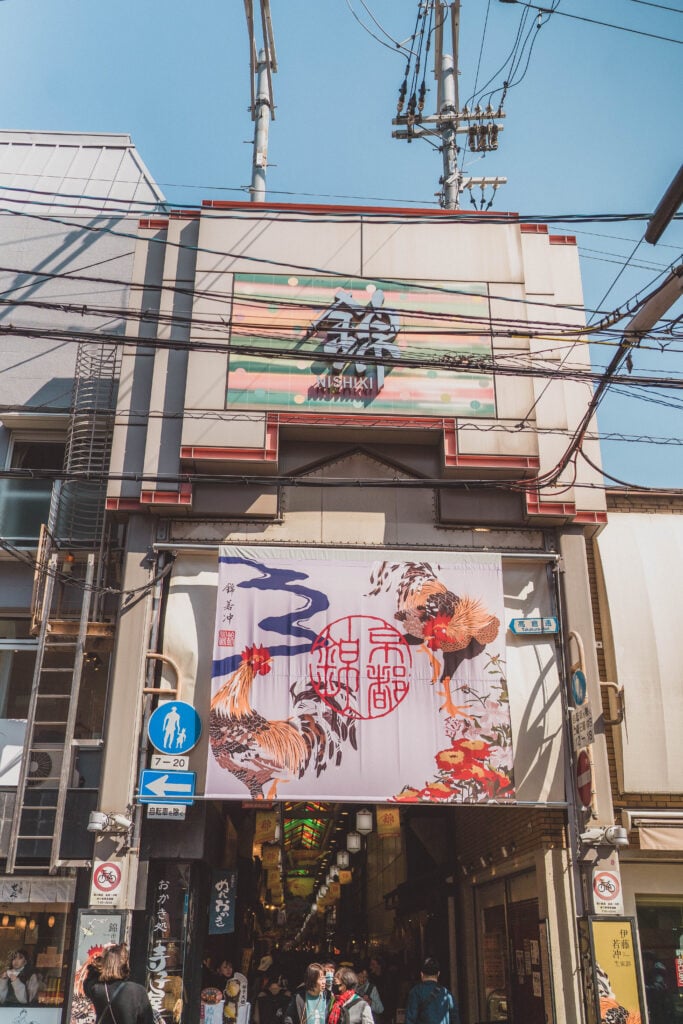
Please note that Nishiki Market is known as 錦市場 in Japanese.

Contents
What is Nishiki Market?
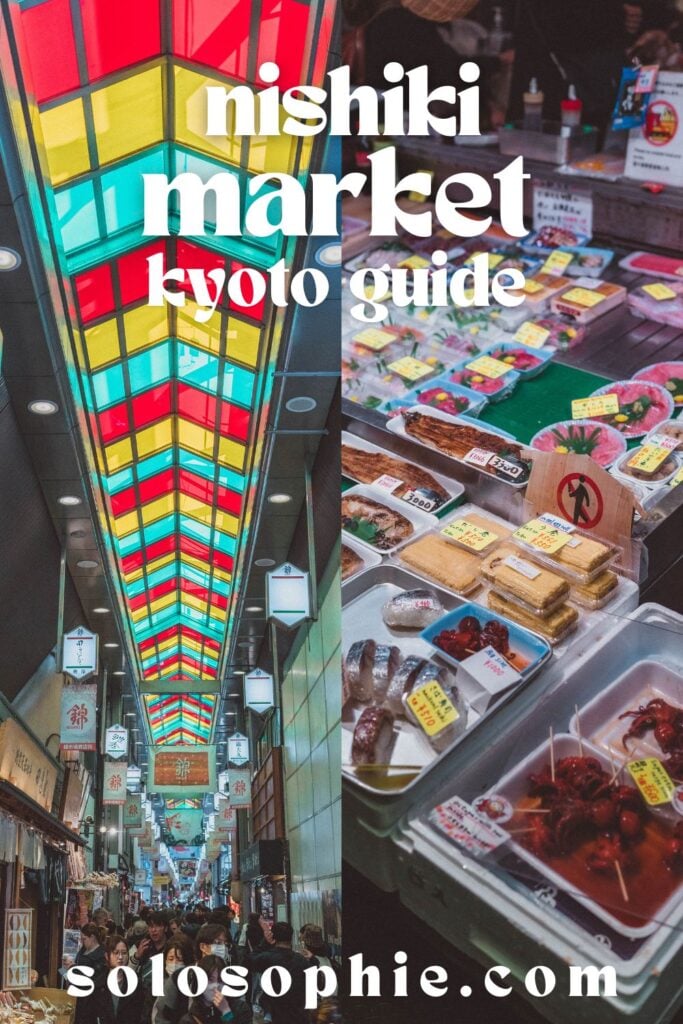
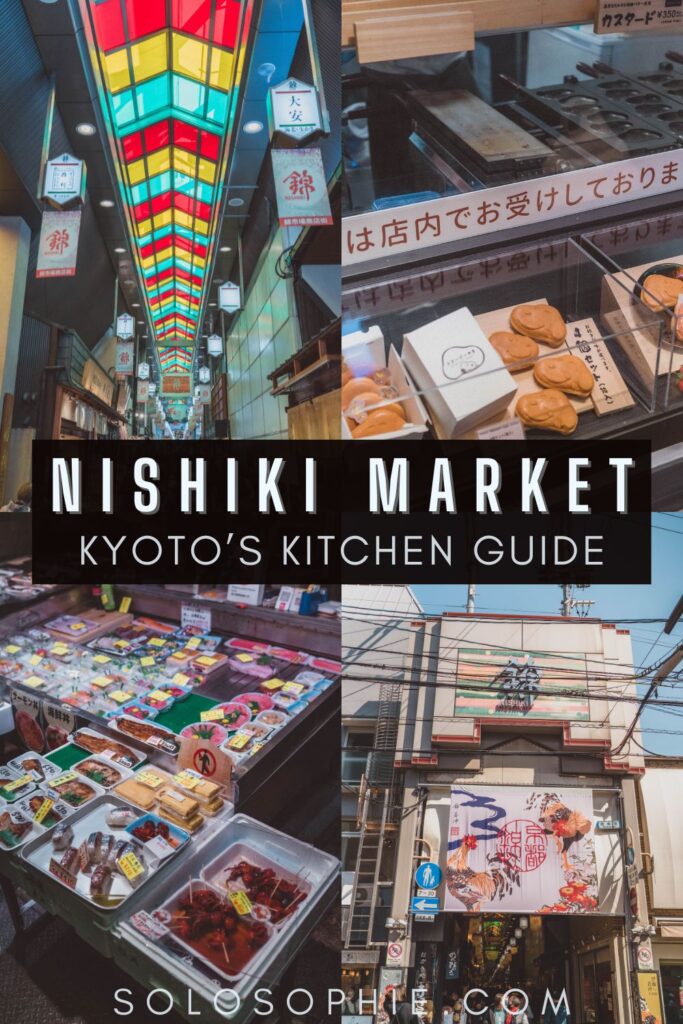
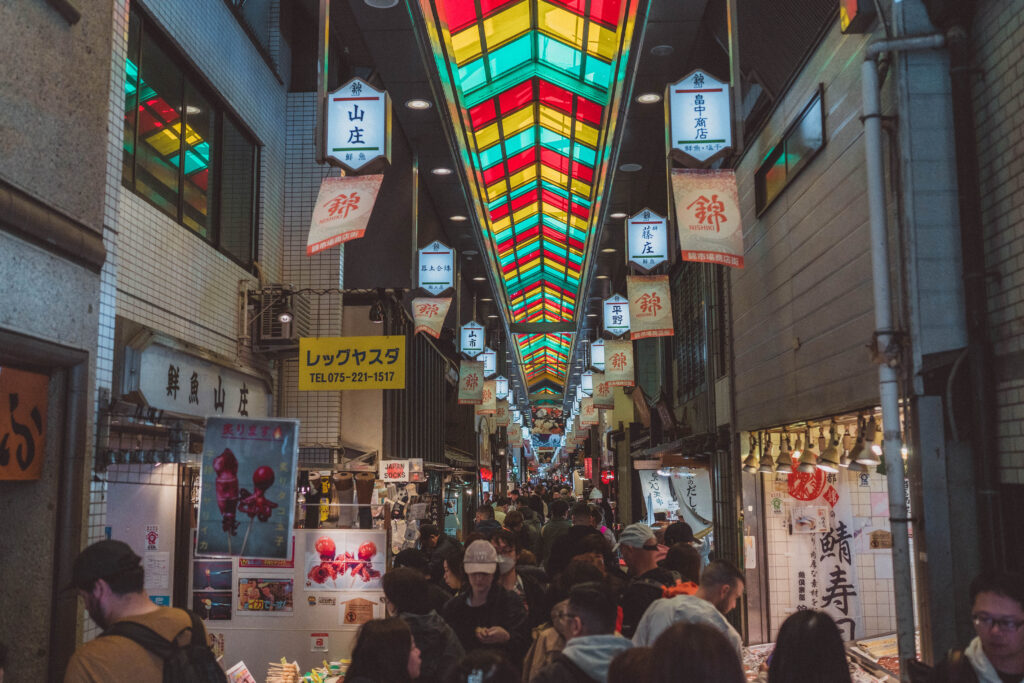
The market is a covered market in downtown Kyoto spanning the course of around 390 metres and is just a few metres in width. There are over 130 vendors and the market is famed all over Japan for its rich variety of foodstuffs and associated culinary products and gadgets.
Most vendors tend to specialise in one particular food, and in doing so, they have truly perfected the craft of producing that particular item. Some shops will give out free samples which is pretty handy to see if you actually want to purchase a full portion of that product!

For the most part, the vendors at the market sell street foods which are designed to be consumed on the spot and are pretty small portions of a single meat skewer or small cake and the like. As such, you can aim to purchase around five different kinds of foods while at the market to make a full meal-sized portion!
One thing you should know about the market before visiting is that it’s very busy and pretty narrow! Although the covered market runs for five blocks and 100 vendors are squeezed in under the iconic red, yellow, and green arcade, it’s pretty much always packed and so you should set aside extra time for your visit just to move through the crowds!

Top tip: Although card payments are becoming increasingly commonplace in Japan, cash still remains king in a lot of situations, including at the market, so be sure to bring cash to ensure that you can buy everything that you’d like to sample. ATM machines can easily be found in konbinis such as 7-eleven.
A history of Nishiki Market
The history of the market dates back to 782 when fish was sold in the area. This was the perfect place from which to sell fresh products due to the presence of fresh cold groundwater in the area.
However, it wasn’t until 1616 that the market received official permission from the Bakufu government to sell fish. Unfortunately, turbulent times weren’t over for the market and due to competition between the sellers, the number of shops dwindled down to just 7 by 1883.
Things started to turn around for the market once more in 1911 when a new establishment arrived to promote the market. Throughout the 20th-century, things continued to change for the market, leading up to what you see now.
Today, Nishiki Market is used by two different clientele; there are the customer facing shops who cater to locals who want to buy their groceries and tourists who wish to sample some local Japanese food, and then there’s the supplier industrial side to the market, which supplies produce such as seafood to restaurants to Kyoto and beyond (even as far away as Tokyo).
When is the best time to visit?
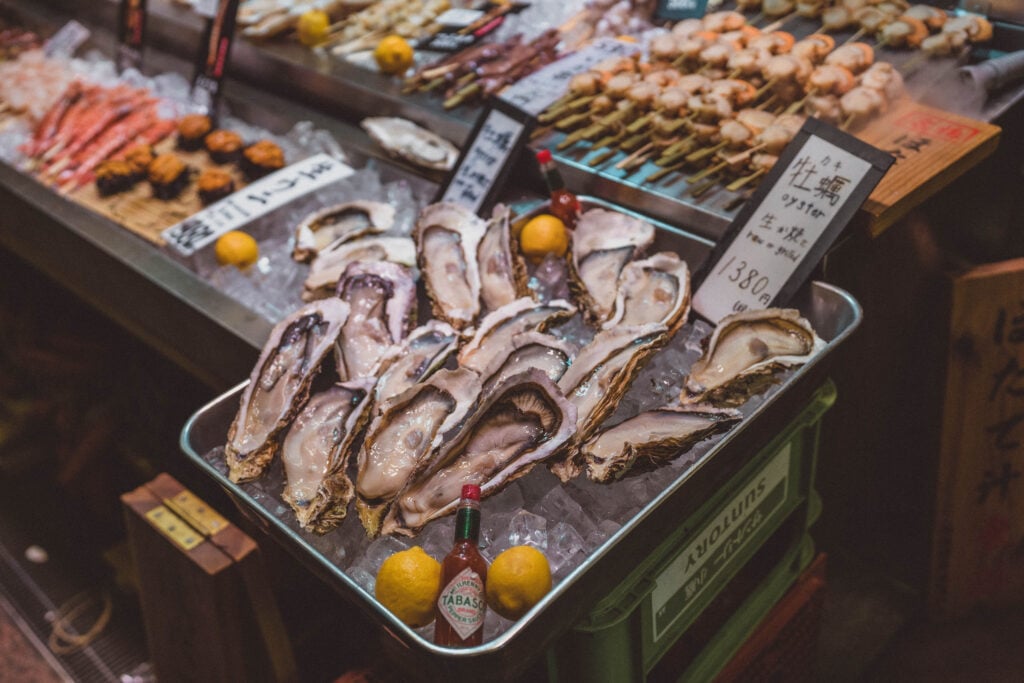
In our one day in Kyoto itinerary, we recommend visiting Nishiki Market at lunchtime. And, while this is a pretty busy time to visit, you’ll definitely want to come to the market with enough of an appetite to try a few different street foods!
The only thing I would say about planning to visit is to try and avoid weekends if possible. We went on a Friday pre-cherry blossom season and even then it was pretty hard to move through the crowds, so I can only imagine what it must be like to visit during sakura season or even on the weekend!
Nishiki Market etiquette
Don’t eat while walking and, if you’ve purchased food to be consumed straight away, eat it at the stall in which you bought it. If you’ve bought food to takeaway, keep it in its container until you’ve left the market and found a suitable place in which to enjoy it!
After you’ve eaten your food, use the trash cans at the stall at which you purchased your food for the leftover receptacles. Littering is highly frowned upon in Japanese culture and, one of the more curious Japan travel tips that I have to give you is that garbage cans aren’t very common so you have to take your litter home with you. Don’t dispose of trash at the vending machine recycling boxes. You can only put used bottles in these!
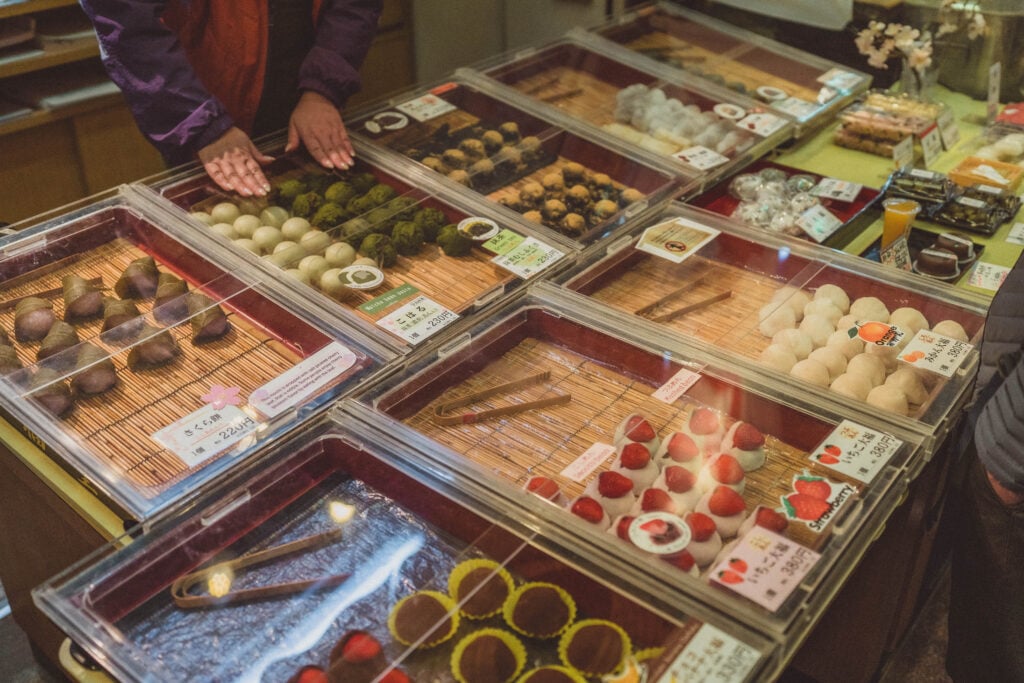
Though you’ll undoubtedly observe people snapping photos of all the unique foods that they’re trying to take, photos aren’t allowed at every stand. Don’t worry though about snapping a photo in a forbidden location because there are signs in front of the shops which don’t let you take photos!
We saw a few people taking their luggage through the passage but honestly I completely advise against this! The passage is already pretty crowded as it is and you don’t really want to be adding to that by dragging heavy suitcases through the market!
Tipping is not really ‘a thing’ in Japanese culture and so nowhere will expect you to tip. I advise not to even try as you might confuse people and will definitely be turned down which will be awkward.
Finally, if you decide to have an alcoholic beverage, then be aware that, if you are driving, then there is a zero tolerance policy towards alcohol. Unlike in some other countries, you can’t even have a single half pint of beer and drive afterwards so do bear this in mind and don’t drink if you’re planning to rent a car to go on a road trip somewhere after your time at the market.
Things to try at Nishiki Market
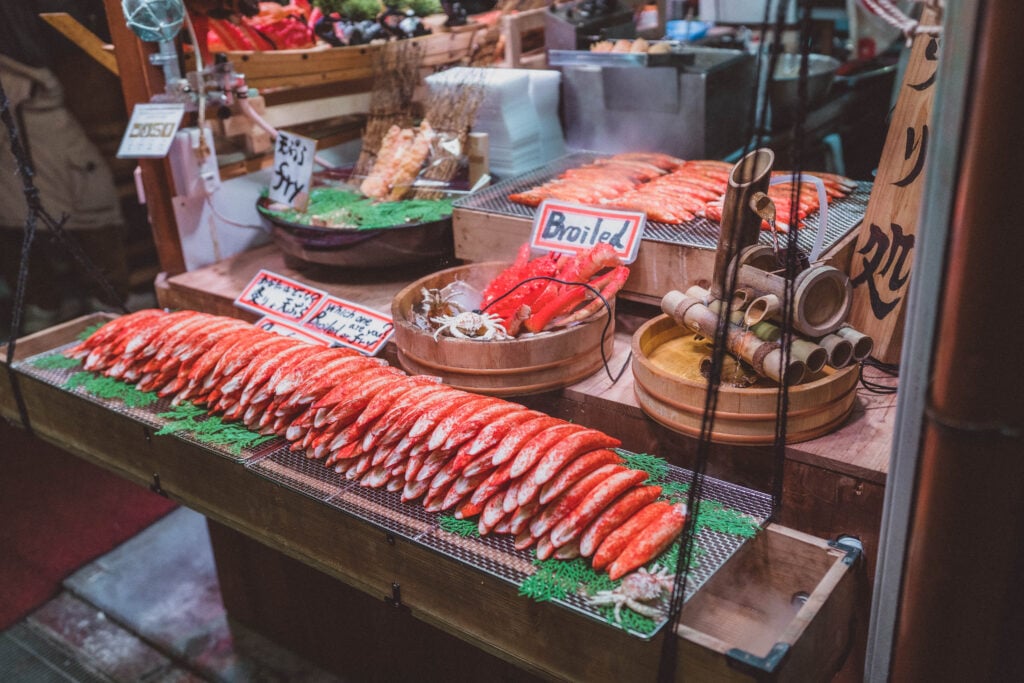
Make sure you come to the market hungry because there’s a tantalising array of sweet and savoury foods to choose from. Just note that, like many places in Japan, some vendors within the market are cash only.
It’s also worth noting that some products are seasonal so if there’s something you’ve seen on Instagram or TikTok that you really want to try, then don’t expect it to actually be there when you arrive.
I also noticed that although the market is usually open from 9 a.m. to 5:30 p.m. Monday through Friday and 9 a.m. to 4:30 p.m. on Saturdays, not all vendors are open all the time so, again, if you’ve seen a shop you really want to go to, it might not actually be open when you arrive at the market.
If you want to buy food to consume at the market, make sure you eat the food directly in front of the shop at which you bought it. Walking while eating is frowned upon in Japan (apart from in certain circumstances like at a festival) and so you should avoid this at the market.
Savoury foods to try at the market
- Ayu (sweetfish) – This is a local speciality and is a popular type of fish that is often grilled with salt and eaten whole.
- Fried octopus heads – Though not particular to this market (or even the Kyoto region) this is one of the more popular finds at the market due to how unique the food looks!
- Takotamago – This is a variation of the octopus head and is exclusively available at a shop named Kai. This is essentially an octopus head stuffed with a boiled quail egg!
- Shrimp tempura skewer – If there was one food that we saw a lot of stands selling, it was this. This dish is simply shrimp covered in tempura batter, skewered, fried, and served on a stick.
- Wagashi (Japanese sweets) – These are a wide variety of small Japanese sweets which are made to be served with green tea. Popular wagashi include mochi, fruit, and anko (azuki bean paste)
- Kyoyasai (Kyoto vegetables) – Since the middle of the 20th-century the market has also been a popular place to sell evegables. Kyoyasai are heirloom vegetables which originate in the Kyoto prefecture.
- Tsukemono (pickled vegetables) – Pickled vegetables are often served with rice to be intended as an okazu (accompaniment) or with a drink such as sake to serve as a otsumami (appetiser/ snack).
- Yuba (tofu skin) – this is a local speciality of the region and has been consumed since ancient times. This meal is naturally vegan and is often gluten free.
- Hamo (Japanese Pike Conger Eel – Sea Eel) – This has a similar look to an eel and is a popular food to eat in the summer.
- Satsuma age (fish cakes) – My husband actually tried one of these and you can get them in lots of flavour like mushroom, cheese and onion, and tomato. They’re a fried fish cake made with surimi, rice flour, and often an extra ingredient. Fish cakes can be found in most regions in Japan but are named differently depending on where you find them.
Sweet foods to try at the market
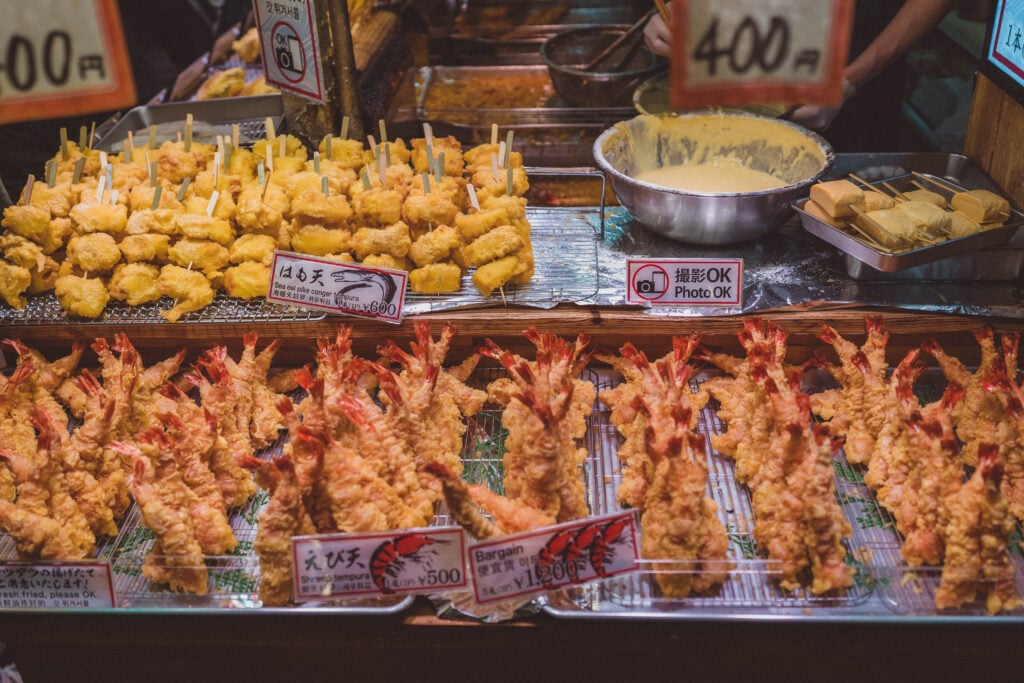
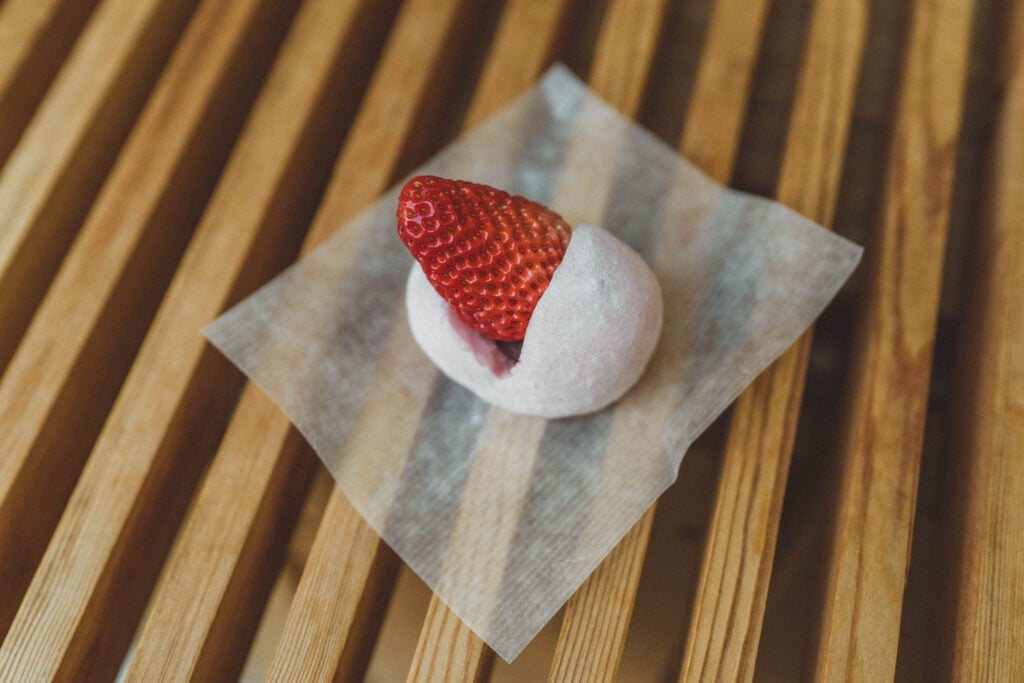
- Mochi – Mochi is one of the most popular cakes in Japan and is a low calorie rice cake which is usually made with water, sugar, rice and cornstarch. A special type of gelatinous rice is cooked and then pounded into a cake shape before being steamed. You can find all kinds of flavours like sakura (cherry blossom), matcha (green tea), mango, and strawberry.
- Ichigo Mochi – This is a variant of mochi. My personal favourite is Ichigo Daifu which is a mochi stuffed with strawberry and red bean paste.
- Goma dango (sesame seed dumplings) – These are small rice flour balls filled with sweet red bean paste and coated in sesame seeds before being deep fried. The process is quite complicated to make them as the cook has to be careful not to burn the sesame seeds as they cook!
Eating vegan and vegetarian at Nishiki Market
It’s no secret that being vegan or vegetarian while travelling around Japan can be a little tricky to say the least! One thing I would say is that you should note that it won’t always be possible to check out the ingredients of each individual item. You can try and ask sellers if a certain product contains egg but some vendors will say they’re not sure.
Another thing to note is the presence of dashi in many foods. This is fish stock and forms the basis of most miso soups. It’s also commonly used to flavour the rice in Onigiri (so even many seemingly vegetarian Onigiri such as pickled plum may actually contain fish sauce) and noodle dishes that would otherwise appear to be vegetarian, and so is pretty hard to avoid.
I’m a pretty strict vegetarian while travelling in Europe and North America but have have chosen to be more flexible in Japan when it comes to dashi as otherwise finding anything to eat (even in convenience stores such as 7-Eleven) would be pretty much impossible.
At the market, you’ll find a number of things that appear to be vegan or vegetarian at first glance but might have hidden ingredients. This includes soymilk ice cream which might contain cow’s milk or miso paste which contains egg.
If you would prefer to still avoid these ingredients altogether then it’s best to double check before purchasing anything. Another food which looks vegetarian but often isn’t is senbei. These are rice crackers but often contain bonito (fish) flakes or shrimp.
Luckily, there are a number of meat-free shops and stalls selling produce dotted along the trail of the market:
- Yubakichi (湯波吉) Yuba – This tasty snack of dried beancurd skin has been a popular food for centuries.
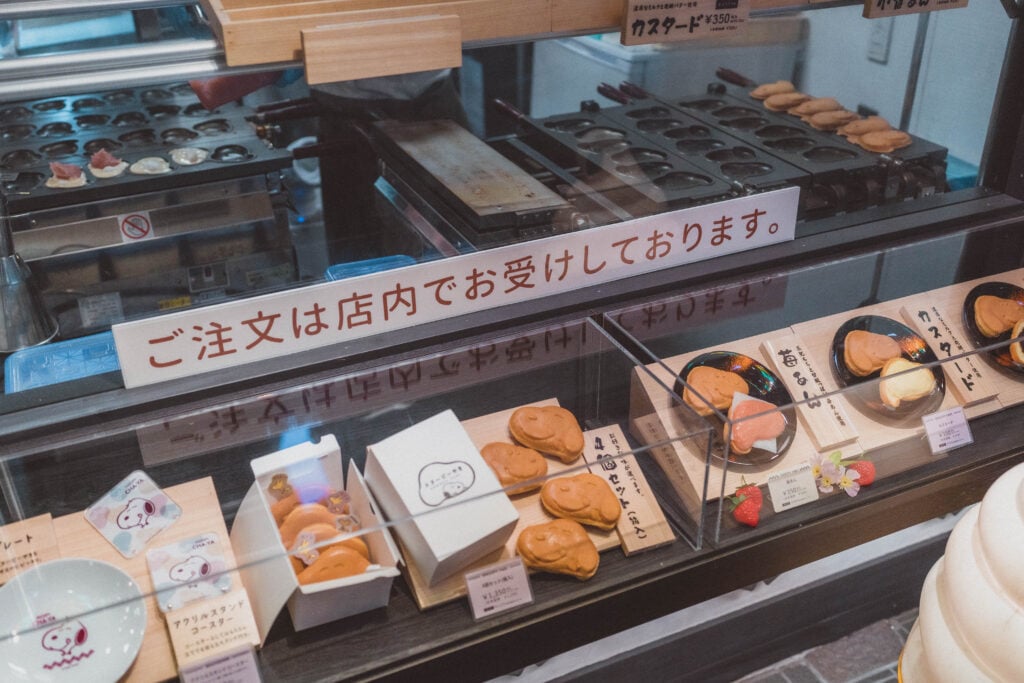
- Kōfuku-dō (幸福堂) Wagashi – If there’s one kind of food that I find myself eating more than anything else while travelling in Japan, it’s desserts and sweet food. This is often a ‘safer bet’ than savoury food if you want to avoid meat and fish.
- Kyōtanba (京丹波) Chestnuts – Roasted chestnuts are a popular warm snack and are completely vegan!
- Mochi-tsuki-ya (もちつき屋) – Not all the sweets are vegan so do verify in advance but the majority are.
Shops to check out in the Nishiki Market
Food aside, if you’re looking for a culinary souvenir from your time in Japan, then there are a few standout shops in the market worth checking out:
- Aritsugu – this store is over 400 years old and many claim that they sell the best knives in Japan.
- Ichihara Heibei Shōten – you can buy personalised chopsticks here but they take about 45 minutes to personalise so head here before exploring the rest of the market if you want to get this done.
For more inspiration nearby, check out our guide to the best things to do in Kyoto.

Enjoyed reading about how to visit Nishiki Market? Pin this article now, read it again later: