

Hidden Gems & Secret Spots in York You’ll Love
Last Updated on 16th December 2025 by Sophie Nadeau
This post may contain affiliate links. Please check out my privacy policy and disclosure for more information.
York is a beautiful city with a curious history that’s not always for the faint-hearted… from public executions to cholera epidemics, Roman ruins and trembling madness, there’s a lot to unpack in this quaint northern English city. Here’s your ultimate guide on the hidden gems & secret spots of York!
Contents
Hidden gems of York
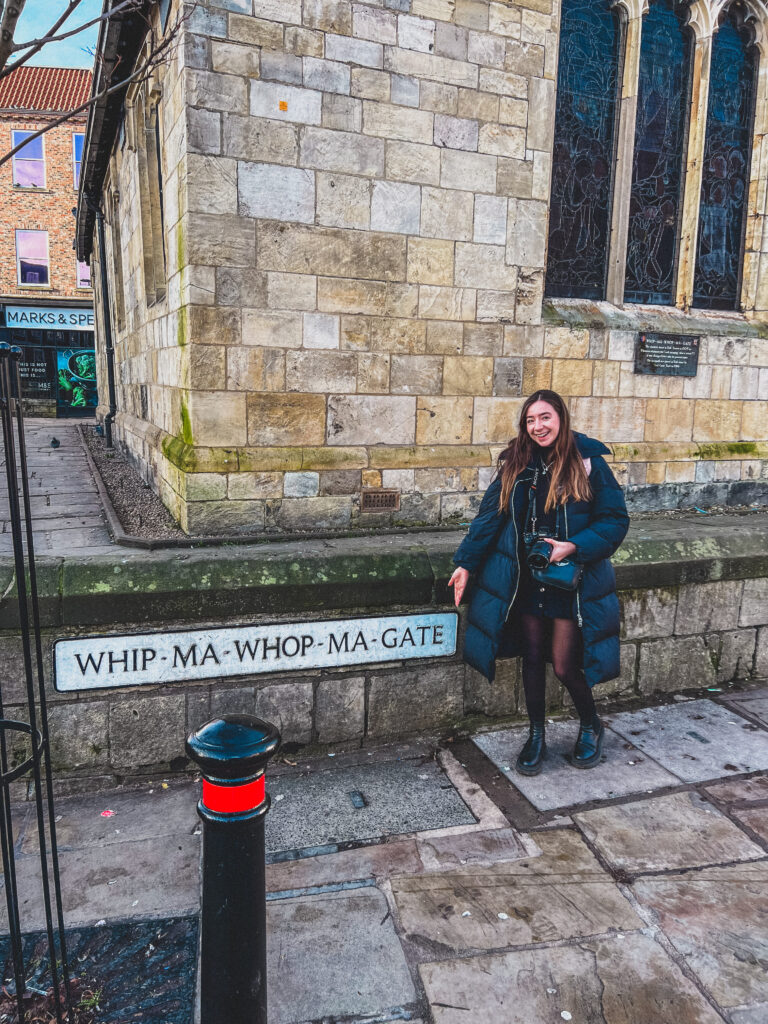
Whip-Ma-Whop-Ma Gate
York’s shortest street, at just 32 meters in length, holds the longest place name and is shrouded in curious tales. It’s thought that the name derives from the phrases “what a street” or “call this a street?”
York was once a major trading city for the Vikings, evidence of this can still be seen in its street names. The Viking word for street is “gate”, hence why many of the streets in the city end with the suffix.
Several tales shroud the origins of this street, though no one quite knows for sure what’s what. Some say the name originates from it being the street where York’s whipping post and stocks stood in the Middle Ages. While others speculate that it could have been the site where dogs were whipped for stealing butcher’s meat from The Shambles.
Either way, the street is so short some even question whether it’s a street at all!
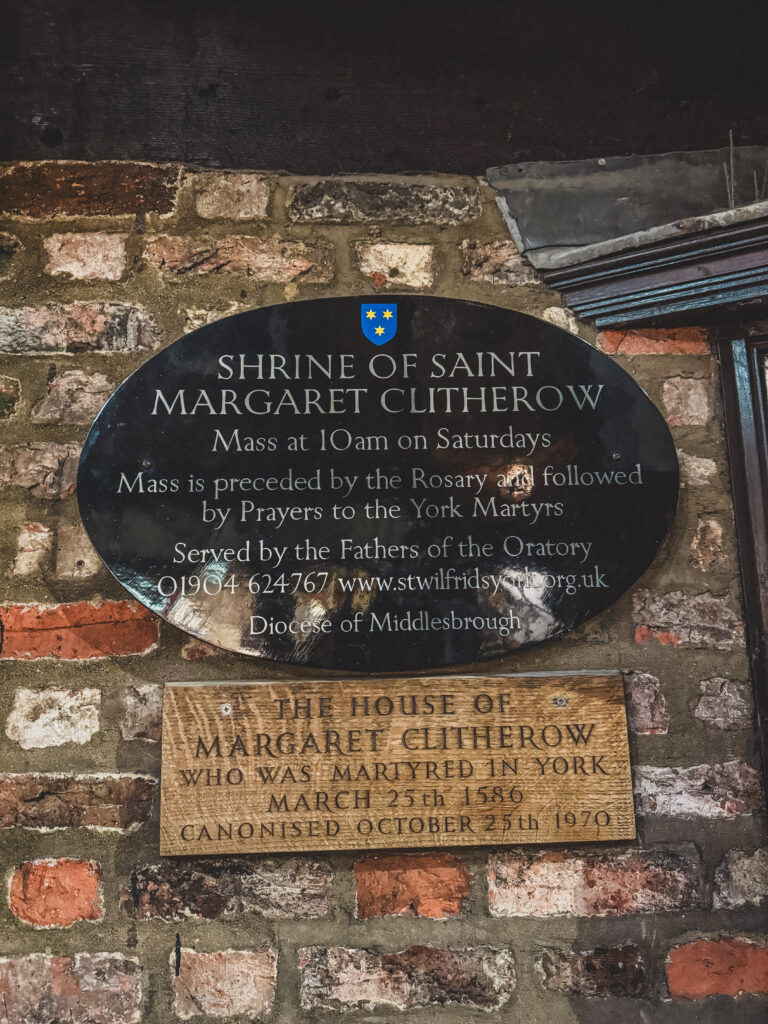
The Shrine of St. Margaret Clitherow
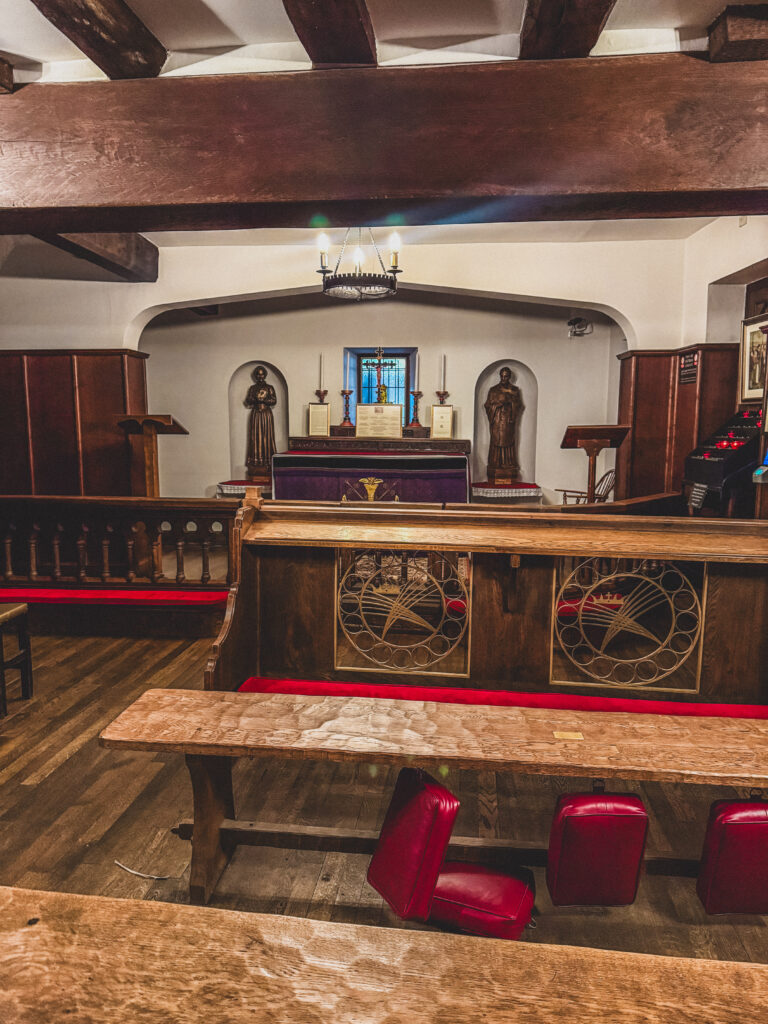
The Shrine of Margaret Clitherow is a hidden gem, tucked amongst the hustle and bustle of York’s cosy street, the Shambles. This small chapel commemorates Clitherow, an English woman who harboured priests and refused to give up her faith in Elizabethan England.
Margaret Clitherow earned herself the nickname “The Pearl of York” for her unwavering loyalty to the Catholic Church. She was a simple wife to a wealthy butcher, John Clitherow, and by 1574, she converted to Roman Catholicism, even though it was illegal to be so during the 16th century.
She refused to attend Anglican church services and, as a result, was repeatedly fined and deemed a recusant. Despite this, Clitherow, as the staunch Catholic she was, went on to create a secret room in her home where she would hide priests to hold secret masses.
During a raid on her home, Margaret Clitherow was seized and sentenced to death after she refused to plead guilty or innocent, claiming “only god could judge her”. Therefore, Margaret Clitherow was martyred in York on March the 25th 1586. Her execution was brutal to say the least, as she was pressed to death with an 800-pound weight.
It wasn’t until 1970 that Pope Paul VI canonized Clitherow and recognised her as one of the forty English martyrs of the Catholic faith.
Roman Baths
One of the few Roman remains that are still visible in York lies in the cellar of an unassuming pub, that is, of course, before you see its name… The eponymous pub, Roman Bath, is also the public entrance to the small museum where visitors can step back in time and catch a glimpse at the fascinating excavations of a Roman bathhouse.
Roman Bath is located on St Sampson’s Square, right in the heart of York. The curious ruins were accidentally stumbled upon in the 1930s when renovation works were going on.
The Baths are thought to have been built sometime between 71 AD and 122 AD, and although the complex would have been much larger (some 200 square metres) only a fraction of the site has been excavated.
The most fascinating thing to see when visiting is evidence of the caldarium. This room would have been hot and steamy, and the underfloor heating system would have been heated by a furnace tended to by slaves.
The Roman Baths are open from 11 am – 5 pm daily and can be visited for a small fee. However, the pub itself stays open for longer if you want to enjoy a drink afterwards!

The Trembling Madness
The Trembling Madness is a public house in York, which takes its name from medieval times when people drank more beer than they did water, as it was deemed safer. As a result, they often suffered from trembling madness, more commonly known as “Delirium Tremens” (now, the name for a popular brand of Belgian beer).
The rear of the building dates back to 1180 AD. It was the first Norman House to be built in York and sits upon the site of a 15th-century Augustinian friary.
This medieval craft-ale mansion is disguised as a bottle shop (indeed, you can purchase delicious beers to take away) but, if you head up the stairs at the back, you’ll be greeted by a convivial sight of punters eating and drinking!
The Trembling Madness specialises in not-so-easy-to-find Belgian beers. The pub has two locations, but the cosiest one resides at 48 Stonegate.
Bootham Bar
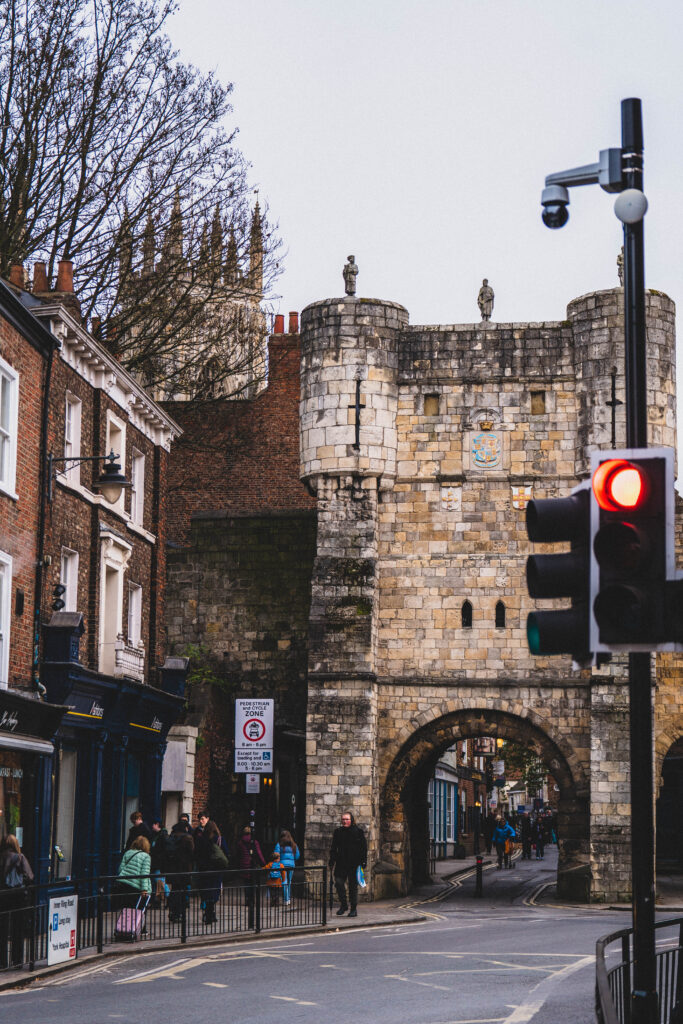
Since Roman times, York has been defended by walls in some form or another. A notable former York City gate stands as Bootham Bar, and this stone archway has a rather unique history.
There has been a gateway in this space for over 2,000 years. However, the one seen standing today is not of Roman origin, instead, the archway dates back to the 11th century, while the remaining parts of the structure are from the 14th century.
During the Siege of York in the First English Civil War, Bootham Bar was damaged. But this may come as no surprise when you learn that it was used to display the decapitated heads of traitors or the opposition…similar to that of Micklegate Bar, in the east of the city.
Today, three small stone statues carved by G. W. Milburn sit atop the Bar, they were added in 1894 and replaced former statues which were deteriorating. The statues are of a stone mason holding a model of the Bar, the 14th century Mayor of York, Nicholas Langton holding a scroll, and a knight in medieval armour with a sword and shield.
Roman column
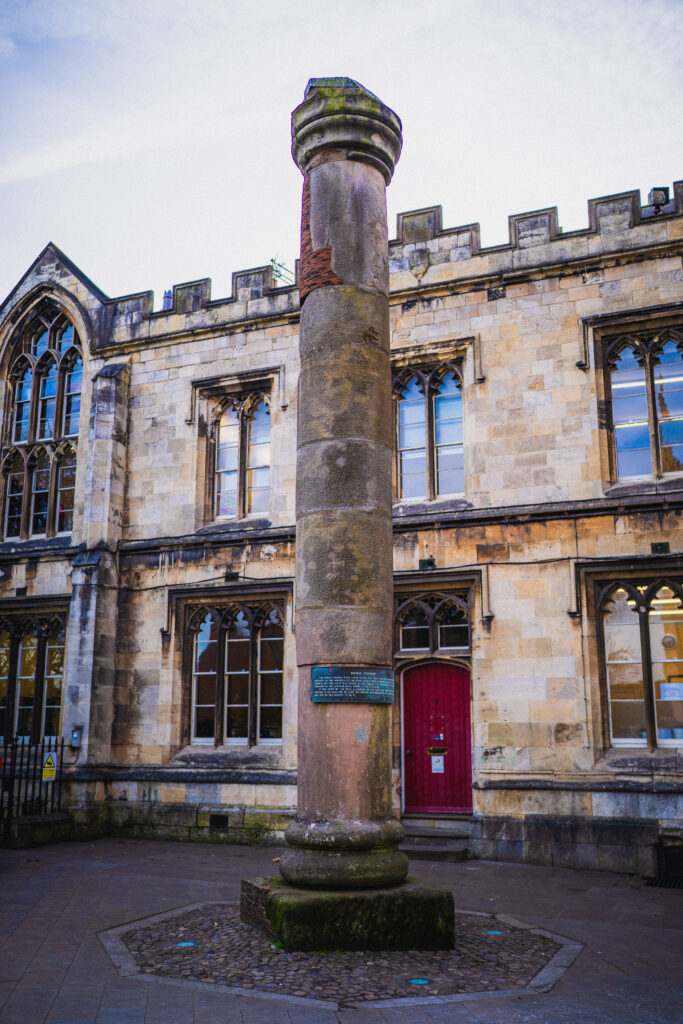
Standing in Minster Yard is a Roman column which was originally built in the first century by the soldiers of Legio IX Hispana. The column was first discovered beneath the cathedral of York Minster during excavations in 1969.
The lone column is indeed believed to have been part of a bigger group of sixteen or so freestanding columns (eight on each side), which would have supported the walls of the basilica on site before.
The Roman column was gifted to the city three years after its discovery, to commemorate the 1900th anniversary of York’s founding.
The story of Gerald the Bengal Cat
A rather recent story of York is found in the form of Gerald the Bengal Cat. While sadly, Gerald is merely a memory rather than a sight to be seen in York, locals and tourists alike remember him fondly through stories and his burial site.
Gerald was a striking Bengal cat who moved from London to York with his brother Donald and their owner. While Donald would stay close to home, Gerald became a regular sight as he regularly roamed the grounds of York Minster and the surrounding streets.
Stealing the hearts of many, this friendly feline brought great pleasure and joy to all those who came across him. However, he sadly passed away from natural causes in 2020 at the age of six.
Within days of his death, thousands of people donated to crowdfunding with hopes of getting a permanent memorial for Gerald. Indeed, he was so loved that condolences were received from far and wide, including from Larry (The Downing Street Cat).
The York Minster bells were rung on the day of his funeral. And, with Donald in attendance, his brother Gerald was buried and put to rest in Dean’s Park beside the cathedral.
Cholera burial ground
In the shadow of York City walls, near York Railway Station, is a grassy area where the souls of those killed in the Cholera epidemic of York were laid to rest.
Sadly, Cholera ravaged York in 1832, and an epidemic ensued, affecting at least 450 people and killing around 185 people out of the city’s population of 25,357. The outbreak lasted from June through to October.
Riots nearly broke out on North Street at the mere sight of a hearse transporting a cholera victim’s body, as people weren’t aware at the time that it spread through the water.
Today, the burial ground is a silent reminder of the death and destruction plagues can bring to humankind. There are twenty surviving sandstone memorial stones.
Dick Turpin’s Grave
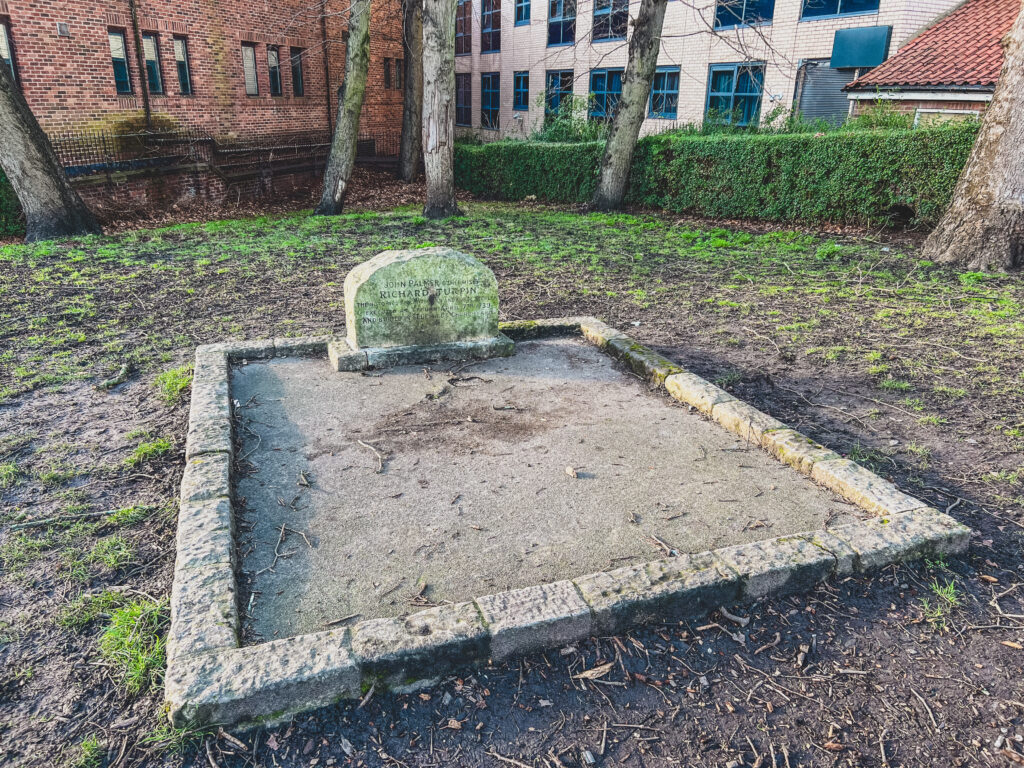
“The man, the myth, the legend”, Dick Turpin actually lived a fairly regular life until he joined a gang of thieves and became a poacher, burglar, horse thief and killer! Indeed, this romanticised version of a highwayman and his horse Black Bess, is rather a sordid tale of an English highwayman.
Richard Turpin, as he’s offiically known, was born in Essex in 1705. He is believed to have followed his father’s footsteps earlier in life, trading as a butcher. However, his regular living turned into something out of a Bond movie (the baddie’s side of course) when he joined the notorious Gregory Gang.
The Gregory Gang were perhaps best known for their poaching of deer and smuggling venison into London. But, their methods were ruthless. One account says that Turpin himself is said to have held a landlady of an inn over a fire, burning her, until she revealed the very whereabouts of her savings.
With charges quickly stacking against the gang, Turpin is said to have disappeared from public view, only to resurface in 1737 with two new accomplices (one of which he may have accidentally shot and killed). To top it off, while fleeing from the scene, he killed another man who attempted to capture him
Later, he moved to York and assumed the alias of John Palmer. But trouble followed, and people soon became suspicious of “Palmer” suspecting he was a horse thief, and questioning how he might be funding his lifestyle.
Imprisoned at York Castle, Turpin’s true identity was revealed by a letter he wrote to his brother-in-law from his cell, falling into the hands of authorities. In March 1739, Turpin was found guilty on two charges of horse theft and sentenced to death. By April, he was hanged at Knavesmire.
His story lived on through legends after his execution, as Turpin was romanticised as dashing and heroic, and the highwayman and his fictional horse Black Bess became the subject of ballads and popular theatre of the 18th and 19th centuries, including film and TV in the 20th century.
The Multangular Tower
Nestled in the north corner of York’s Museum Gardens stands The Multanger Tower, an iconic historic landmark of York and one of the finest exampled of a preserved Roman structure in the city.
The tower stands between the Yorkshire museum and the medieval St Leonard’s Hospital. Indeed, it has been stood there for quite some time as it’s believed to have been built around the 3rd century AD, defending the settlement.
Multangular Tower is one of eight fortifications of its kind. While the tower itself was built by Romans, repairs have been made over the centuries.
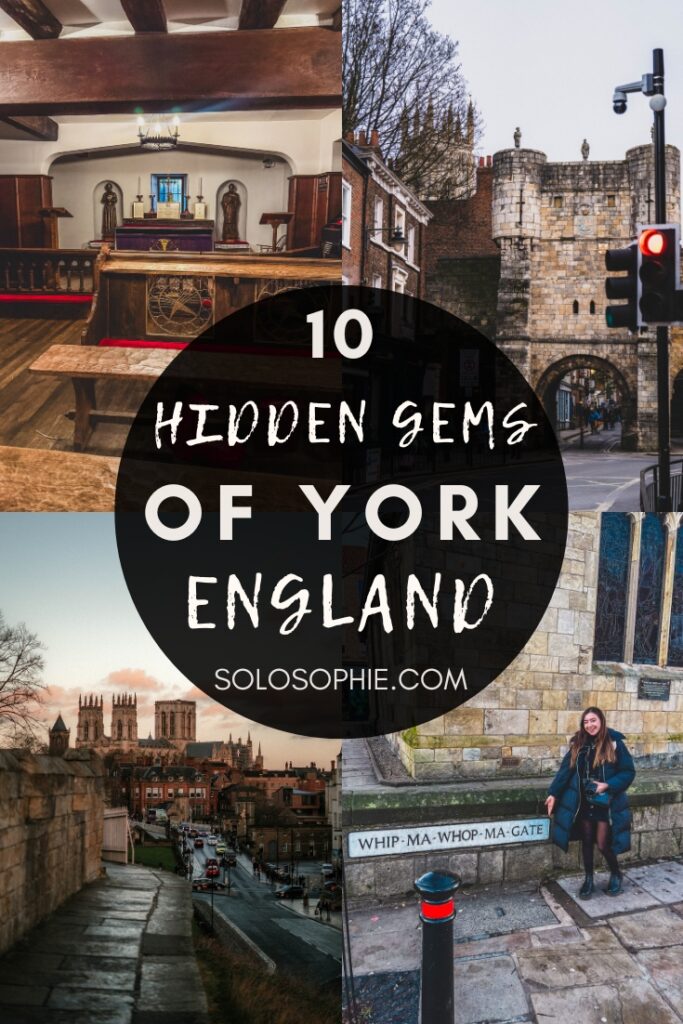
Enjoyed reading our hidden gems & secret spots in York guide? Pin this article now, and read it again later:



Your beautiful writing and keen eye for offbeat charm really make York feel like a place of gentle surprises and timeless character. Thank you for sharing such a carefully curated, wander-worthy guide—it’s inspired me to go exploring with fresh eyes!