The Ultimate Glencoe, Scotland Tavel Guide 2026: Top Hikes, Viewpoints & Hidden Gems
Last Updated on 6th January 2026 by Charlotte Nadeau
This post may contain affiliate links. Please check out my privacy policy and disclosure for more information.
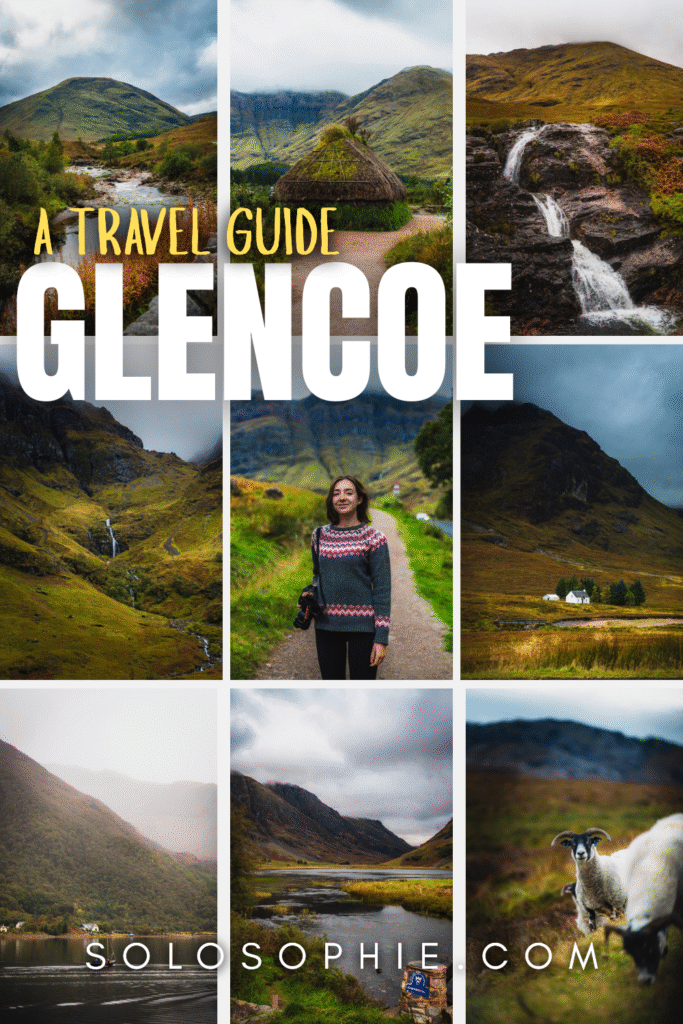
Glencoe is one of the most breathtaking places in all of Scotland. This Scottish Highland gem is renowned for its dramatic landscape, sweeping vistas, hiking opportunities, and natural beauty. It’s also the site most famously associated with the history of the Highlands, shaping a defining moment in Scottish history. Here’s your ultimate travel guide to Glencoe!
Contents
What is Glencoe famous for?
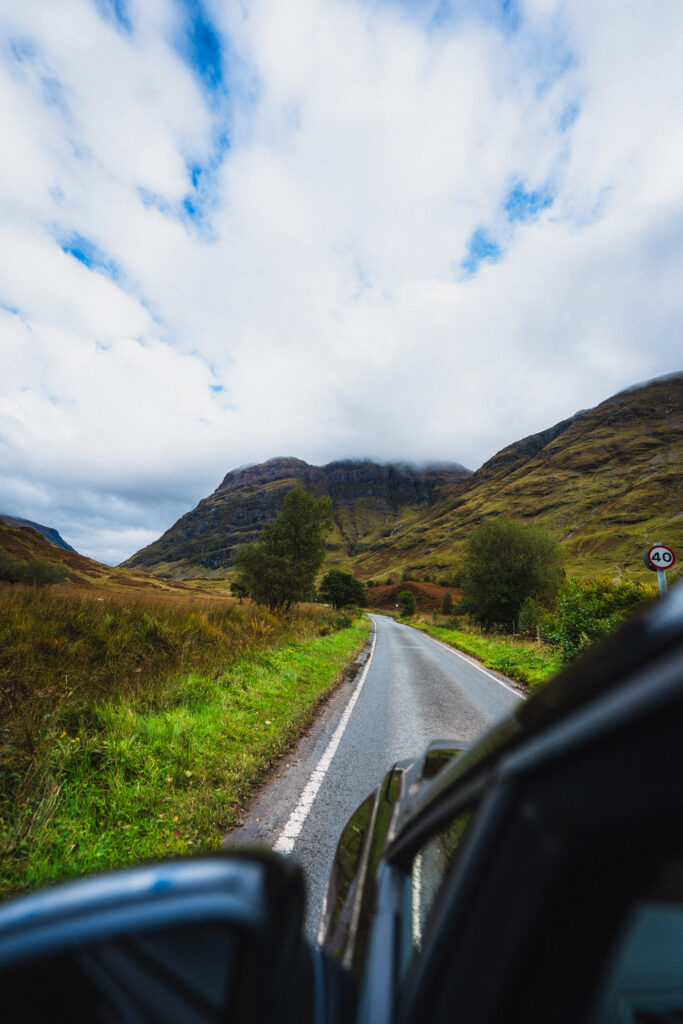
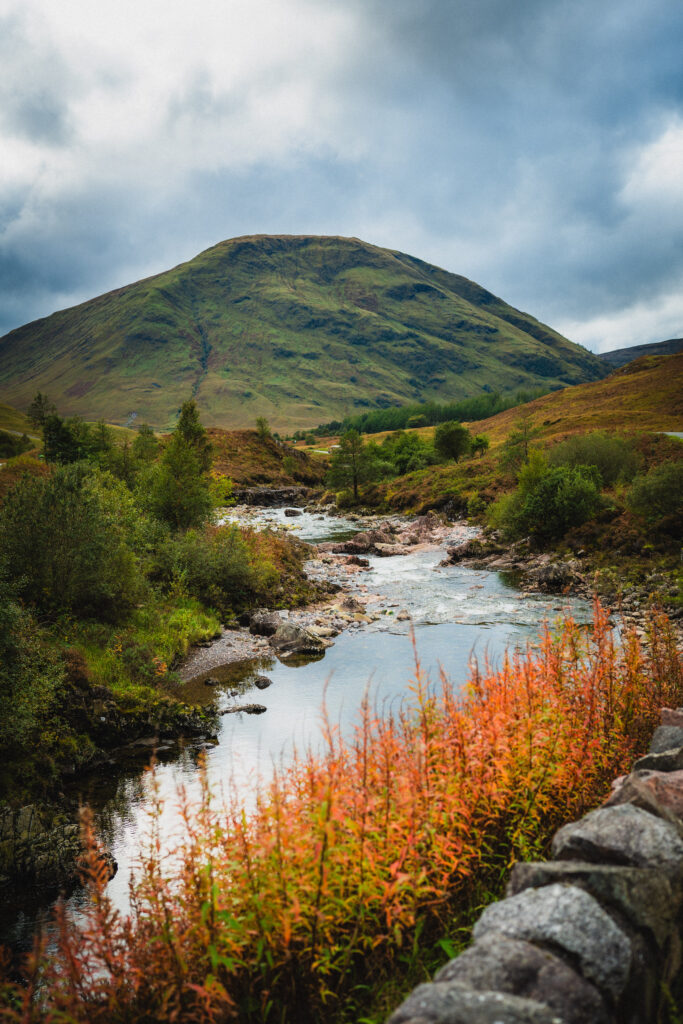
Glencoe is perhaps best known for its dramatic, sweeping Highland hills, remarkable geological formations, and breathtaking scenery. It’s often cited as one of the most beautiful places in Scotland. As such, it has also been the backdrop for many films, including Skyfall, Harry Potter, Braveheart, and Highlander.
Beauty aside, Glencoe also has a dark past, which is worth remembering, especially when it comes to understanding the Scottish Highlands’ history. This particular tragic event exposed the major political tensions and showed how harshly the government once treated Highland clans.
The Massacre of Glencoe took place on the 13th February 1692. The events that unfolded involved an estimated 30 members and associates of the Clan MacDonald of Glencoe who were murdered by the Campbell clan, who were acting under government orders. This murder took place, allegedly for failing to pledge allegiance to the new monarchs.
This happened after the clan members were welcomed into the homes of the MacDonalds. This deep-seated betrayal was a violation of Highland hospitality codes. And, to this very day, it is still remembered as a symbol of government brutality and treachery.
It’s for this reason that Glencoe is often nicknamed “The Glen of Weeping” or “Valley of Tears.”
When is the best time to visit Glencoe?
To be honest, Glencoe is moody and atmospheric all year round, and there’s no best time as such. For the ease of access, between April to September is likely best as the climate will be warmer and you’ll avoid ice. However, if you wish to see snow capped mountains and have a vehicle that can safely navigate icy roads, then winter is also a great time – but extremely cold!
On average, Glencoe receives 188 days of rainfall per year – making it the wettest place in Scotland. But the misty, wet scenes are what make this part of the Highlands so iconic. Just bear this in mind when packing appropriate footwear and clothing!
Highlights of a drive through Glencoe
Ballachulish Peninsula
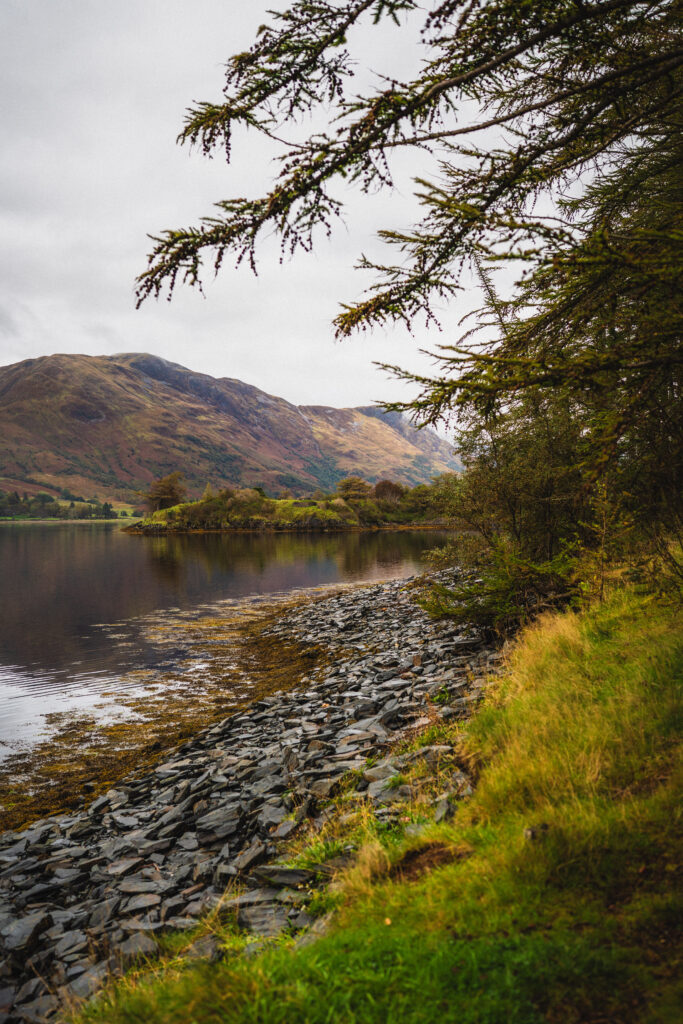
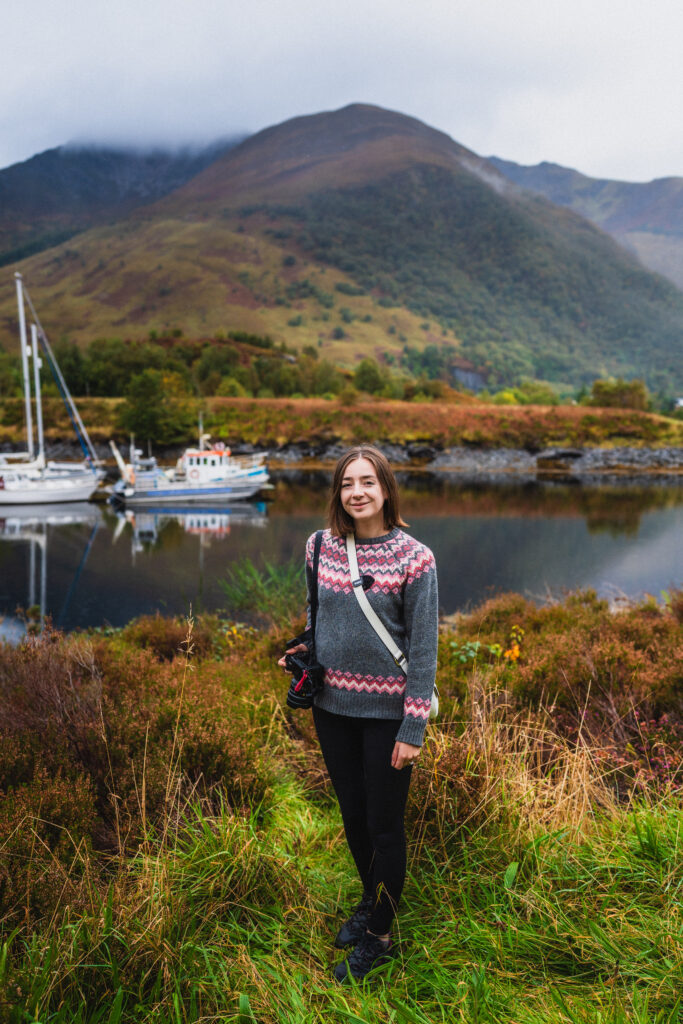
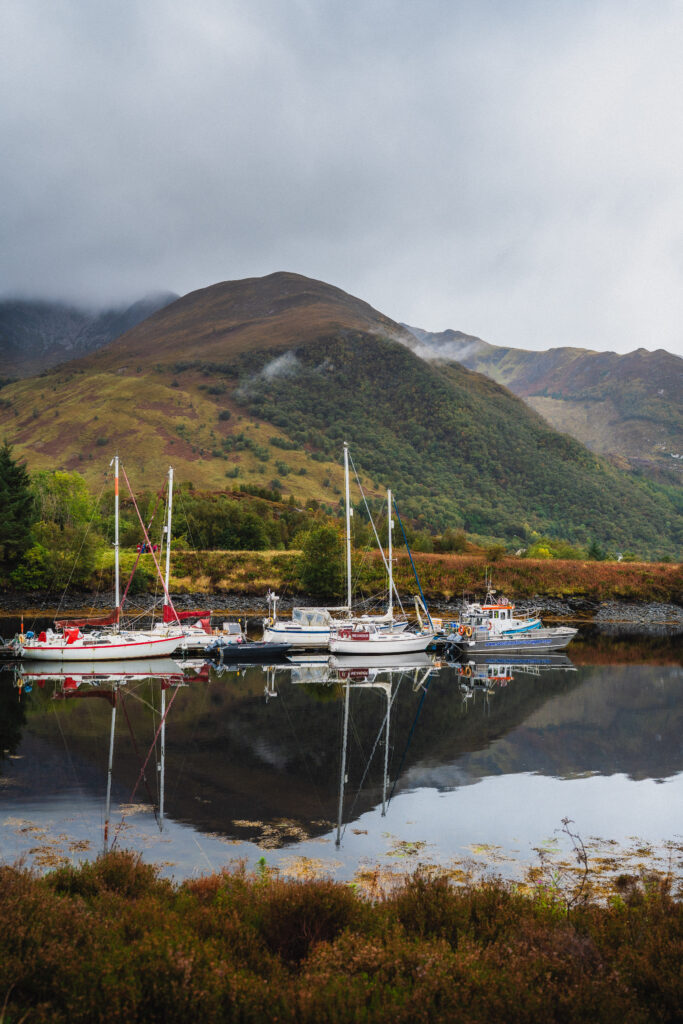
The Ballachulish Peninsula is a beautiful stretch of land between Loch Leven and Loch Linnhe, sitting right at the gateway to Glencoe. Best known for its views overlooking the burial islands, this peninsula is also a popular base from which to start exploring the region, as it offers easy walking trails and historic sites, including its old slate quarrying heritage.
Ballachulish village itself was once the “slate capital” of Scotland. Over the course of more than three hundred years, the quarries produced the majority of the country’s roofing slate, and at their busiest, they employed more than 500 men. Indeed, many local families can still trace their connections to those who worked at the quarry.
Today, you can see the striking beauty of this spot. The walls of exposed slate still show the scars of centuries of cutting, while deep, still blue pools now fill what was once the quarry floor. All of it sits beneath the sweeping backdrop of Beinn a’ Bheithir (a mountain), giving the area an unexpectedly dramatic atmosphere.
Eilean Munde
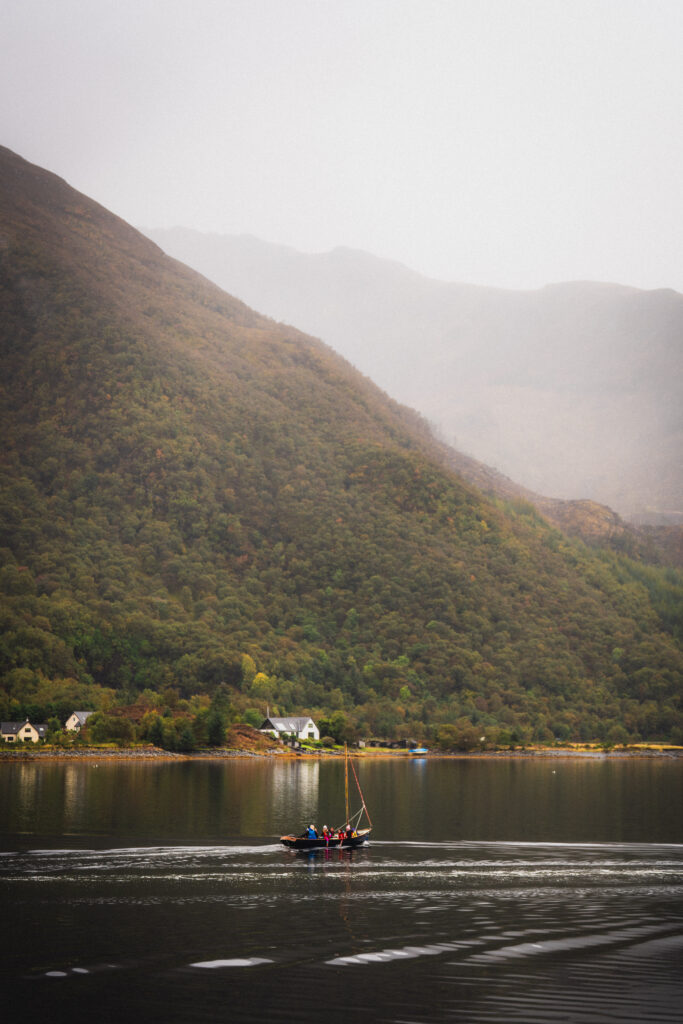
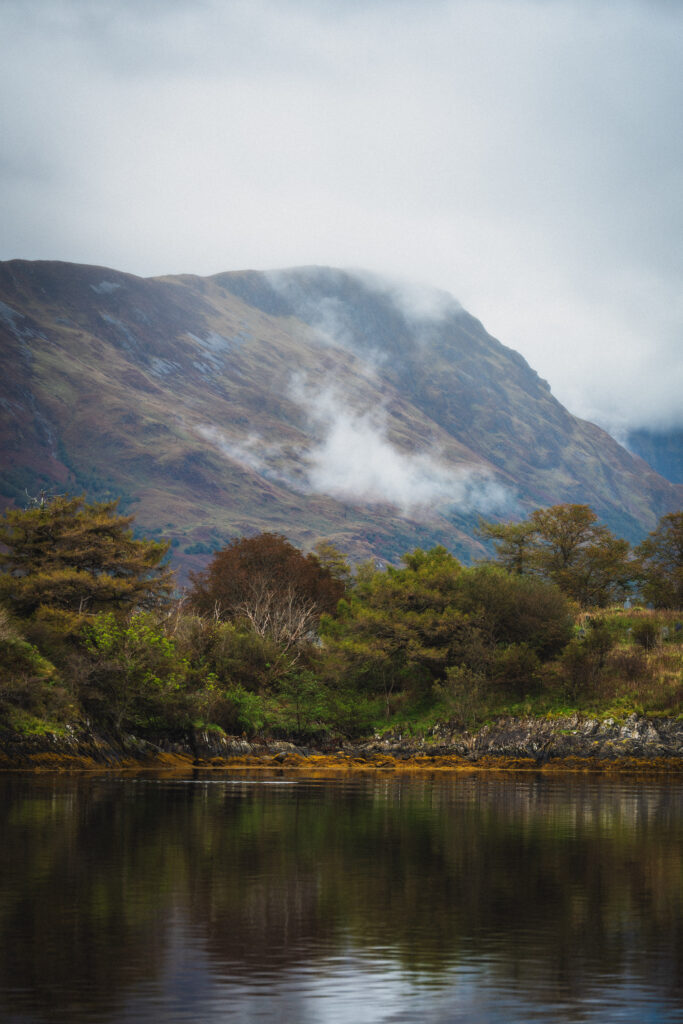
Eilean Munde is also known as the “island of the dead,” is an uninhabited island that sits in Loch Leven. For centuries, the small island was used by Highland clans as a burial site. The clans would share the island and maintenance of the graveyard, even when there was conflict between them. The last known burial is said to have taken place in 1972 of Mrs Christina MacDonald Sharpe, a native of Glencoe.
The island is also the site of a chapel that was built in the 7th century by St. Fintan Mundus. However, the church seen today was rebuilt in the 16th century after the previous building burnt down in 1495. The last known service in the church was held in 1653.
Today, the island is only accessible by boat. Many of the burial grounds have fallen into disarray, but each year, a group of volunteers (people of MacInnes and MacDonald) visit the island to clear overgrowth and maintain the site as much as possible. From afar, you can still see the remaining gravestones on Eilean Munde.
Glencoe Visitor Centre
The best way to learn about the rich local history and heritage is to pay a visit to the Glencoe Visitor Centre. Here, you’ll find several informative exhibitions detailing the most significant events, as well as a short film that gives an insight into what makes Glencoe so special.
You can also learn about the thriving local wildlife, of which there is plenty! And, the weather. Glencoe takes the title as one of the wettest places in all of Scotland, with an average rainfall estimated at 3,562 mm – hence why the landscape is so green and luscious!
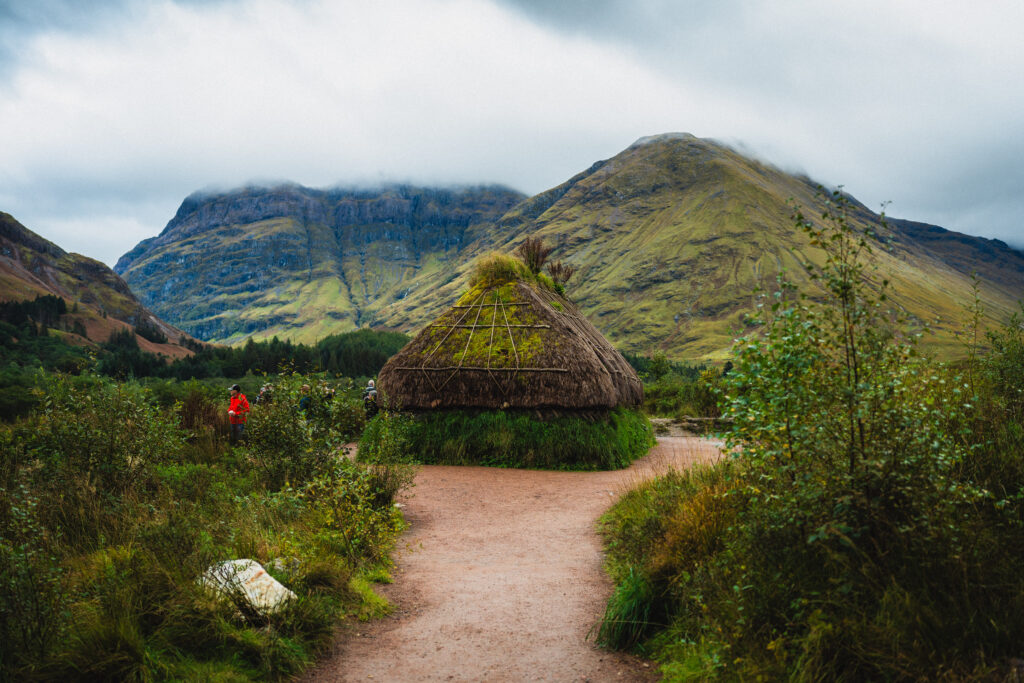
One of the most unique things to see at the visitor centre is the reconstruction of a Turf House. Using whatever natural materials their local landscape could provide, these small huts would have been the typical abode the Highlanders would have inhabited in the 17th century. This replica is a remarkable reconstruction, where traditional techniques and materials have been used to make it as realistic as possible. You can step inside and take a peek around, too!
Glencoe Visitor Centre opening hours: 9:30 am to 4 pm every day.
The Clachaig Inn
As one might expect in such a rural and atmospheric landscape, there is, of course, a cosy inn. The Clachaig Inn dates back to the 16th century and serves the local area as a pub (it has three bars), restaurant and hotel.
Upon the door is a sign that reads “No hawkers or Campbells” – a wry reference to the Glencoe massacre, which was a betrayal of the Campbell clan. The inn itself is rustic, and serves hearty Scottish food (local venison being a highlight!)
Hagrid’s Hut Location
Because the landscape of Glencoe is so surreal, it has been used many times as the backdrop for films. One of its most notable filming locations has to be Hagrid’s Hut, from the beloved Harry Potter film series.
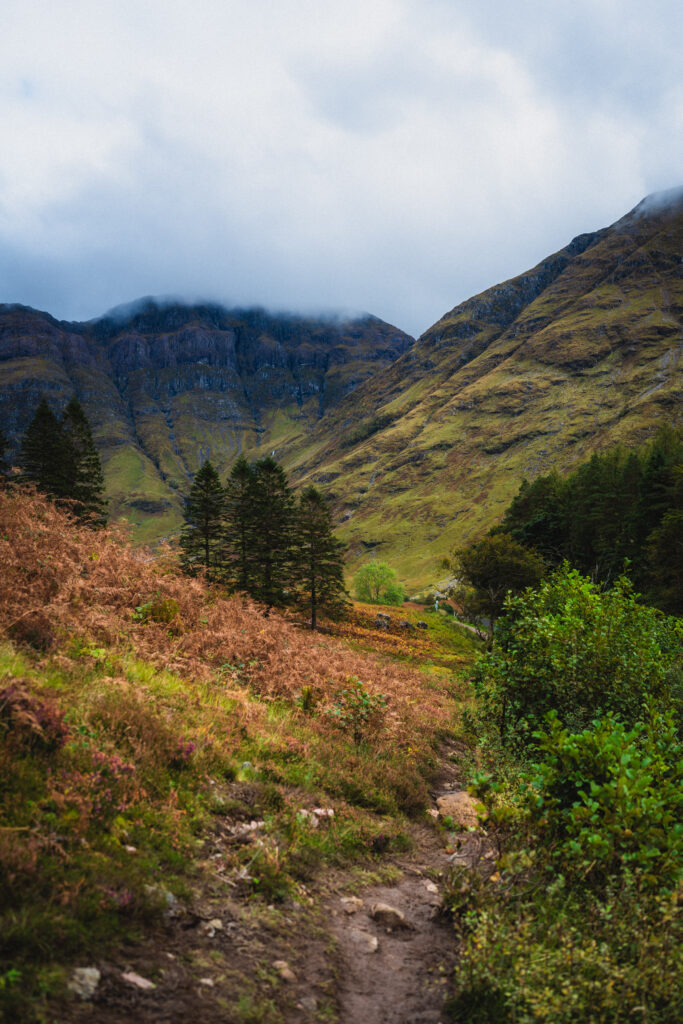
This particular filming location is in reference to the Prisoner of Azkaban film. While there is no physical hut, and the exact location is on private land, you can sneak a peek at where the set would have been, as well as enjoy stunning views overlooking the Torren Lochan next to Signal Rock forest. There’s a small paper sign pointing to where you can see this viewpoint.
Loch Achtriochtan
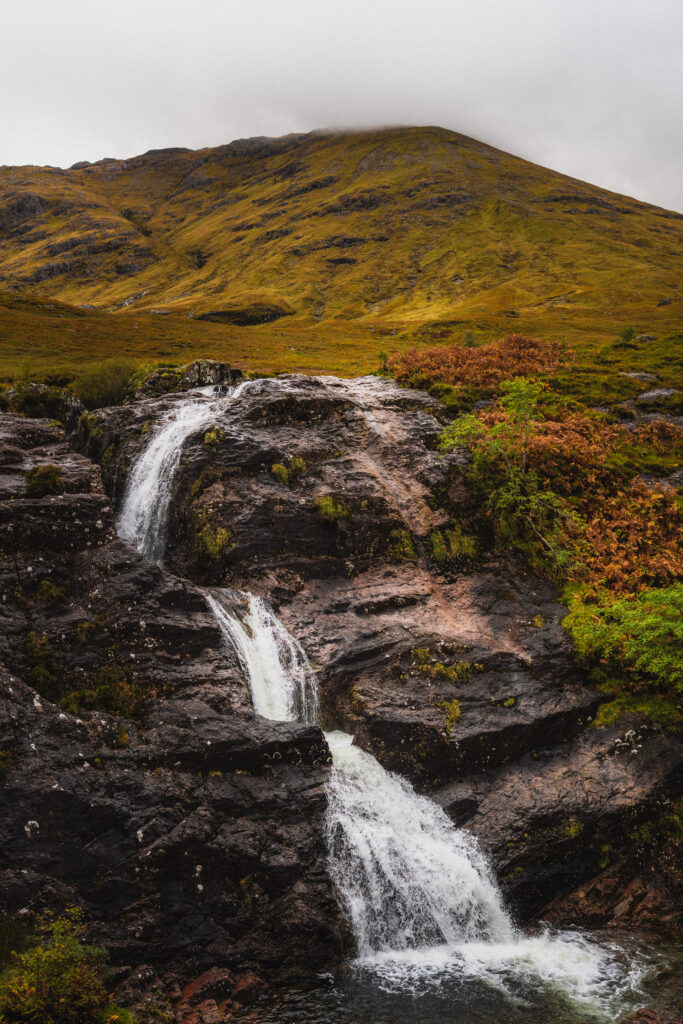
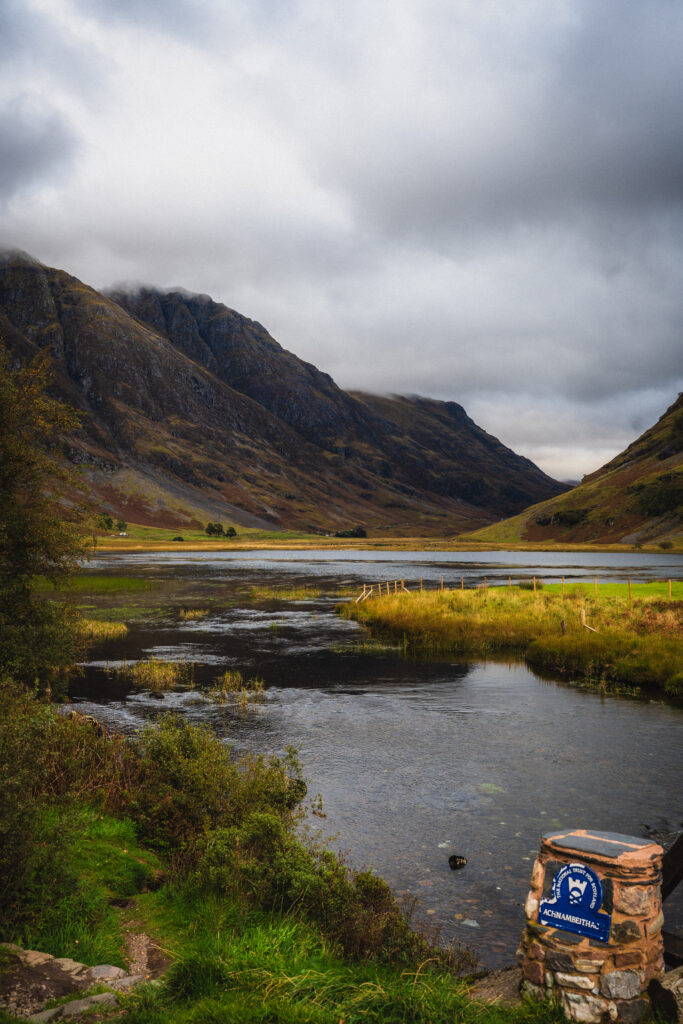
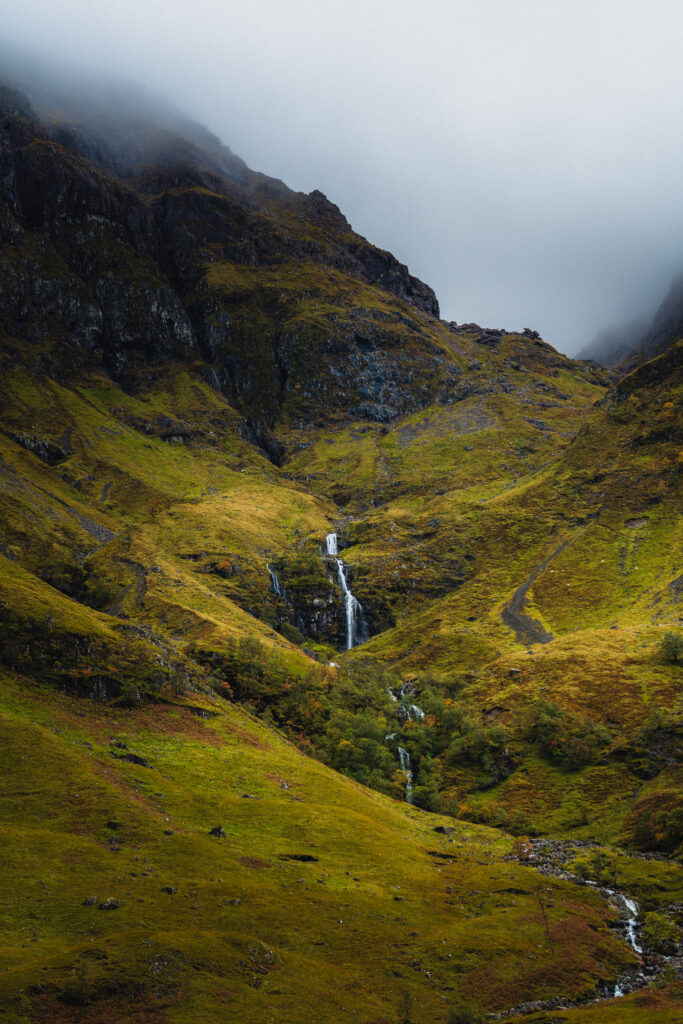
Located east of the village of Glencoe is a small, shallow freshwater loch. Surrounded by the dramatic scenery, it makes for the perfect place to stop for photographs. And, you may even spy out waterfalls trickling down, which are particularly prominent after heavy rainfall in the area.
Wee White House
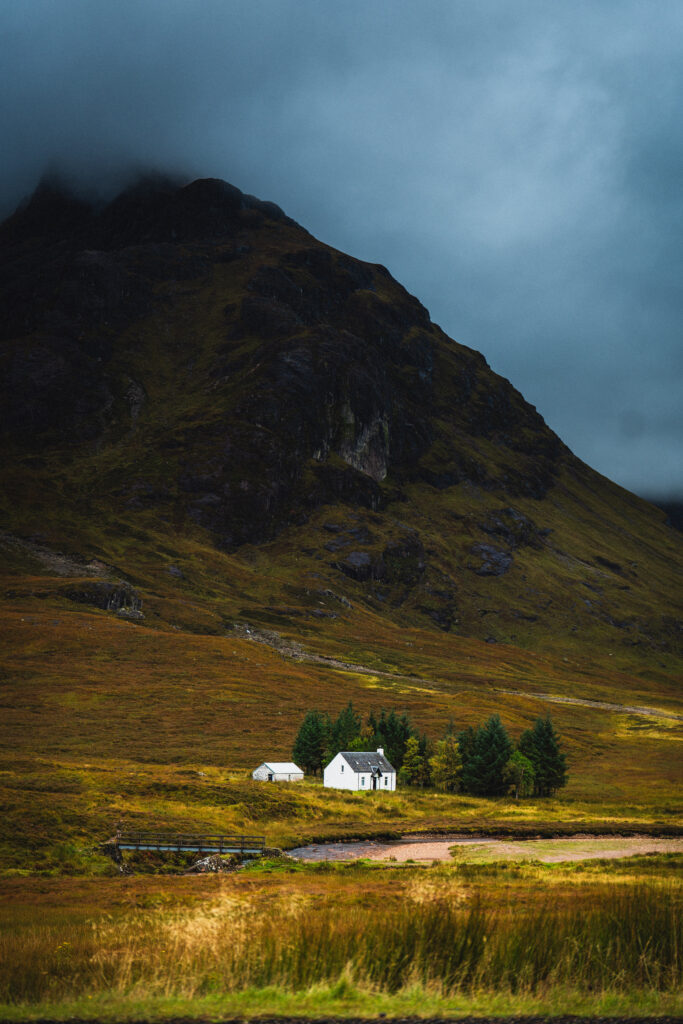
Lagangarbh Hut, or “the wee white hoose” as it’s better known, sits at the foot of Buachaille Etive Mor mountain. Directly visible from the A82 road, this small house offers the quintessential Scottish Highlands view, and as such, is one of the most photographed and popular attractions in the Glencoe area.
The wee house was originally a crofter’s home, but it is now owned by the National Trust and has been occupied and maintained by the Scottish Mountaineering Club since 1946. As you might imagine, they have been inundated with calls from avid tourists keen to rent out the cottage as a holiday home! However, the house is only really available to mountaineers and hikers tackling the nearby Munros.
You may also well recognise it from the James Bond movie Skyfall. While the ‘Skyfall Lodge’ estate itself is fictional, the scenery is all filmed in the Glen Etive valley.
Most people just park up on the roadside for a quick snap of the house!
Three Sisters of Glencoe
The Three Sisters of Glencoe are so-called because they’re a set of three sister mountains. The folklore surrounding these mountains goes that three sisters from rival clans fell in love with three brothers from a rival clan. Their forbidden love led them to seek refuge in Glencoe, but they were tragically ambushed and killed. The mountains are named: Gearr Aonach, Aonach Dubh, and Beinn Fhad.
If you come to the car park, then there are a number of walks which start from here. You also have a great view down onto the valley.
Photograph Buachaille Etive Mòr
Buachaille Etive Mòr is easily one of the most photographed mountains in Scotland. So much so, it has become somewhat synonymous with landscape photography in the country. The mountain is almost a perfect cartoon-shaped form and stands at an elevation of 1,021.4 m (3,351 ft).
For the best views, you can either snap a photo straight from the A82 road, or head to Glen Etive.
Skyfall Road
As mentioned, this is the spot where the iconic James Bond Skyfall movie was filmed. Glen Etive Road, which is now sometimes referred to as “Skyfall road”, is the exact filming location where James Bond and M stand beside the Aston Martin DB5, with the Buachaille Etive Mòr mountain in the background.
Hikes to do in Glencoe
There are numerous hiking trails and walks to do in the Glencoe area. Here are some of the most popular hiking routes and their difficulty/approx timings:
- The Three Sisters Walk – challenging (7-9 hours), or there is a shorter, more accessible walk via the Lost Valley (Coire Gabhail) , which is moderate (2-3 hours)
- Buachaille Etive Mor / Devil’s Staircase – challenging (5-6 hours)
- Pap of Glencoe – moderate to hard (3.5-5 hours)
- Loch Achtriochtan Circular – easy (around 2 hours)
- Signal Rock and Steall Falls (nearby Fort William) – moderate (1.5-3 hours)
Where to stay in Glencoe
There are several options when it comes to choosing accommodation in Glencoe. And, there are also a number of camping sites with plenty of amenities for those looking for an authentic Scottish Highlands trip! Here are some suggestions of where to stay (based on web reviews):
Clachaig Inn – For a unique pub experience and easy access to nearby hiking trails, this cosy rustic inn makes for the perfect option. The inn also has three different bars, each with individual character, and a restaurant that serves delicious, hearty Scottish food. Check prices and availability here.
Aos Sí Lodges – This tiny shelter is conveniently located near Glencoe and the Three Sisters viewpoint. Offering an unmatched cabin vibe, this accommodation is described by guests as clean, tidy, modern, and well-stocked for those self-catering. Check prices and availability here.
Caolasnacon Caravan & Camping Park – Around a 10-minute drive from Glencoe, this campsite & caravan site is tucked away between breathtaking scenery. Offering amenities such as showers, electric hook-ups, toilets, laundry, and dishwashing. It makes for a great base from which to explore the wider area. See their official website for more information.
Enjoyed reading our travel guide to Glencoe? Pin this article now, and read it again later: