

Santa Claus: The Real St Nicholas Behind the Legend
Last Updated on 26th June 2024 by Sophie Nadeau
This post may contain affiliate links. Please check out my privacy policy and disclosure for more information.
It turns out that there is a real man, Saint Nicholas, who is alleged to have inspired the legend/ folklore of Santa Claus (or Father Christmas- depending on where you’re from). Here are some of the myths and legends surrounding Santa Claus and how the Christmas tradition came to be, as well as Santa’s Grave.

Who was Saint Nicholas?
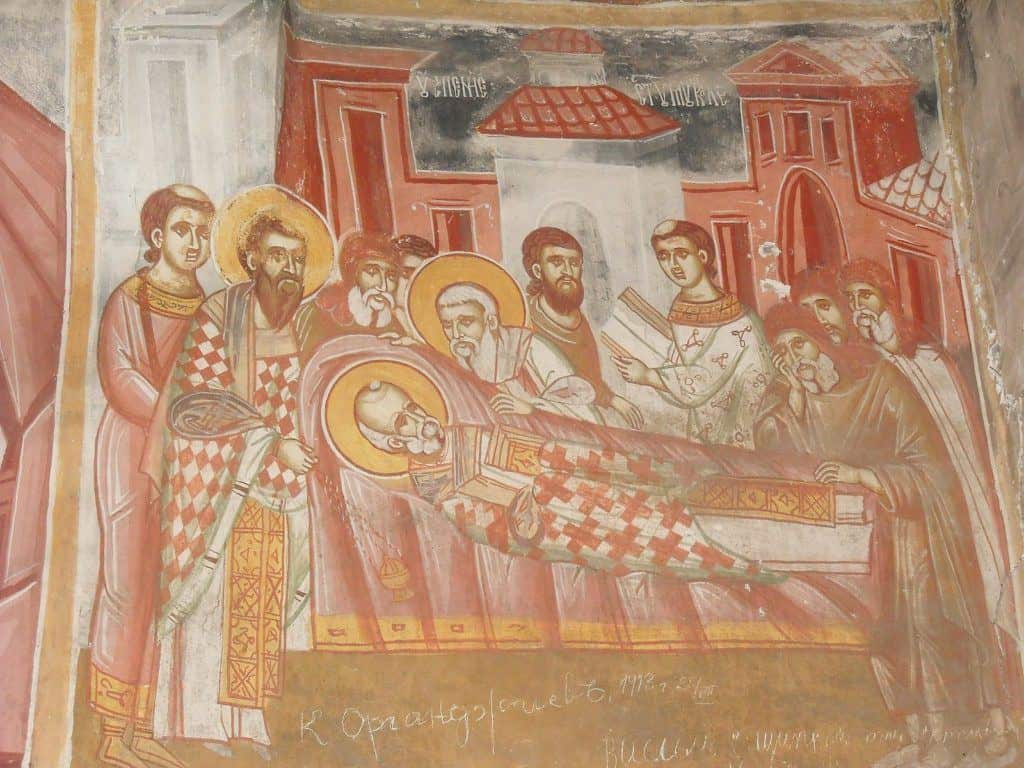
Saint Nicholas, who has come to be known as Father Christmas today, was actually a bishop from what is now known as modern day Turkey. Born on the 15th March 270AD, St Nicholas was a practicing Greek Bishop throughout the 4th Century.
He is said to have performed many miracles during his lifetime and aided people wherever he could. After pilgrimages to Egypt and the Palestine area in his youth, he was made Bishop of Lyra upon his return to his birth country.
He was such an influential figure in early Christianity that he was invited to attend the council of Nicea. The council of Nicea was when a group of senior clergymen congregated in Nicea in 325 to decide definitively which passages and what content would be placed into the bible. Their decisions stuck and form the basis of what is seen in the Christian holy book today.
Upon his death, he was made the patron saint of children, merchants, archers and sailors. He’s also the patron Saint of the following cities; Amsterdam, Liverpool, Barranquilla and Bari.
How did Saint Nicholas become Father Christmas/ Santa Claus?
Throughout his lifetime, Saint Nicholas became famous for delivering secret gifts to those in need. One particularly touching story sees the Saint delivering bags of gold down a chimney: A very poor man had three daughters.
In those days, in order to marry your daughter to someone, you had to pay a dowry (or a sum of money that would ensure for their care). The poor man couldn’t afford the dowry for one daughter, let alone three.
When Saint Nicholas heard of this, he snuck over to their house in the dead of night and dropped a bag of gold down the chimney. The girls had hung out their stockings over the fireplace to dry overnight. Somehow, the bag of gold ended up lodged in the stockings.
When the girls woke up the next morning, they couldn’t believe their good luck. It’s thought that this is the reason why we hang stockings at Christmas and why we’re given gold coins around the festive period.
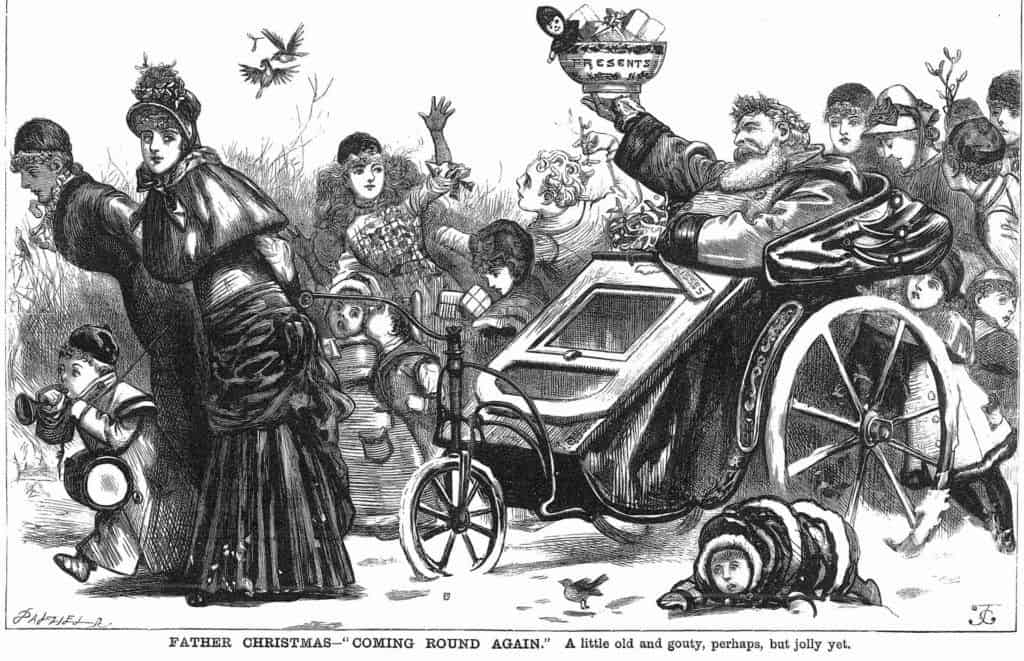
Surprisingly, though, Saint Nicholas didn’t actually become associated with Christmas until the 16th Century. The holiday season had long been associated with gift giving and happy exchanges. In the UK, the ‘secret’ gift giver became known as ‘Father Christmas’ and ‘Père Noël‘ in France. During the Victorian era, Saint Nicholas was finally linked to Santa Claus for once and all.
Santa’s Grave (Final Resting Place of Saint Nicholas)
Although it’s thought that Gemiler Island, just off the coast of Turkey, may well be the final resting place of Saint Nicholas, his body is actually located in several countries around the world.
In 1993, a small and dedicated team of archaeologists discovered a Byzantine Grave on the small and deserted island of Gemile in Turkey. For hundreds of years, the island was the site of Christian pilgrimages.
Academics now believe that the simple grave of Saint Nicholas (or Santa’s Grave) was probably the reason. Today, the island is popular with holiday makers, boat enthusiasts, and history buffs.
However, as is customary with saints, small relics from the body (bones, teeth, hair etc) were taken and distributed in churches throughout the world. As such, relics of Saint Nicholas can now be found in various countries around the world.
Places where you can find his relics, include; Austria, Belarus, Italy, Belgium, Canada, Denmark, France, Greece, Germany, Netherlands, Romania and many, many more countries.





Merry Christmas! I’ve enjoyed your posts this year!:)