Nîmes: The Most Roman City Outside of Italy
Last Updated on 15th May 2026 by Charlotte Nadeau
This post may contain affiliate links. Please check out my privacy policy and disclosure for more information.
The Romans were among history’s greatest builders, achieving engineering feats once thought impossible, and few places showcase that legacy better than Nîmes. In the heart of the city, centuries-old monuments and Roman landmarks still endure, offering a remarkable glimpse into the grandeur of the ancient world. Often referred to as the ‘Rome of France’, Nîmes is typically at the top of every list for history lovers!
Nîmes: The Most Roman Town Outside of Italy
Nîmes has a rich history spanning over 2,000 years, and it is famously dubbed the most Roman city outside of Italy. The city was first inhabited in the Bronze Age, with evidence of semi-nomadic settlers dating back to the Neolithic period (4000–3500 BCE). It’s then believed that the Romans first established control over the area in around 121 BC, when the local tribe submitted to Rome.
The city was named after Nemasus, a local Celtic god who was worshipped at a sacred spring in the settlement. Over time, the name evolved to be just Nîmes. Today, you can still visit the basin where the spring water flows in the Jardins de la Fontaine.
Just like Rome, Nîmes was not built in a single day. However, under Emperor Augustus, Nîmes transformed rapidly, evolving into a prosperous and thoroughly Romanised city. Temples, an amphitheatre, and all the grand architecture expected of a thriving Roman city were constructed with impressive speed. Nîmes aqueduct (Pont du Gard) further reinforced the city’s regional importance. The result? “French Rome”.
By the late 5th century, Roman rule in Nîmes had gradually declined as the Western Roman Empire weakened, and the Roman authority had effectively collapsed in the region.
Nevertheless, regardless of the rulers that have governed the city since, Nîmes’ identity remains firmly rooted in its Roman foundations, standing today as a place of remarkable heritage.
Today, Nîmes is a vibrant southern French city of around 150,000 residents, where centuries worth of history coexist alongside a vibrant Mediterranean lifestyle. It is home to a UNESCO World Heritage Site, the Maison Carrée, while all of its other ancient monuments are protected as national historic landmarks.
Love Ancient Roman ruins? Then Nîmes should be at the top of your bucket list. Together with the equally beautiful town of Vienne, this is one of the best places to see Roman architecture in l’Hexagone.
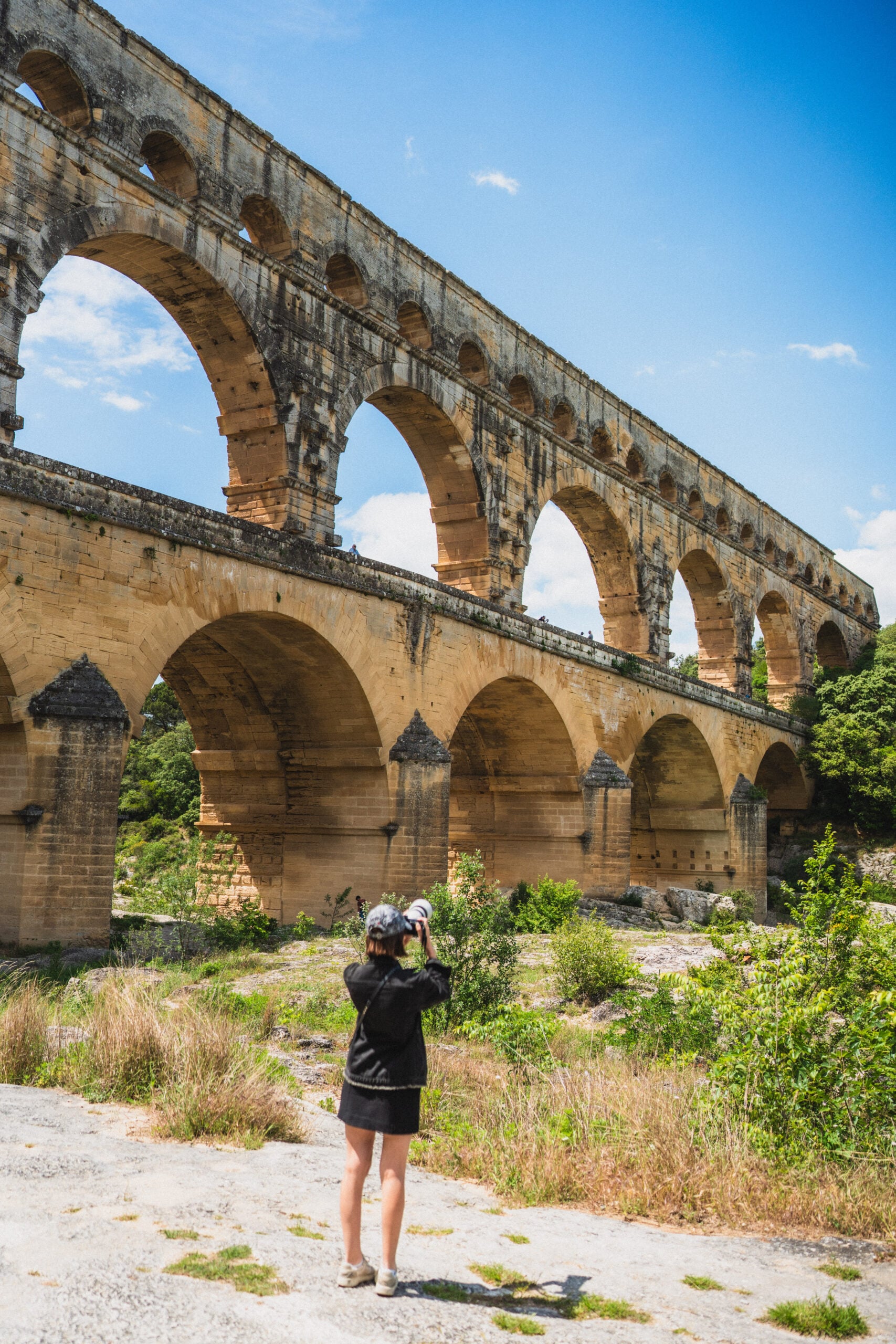
Did you know? Nîmes has such a well-preserved Roman heritage that it is often referred to as the ‘Rome of France’
How long do you need in Nîmes?
If I’m honest, the main things to do in Nîmes are situated pretty centrally, and so you don’t really need extra time to explore the outskirts (which don’t particularly contain anything of note). As a result, one day is more than sufficient for exploring the city, unless you also plan to use Nîmes as a base to discover nearby places such as Pont du Gard or the Camargue.
The Crocodile and the Palm Tree
While strolling through Nîmes, its logo will quickly become apparent: a crocodile chained to a palm tree. This official emblem of Nîmes can be traced back to when a coin was minted to celebrate Augustus’s victory defeating Mark Antony and Cleopatra in Egypt in 31 BC. So, if you’re seeing crocodiles literally everywhere and wondering whether they’re native to the area, have no fear, they aren’t!
The tourist attraction pass (Pass 3 Attractions)
Available at one of the three monuments it covers, or at the tourist office, the attraction pass (not to be confused with the Nîmes City Pass) covers the Amphitheatre of Nîmes, La Magne Tour, and the Maison Carré.
It can be purchased at the tourist office (where you can also pick up a free map of the town) or alternatively at one of the three Roman monuments which it covers. I definitely think it’s worth the price as the amphitheatre alone costs €11 for an adult, and the entire pass is only €14.
Best things to do in Nîmes
Nîmes Cathedral
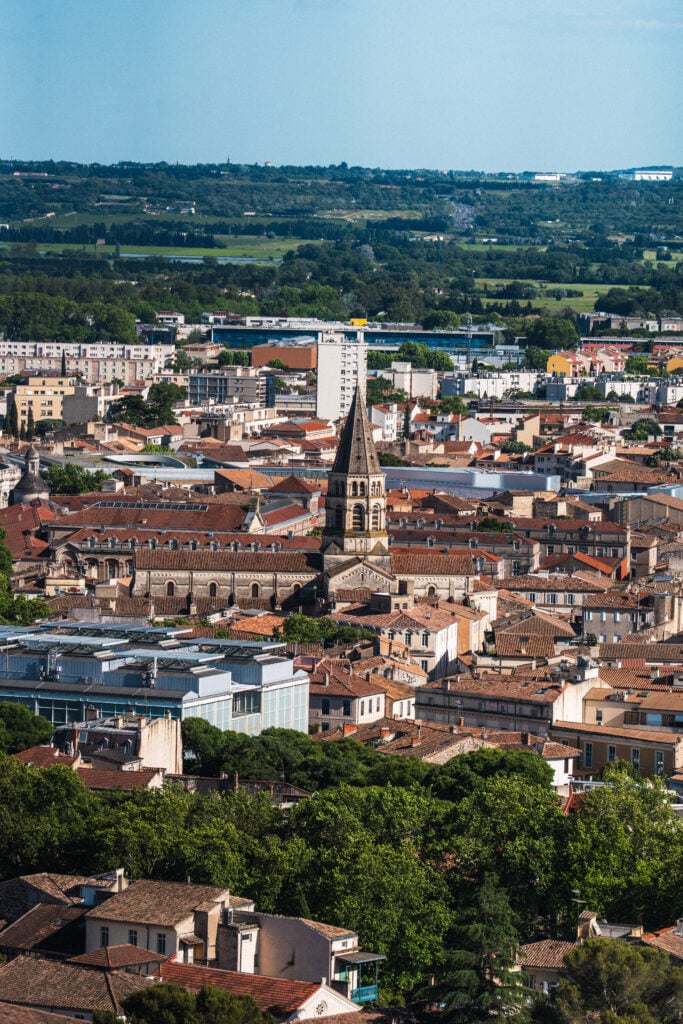
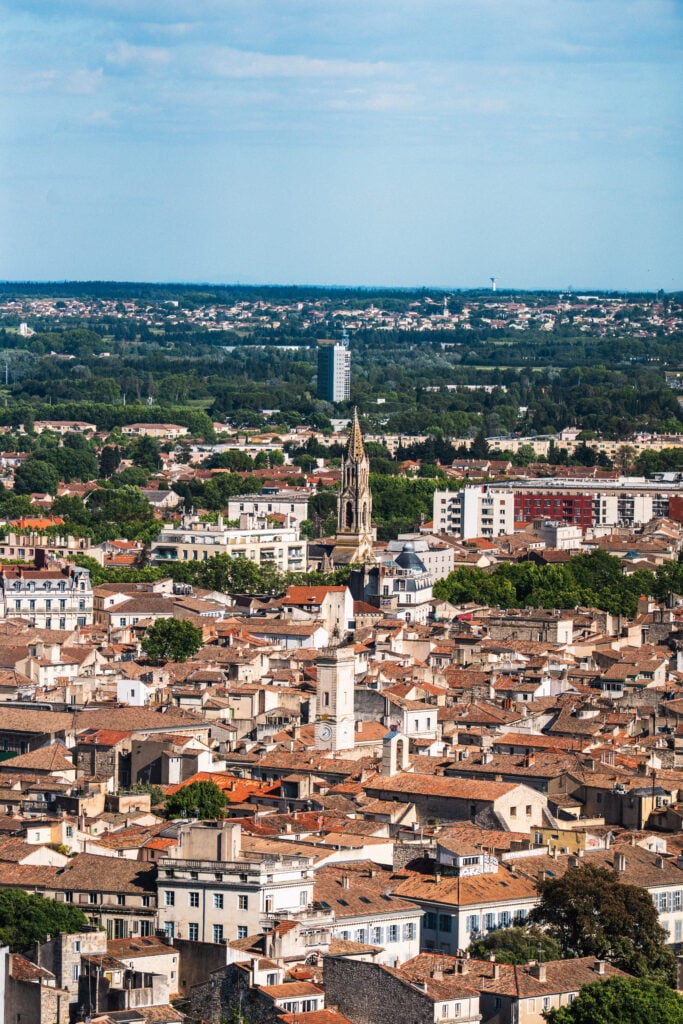
Of course, like many French towns, spires from ecclesiastical buildings poke out of the city’s historic skyline. Nîmes is home to numerous sacred sights, but the most famous of them has to be its cathedral, Cathédrale Notre-Dame-et-Saint-Castor de Nîmes.
This Roman Catholic cathedral is dedicated to the Blessed Virgin Mary and serves as the seat of the Bishops of Nîmes. While the church itself was originally consecrated in 1096, it has been heavily modified, destroyed and rebuilt over the centuries. What can be sees today is 11th and 12th century Romanesque elements, with a touch of Gothic. Nîmes cathedral was listed as a historical monument in 1906.
Amphitheatre
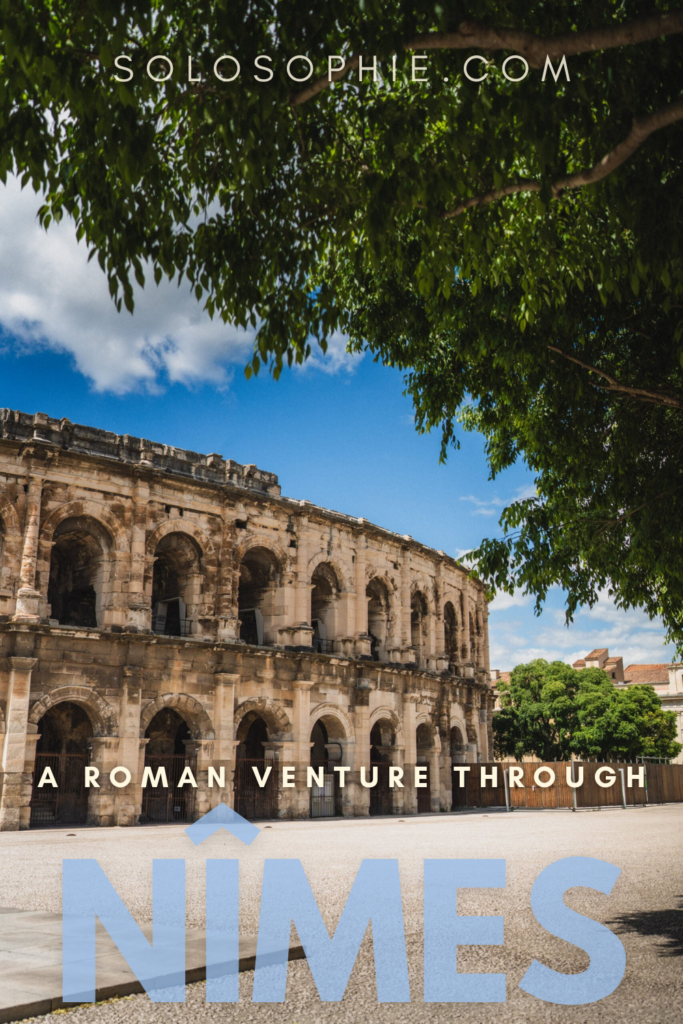
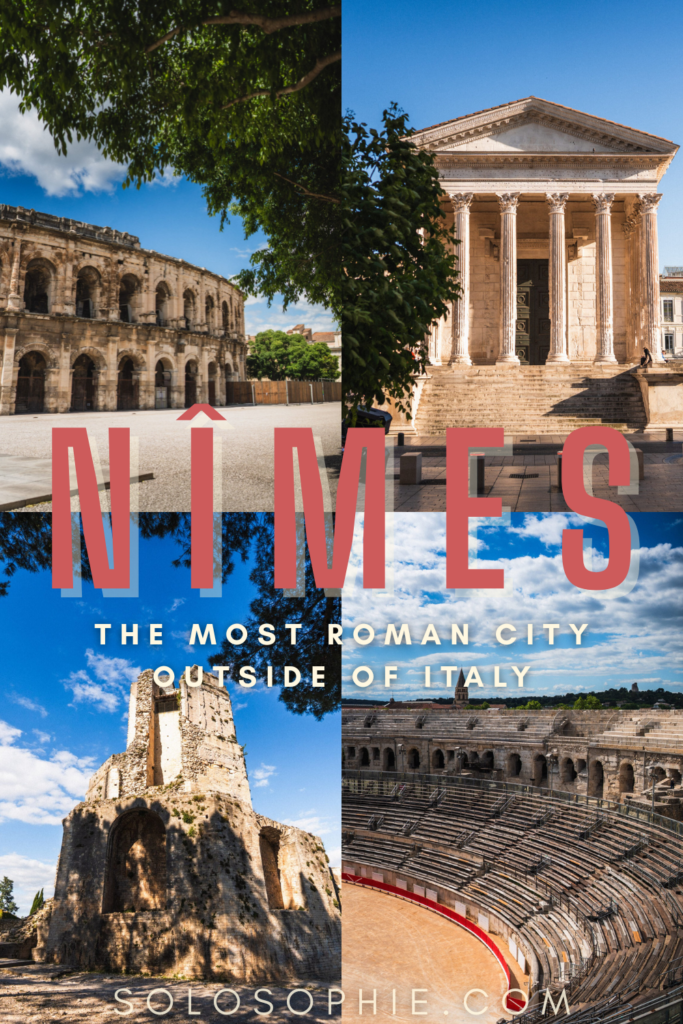
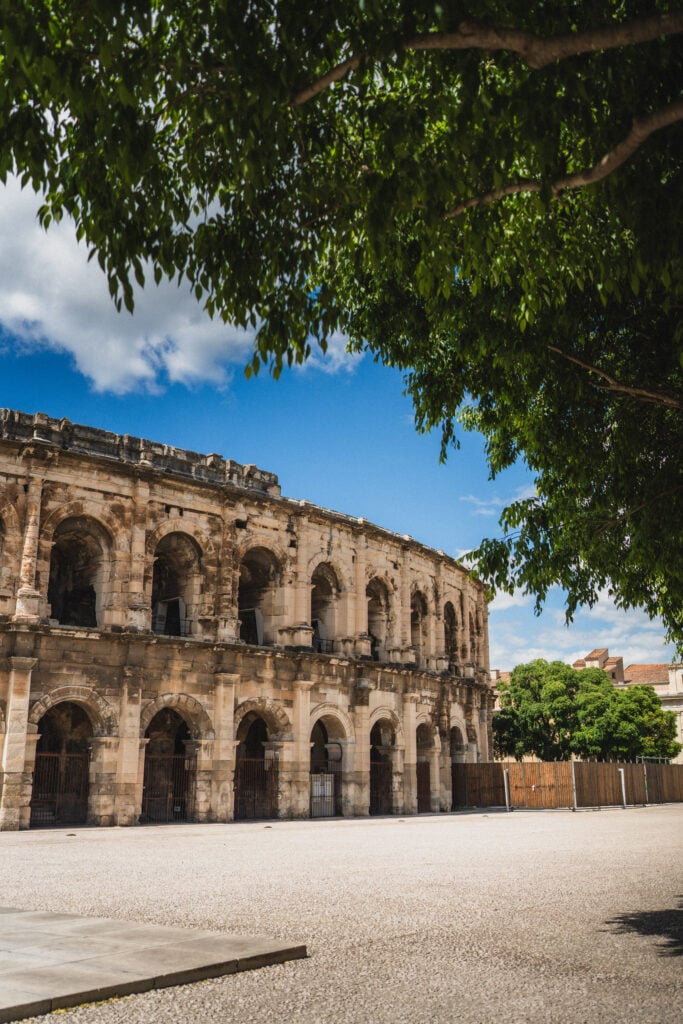
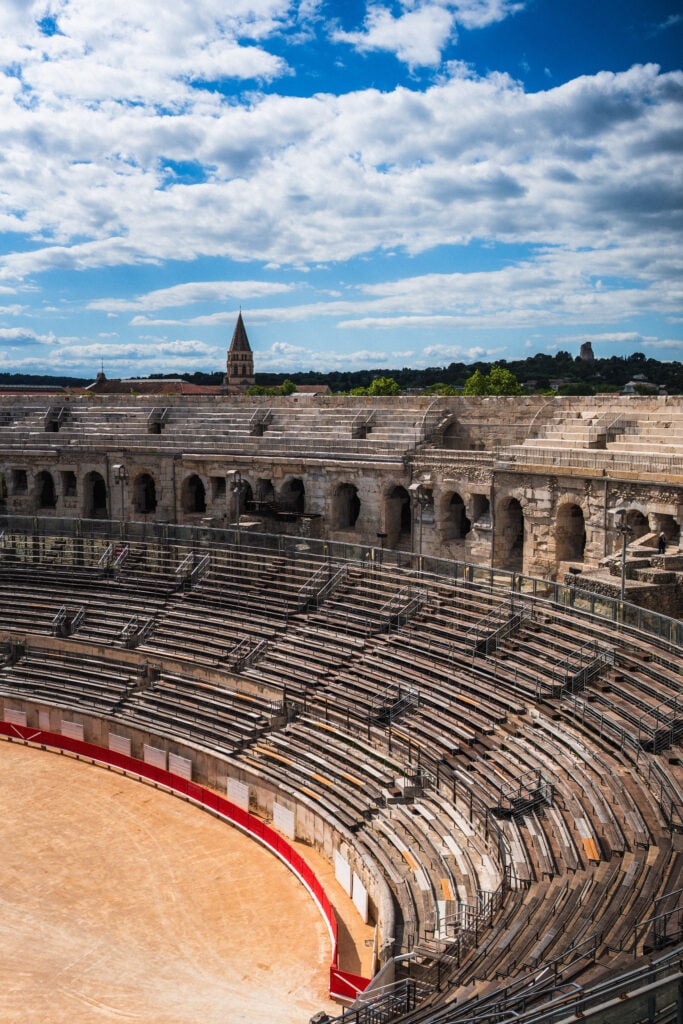
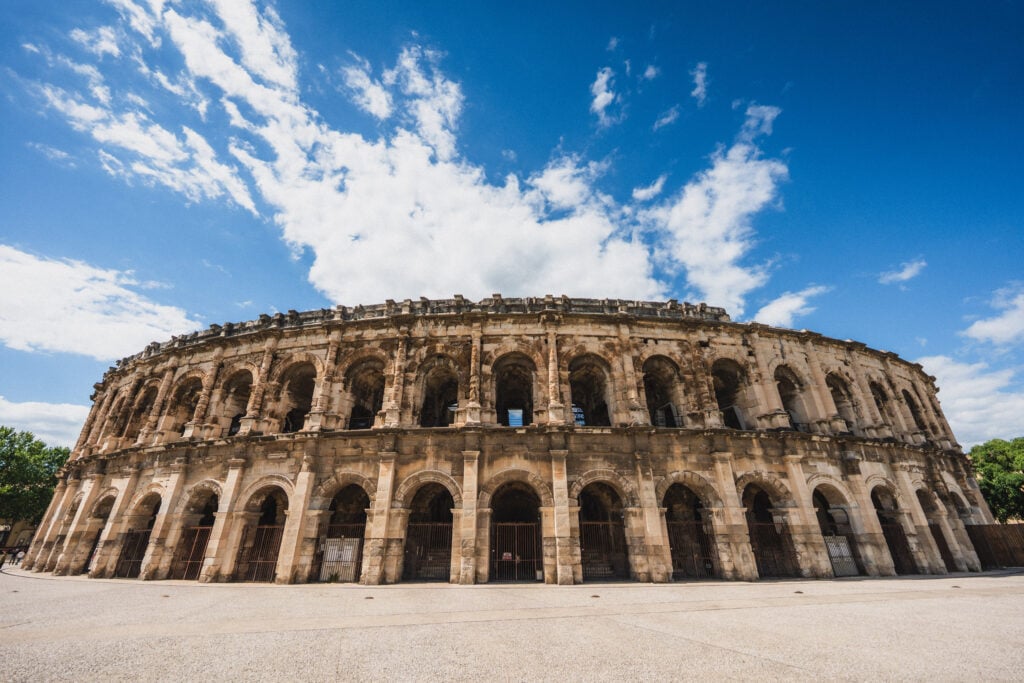
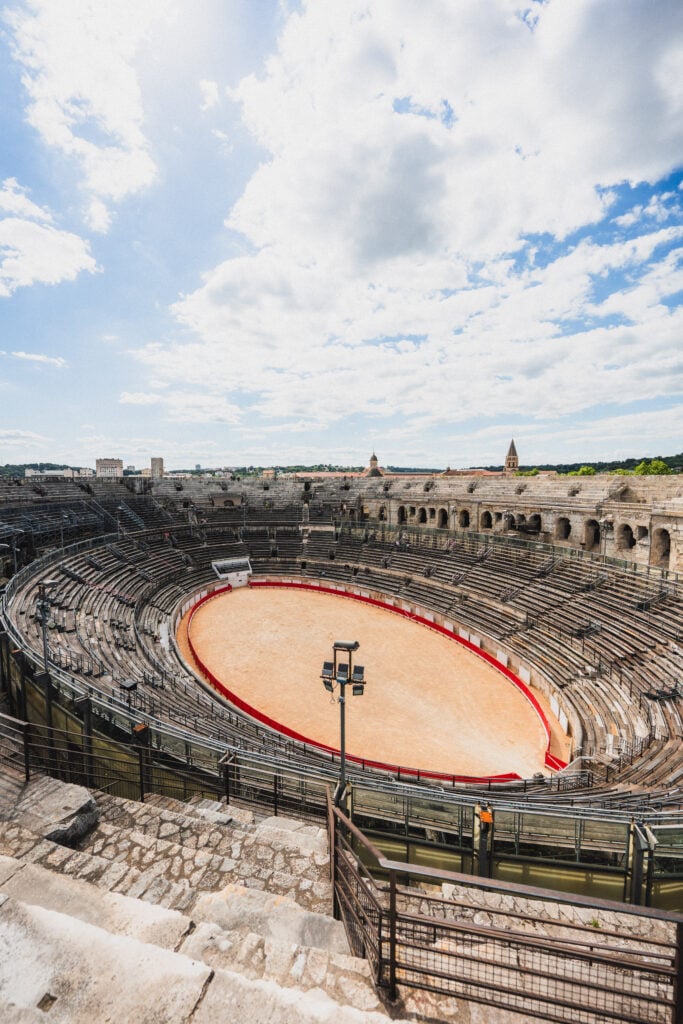
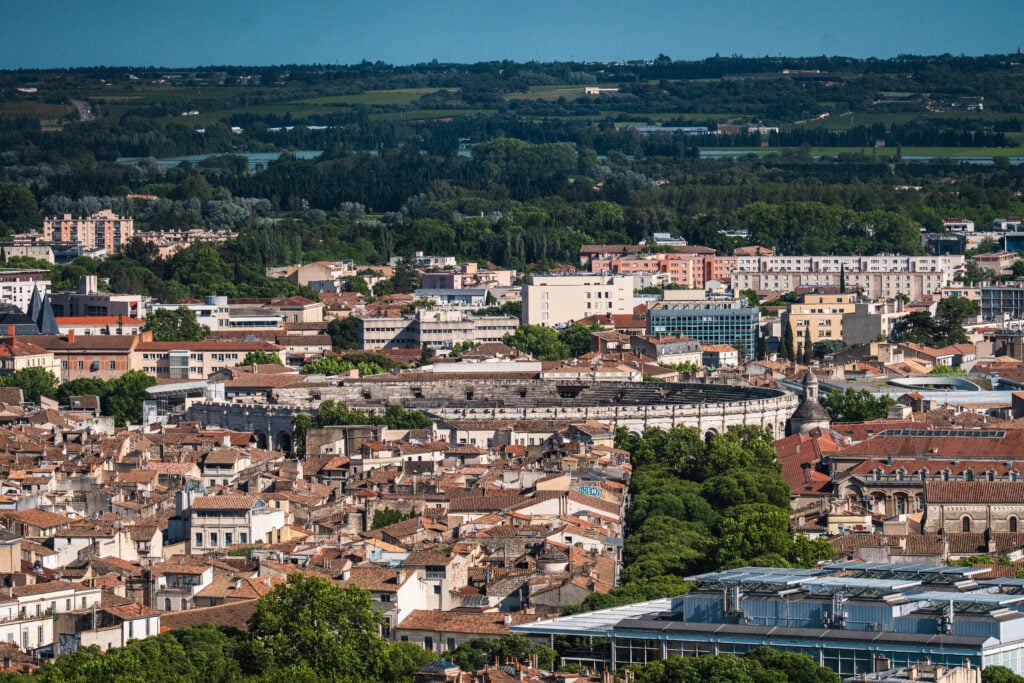
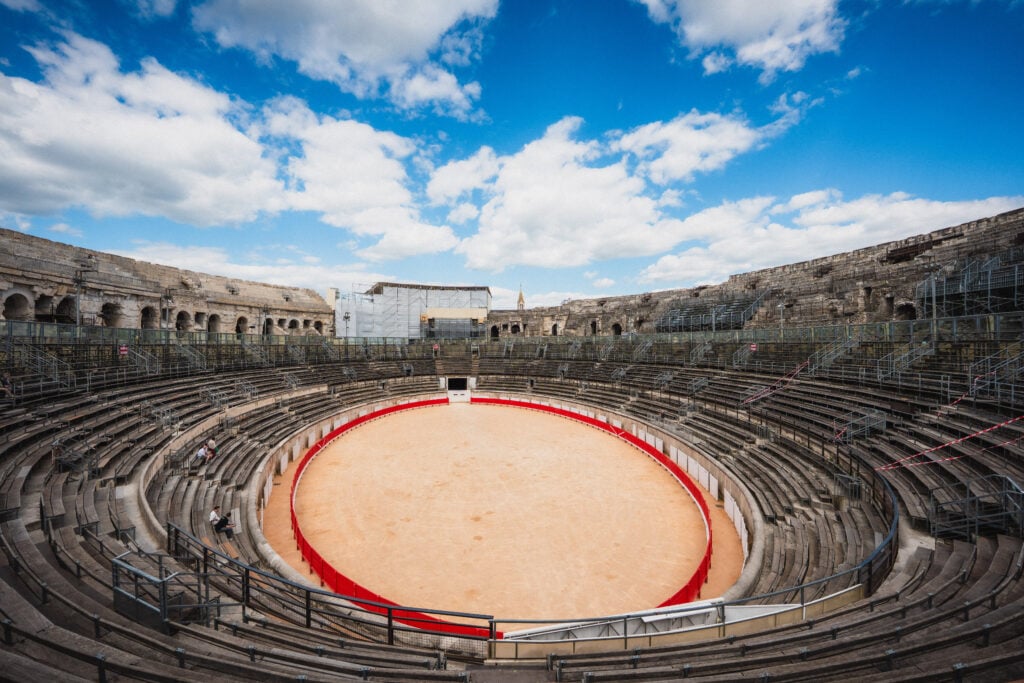
By far the most impressive monument in Nîmes and the top attraction in the city is its amphitheatre, which was constructed shortly after the Colosseum in the 1st Century CE and could once seat up to 24,000 spectators.
At 133 metres long and 101 metres wide, the arena ranks among the largest and best-preserved Roman amphitheatres in the world. And honestly, photographs and words do not do it justice. Walking through the arena today, you get a sense of just how huge the spectacles that once took place here were, where gladiators fought each other and wild animals.
Interestingly, sometime in the Middle Ages, the amphitheatre was repurposed as a fortified refuge. Encircled inside the Roman walls, people literally built homes, workshops, and streets (apparently even a church!) inside it, essentially creating a mini village, which was known as the castrum arenae.
However, in the post-Revolutionary and Napoleonic era, interest in France’s historic monuments grew, and by the 19th century, the arena had once again become a public venue.
The amphitheatre is still in use for concerts, sport events and the like today (and unfortunately also bull fighting). The rest of the time it functions as an open-air museum where you can head inside, pick up an audio guide (included in the price of the ticket), and learn all about the history of the arena.
La Maison Carré
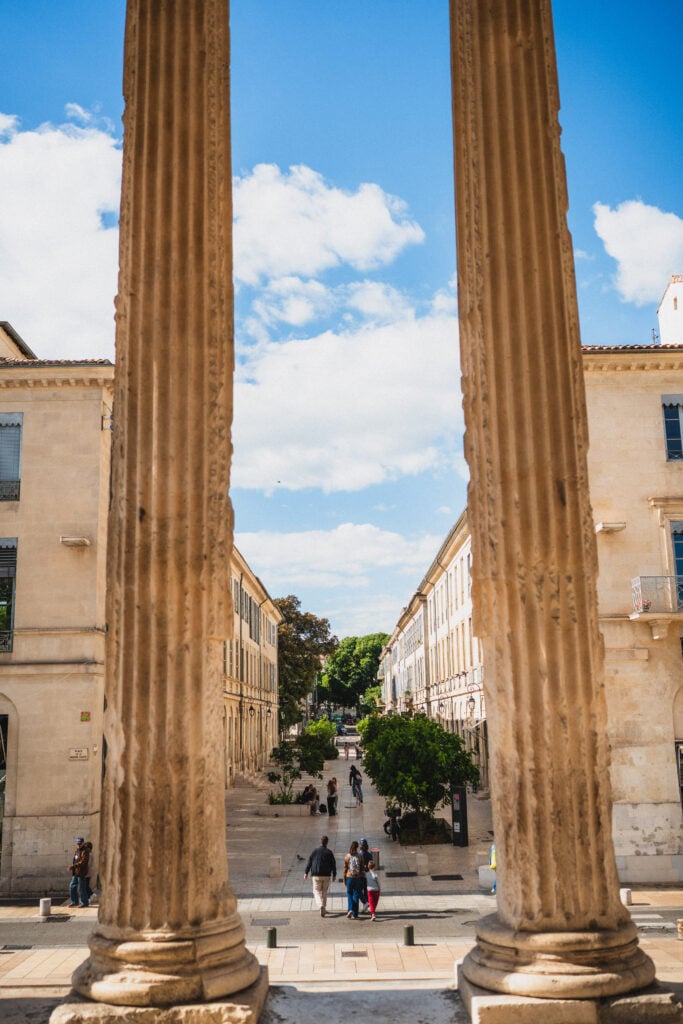
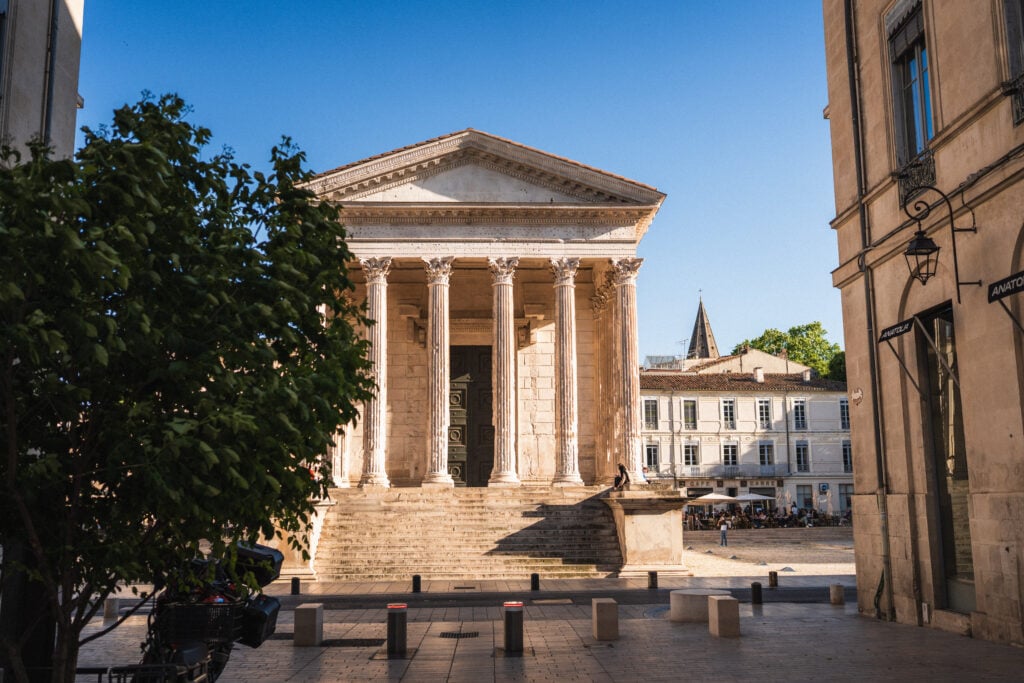
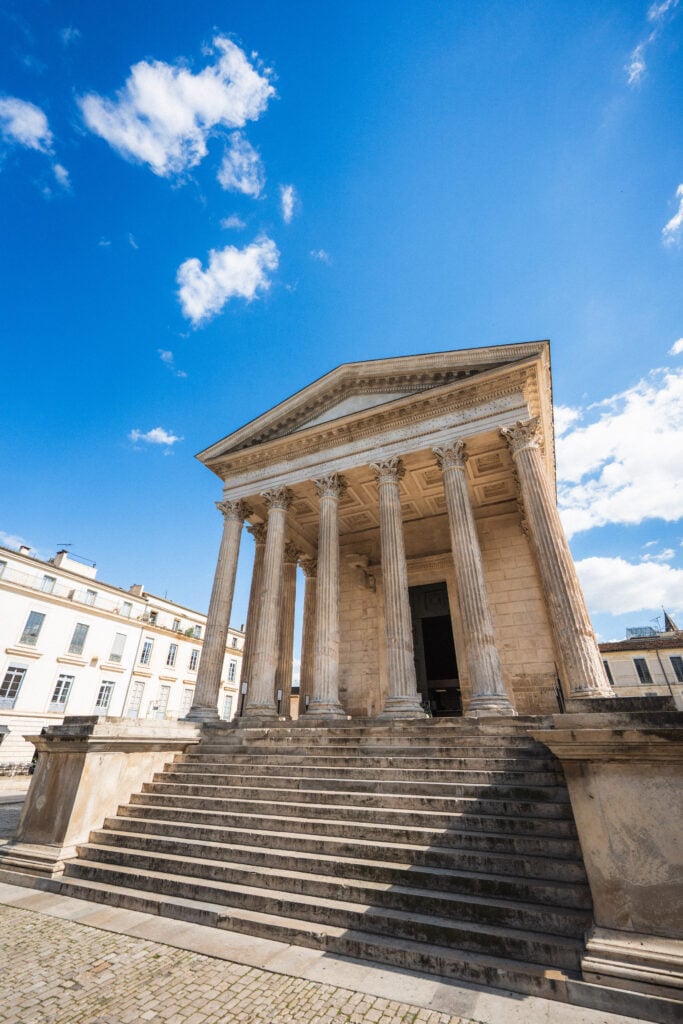
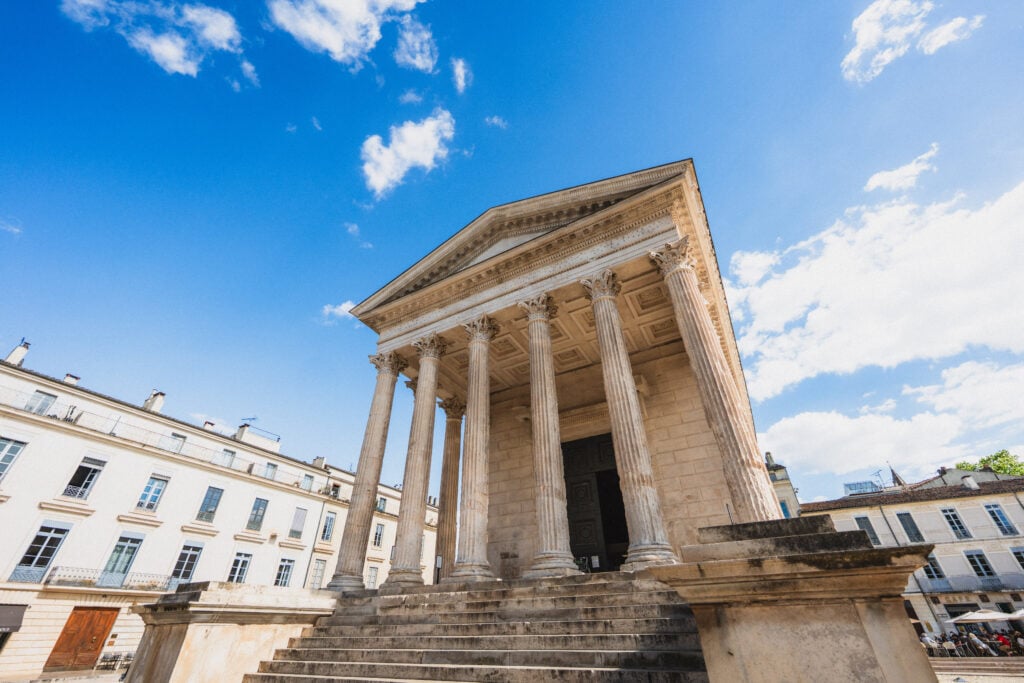
Dedicated to Caius and Lucius Caesar, who were the great-grandchildren of Emperor Augustus, the temple in the heart of Nîmes was constructed in the 1st Century CE and is widely regarded to be one of the best-preserved Roman museums in the world.
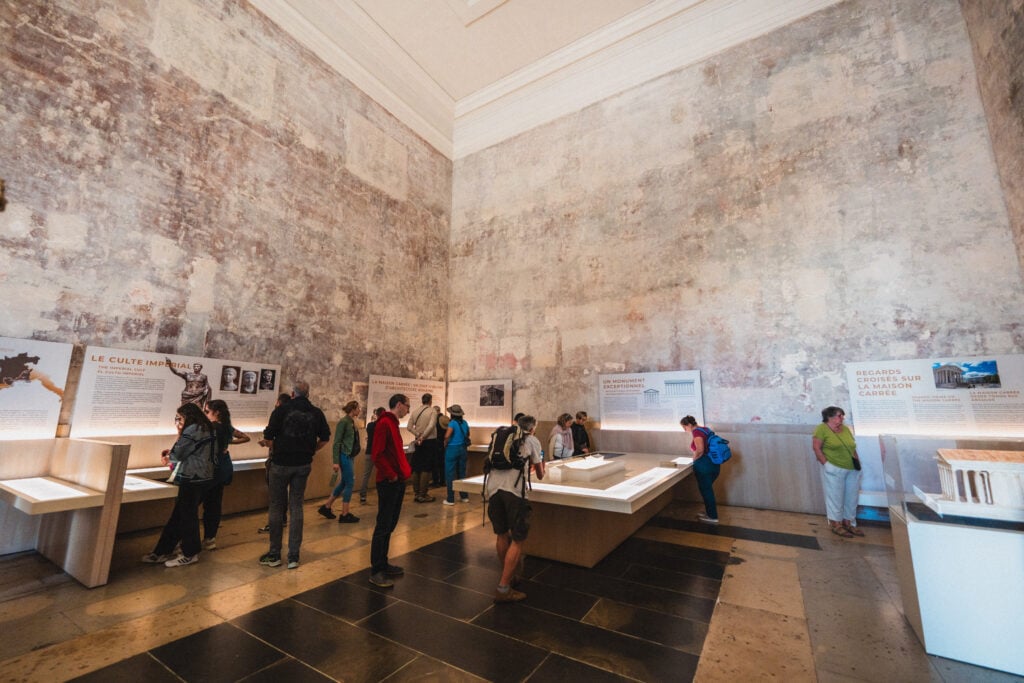
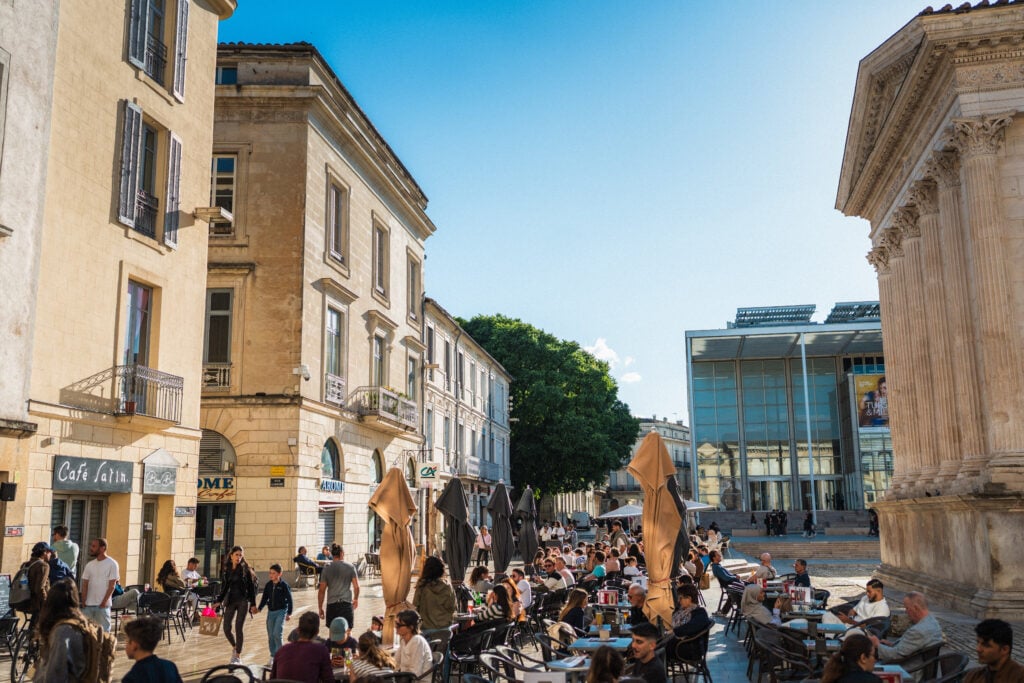
Inscribed as a UNESCO and marvelled for its perfect proportions and beautiful Corinthian columns, the temple is surrounded by a picturesque square filled with bars and restaurants. Enter inside, and you’ll find a small exhibition showcasing the history of the renovation of the temple.
While the exterior is stunning and the exhibition inside is interesting, I would only really recommend entering if you have the attraction pass. There isn’t a huge amount to see inside, so I wouldn’t personally pay for it as a standalone visit.
Porte d’Auguste
Though undoubtedly not the most exciting Roman ruin in the city, it’s still worth paying a visit to one of the two remaining gateways into what once was a walled city. Named after Augustus Cesar, of course, this crumbling ancient entrance was originally part of the Domitian Way, the old Roman road that led to Rome. Porte d’Aguste can be found at the intersection of Boulevard Gambetta and Boulevard Amiral Courbet. And, as it’s simply a gateway on the road, it’s completely free to visit!
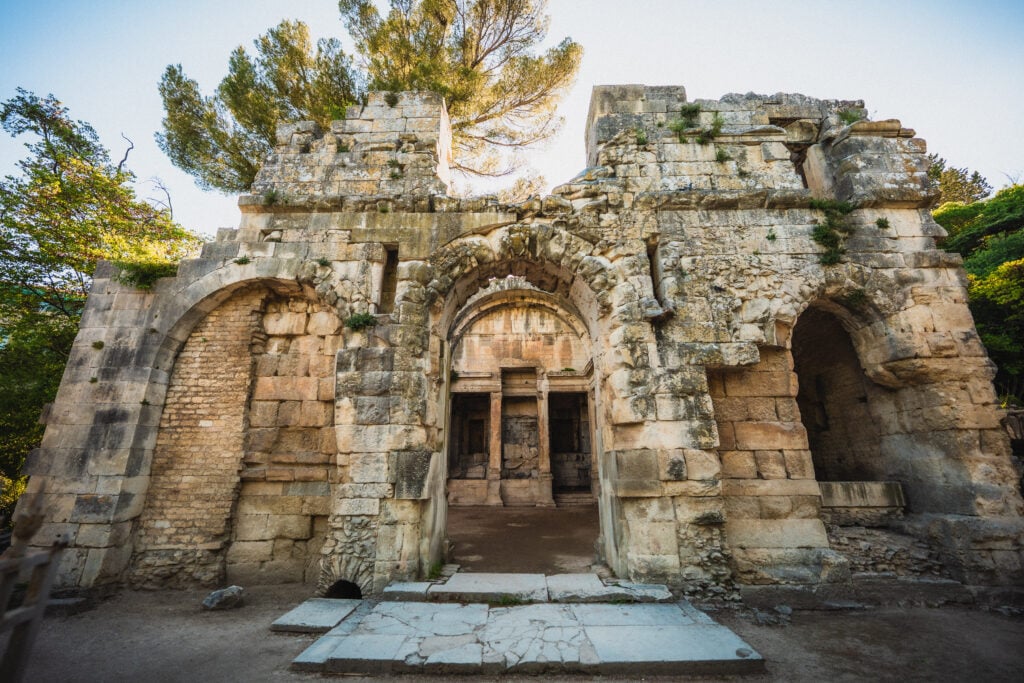
Temple of Diana
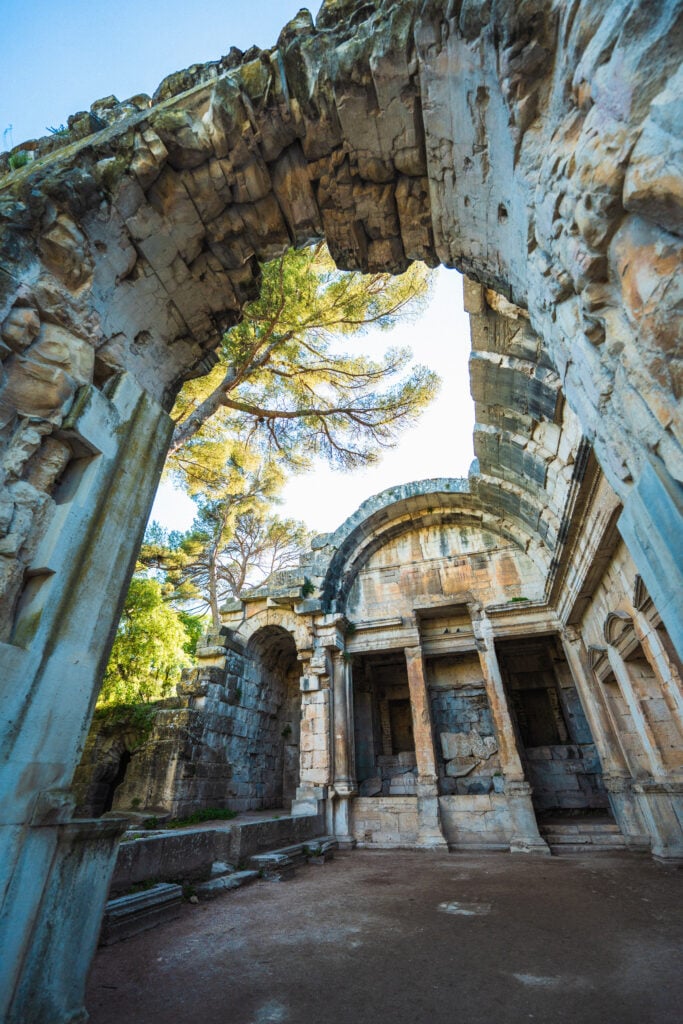
Yet another Roman ruin you can visit for free is the Temple of Diana, which is located within the Jardins de la Fontaine. This Roman ruin, built in the 1st-century, actually remains somewhat of a mystery…Despite its name, this ancient site may not have actually ever been a temple at all.
For a little bit of context: Diana was a goddess in Roman religion with a widely worshipped cult, and this ‘temple’ sits within a wider Augustan sanctuary complex. The historic site, in fact, has a basilica-like floor plan, but it’s also been speculated that it could have been a library. Whatever the case, there’s no actual evidence that this was or ever has been a temple dedicated to Diana.
Visit a museum
If the weather isn’t really co-operating, or you would simply like to discover some more in-depth culture, then there are a plethora of museums you can check out in Nîmes:
- Musée du Vieux Nîmes – Uncover everyday objects related to the history of Nîmes and the surrounding region. Anything from art, textiles, and iconography, to the more unusual and unique objects.
- Musée des Cultures Taurines – This museum is dedicated to the art, history, and traditions of Spanish-style bullfighting and Camargue horse-and-bull culture.
- Musée des Beaux-Arts – The museum of fine art houses works from the Renaissance through to the 20th century.
- Museum d’Histoire Naturelle –This museum preserves thousands of local prehistory materials and zoology specimens, giving insight into Nîme’s natural landscape. The museum was built around the cloister and chapel of the Jesuit.
- Planetarium – A different type of arena of sorts, here you can see the universe projected onto the roof of a celestial dome, which details movements of the sun, planets, and constellations
- Musée de la Romanité – This modern archaeological museum showcases centuries of rich local history.
- Musée d’Art Contemporain – An impressive 9-storey museum which houses both a vast contemporary art collection and a multimedia library. If you know the Centre Pompidou in Paris, it functions in a very similar way!
As with a lot of European cities, Nîmes offers free admission on the first Sunday of the month at many of its museums. So, be sure to keep this in mind if visiting around this date!

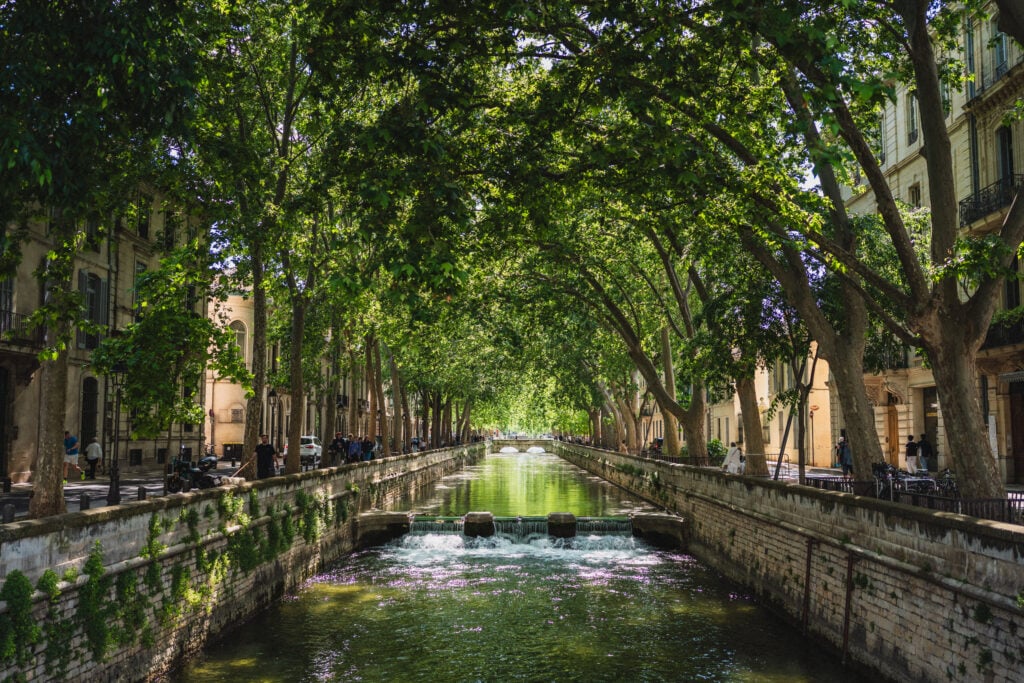
Quai de la Fontaine
Stretching between the old town and the most beautiful park the city has to offer, Quai de la Fontaine. Directly translated as “Fountain Quay”, this park is home to a waterway that is actually a portion of the extensive aqueduct system built by the Romans. Indeed, this very canal passes over the Pont du Gard.
This tree-lined promenade makes for a peaceful stroll alongside the gently babbling water and moss-blanketed walls, and if you follow along, it will eventually lead you to the Les Jardins de la Fontaine.
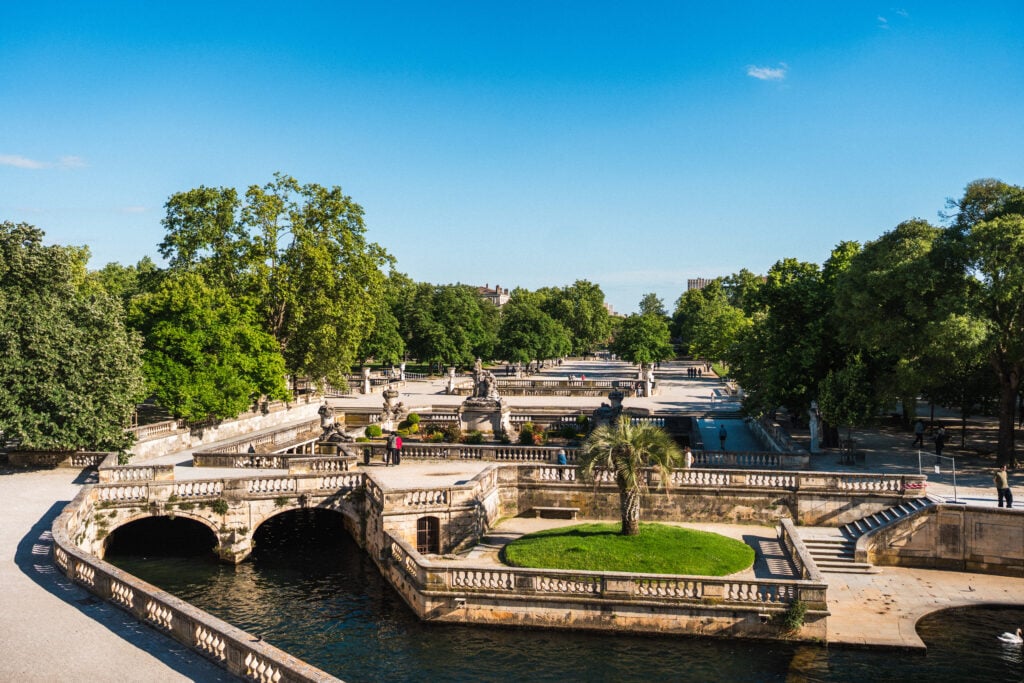
Les Jardins de la Fontaine
The Gardens of the Fountain, like the quay, are named after the ancient spring at the heart of Nîmes’ origins. Among the oldest public gardens in all of Europe, Les Jardins de la Fontaine were designed and constructed by Jacques Philippe Mareschal, engineer for King Louis XV. Covering almost 15 hectares of enchanting greenery, tranquil walkways and the interweaving flow of water, they make for the perfect pocket of escape into nature.
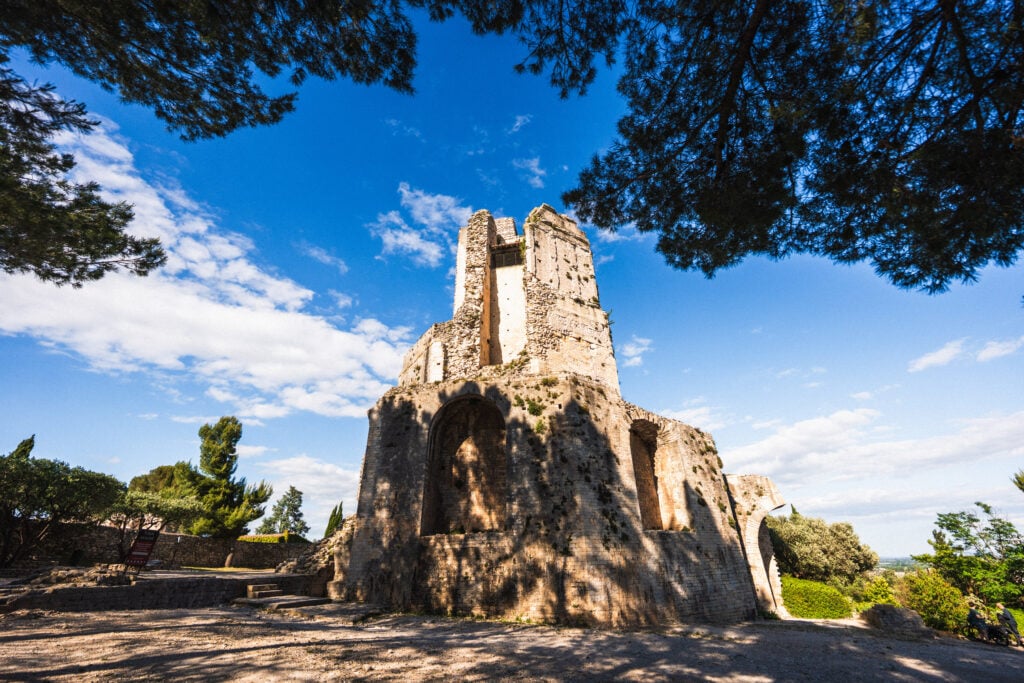
La Tour Magne
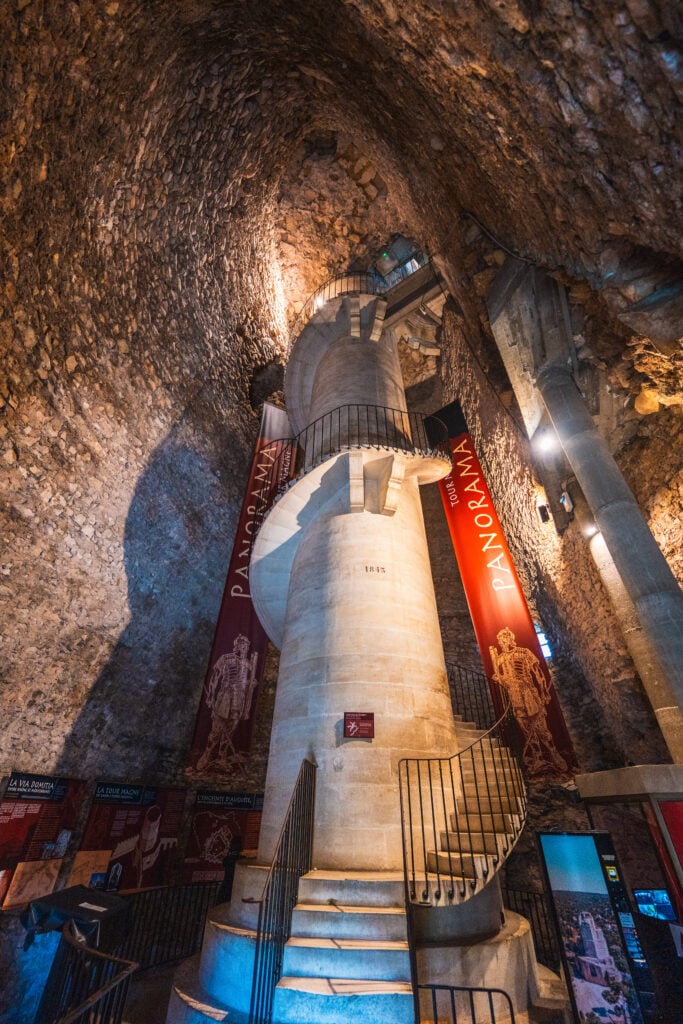
Nestled within the beautiful Jardins de la Fontaine park, this tower undoubtedly offers the best view of the city. Situated at the highest point of the city, atop Mont Cavalier, this ancient Roman tower was originally built to overlook the surrounding landscape and trade routes.
However, the Romans weren’t the first to use this vantage point. In fact, they built La Tour Magne onto the foundations of an ancient Gallic tower. Today, the tower stands 32 metres high (believed to have been around 36 metres before the top storey disappeared), and you can still climb 140 steps to the top, boasting spectacular views overlooking Nîmes and beyond.
Wander around the old town
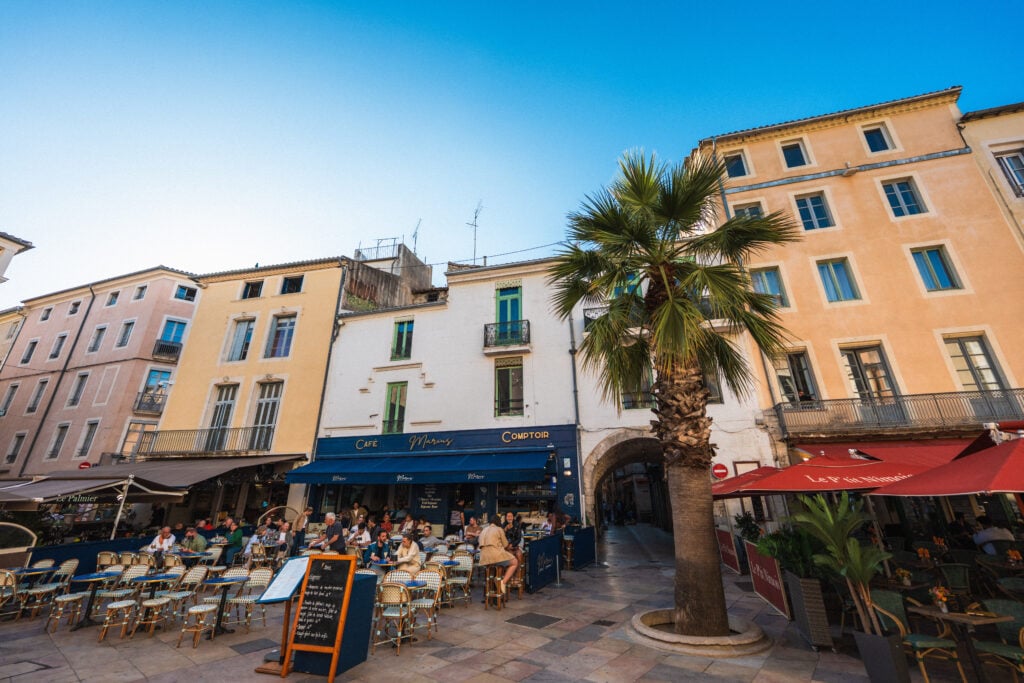
Though the old town is not necessarily as charming as other French cities in the region, like Avignon or Montpellier, it’s still worth wandering around, particularly if you’re looking for a bite to eat or want to grab a drink.
Castellum Aquae
One of only two remaining structures of its kind in the world (the other being situated in Pompeii), the castellum is where the aqueduct of Nîmes would have arrived. This ‘Water Castle’ is estimated to have received somewhere between 30 and 40 million litres of water daily from the 50-km Roman aqueduct, to then distribute to the city’s baths, fountains, and private homes.
Esplanade Charles-de-Gaulle
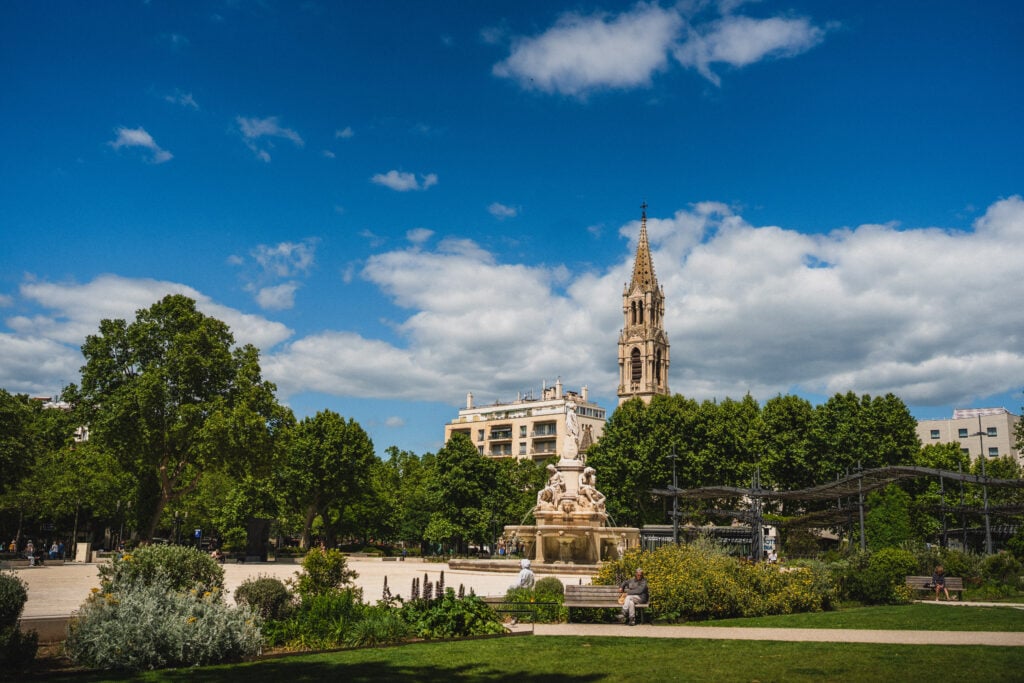
This charming square can be found close to Nîmes train station, acting as a small gateway towards the city’s historic heart. During the 16th century, this area was used for artillery exercises. By the 19th century, it was transformed into a gathering place for locals and tourists alike, featuring a large fountain and green spaces.
In the late 2000s, the area went under further transformation, benches, shelters and more modern seating elements were added. It was also renamed from Esplanade to Esplanade Charles-de-Gaulle, honouring the famed French soldier.
Square Antonin
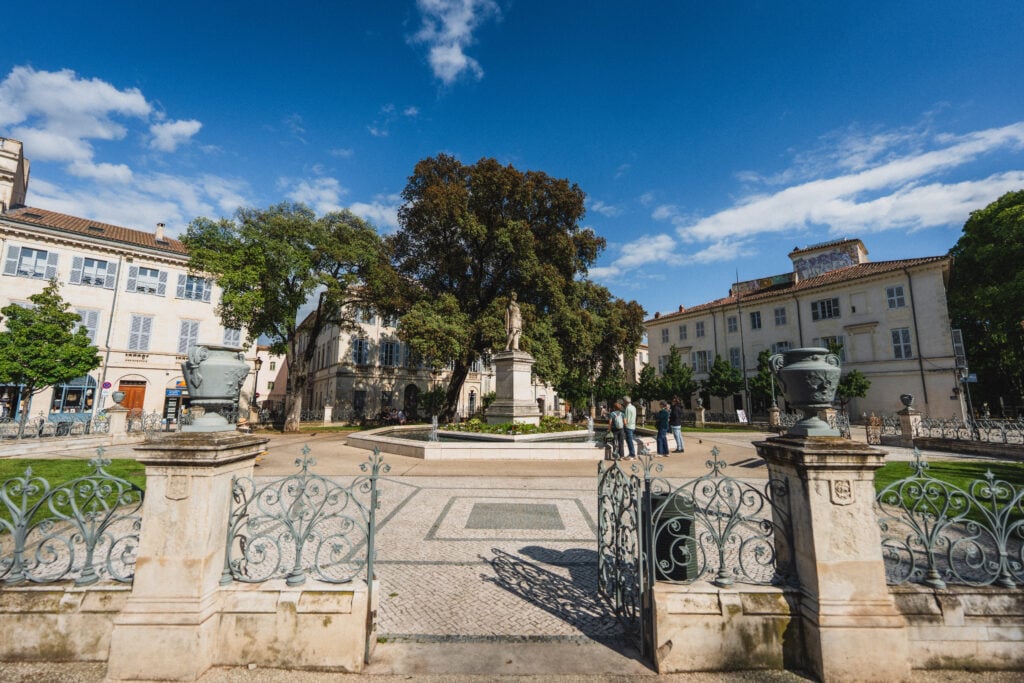
Yet another charming square just outside the old town is Square Antonin. This public square was established in 1862 and is actually named in honour of Roman Emperor Antoninus Pius, whom you can see in a marble statue atop a fountain in the square, and whose family was originally from ancient Nîmes.
Pont du Gard
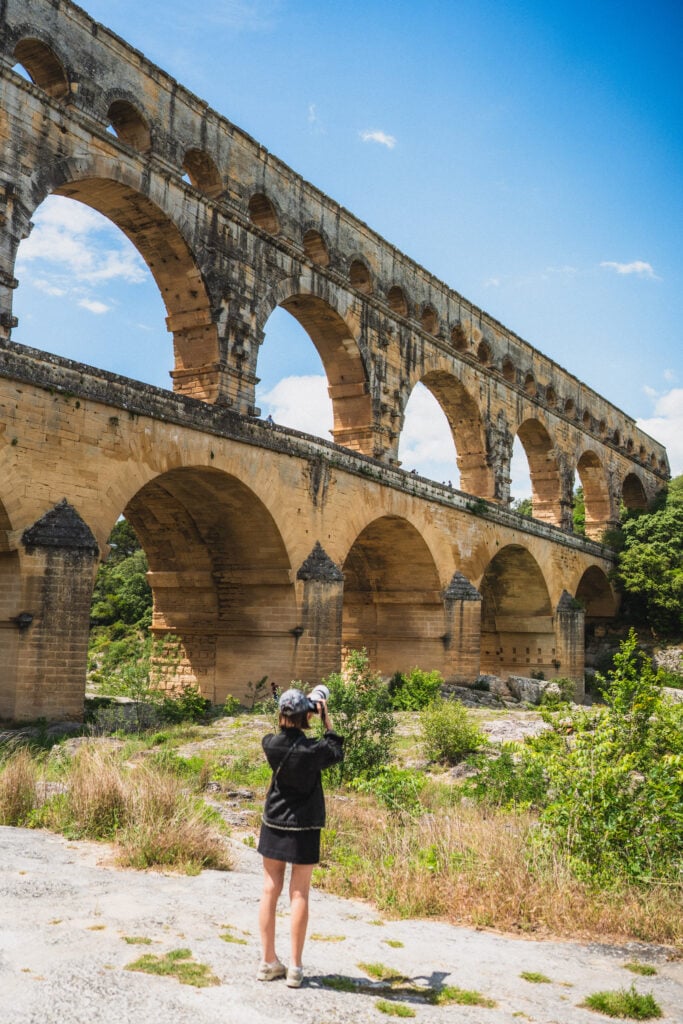
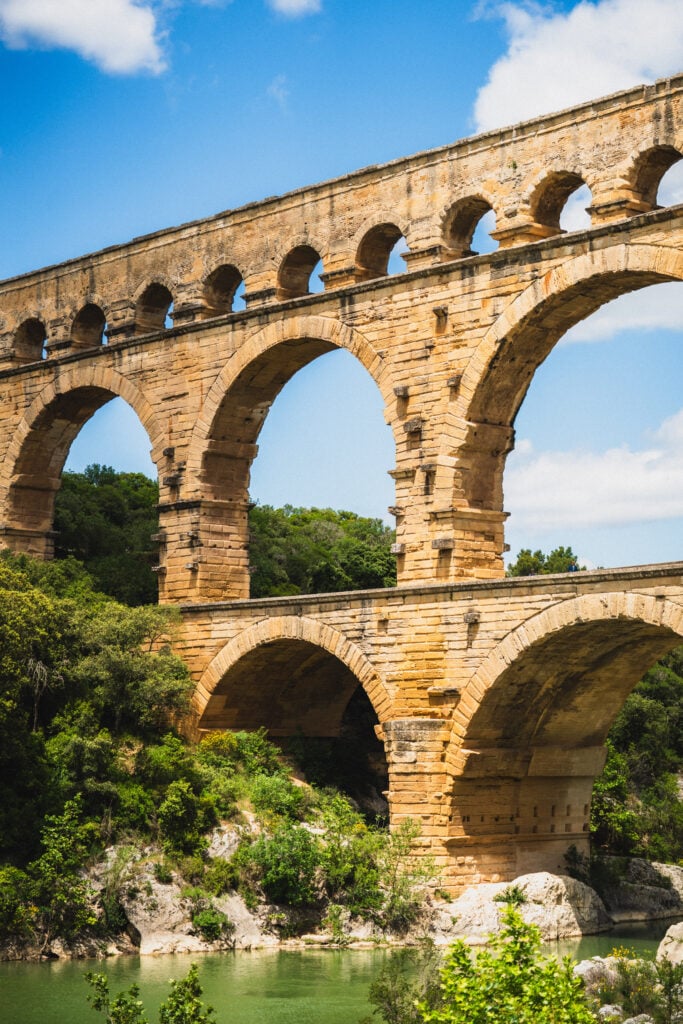
If you’ve not yet got enough of a historical fix after exploring Nîmes, then the breathtaking Pont du Gard is just under half an hour’s drive away.
This remarkable feat of Roman engineering carried fresh water from the springs near Uzès, supplying the city with abundant water for bathing, drinking, and sanitation. Pont du Gard is certainly one of the finest preserved examples of an ancient Roman aqueduct and a true wonder of antiquity. Granted UNESCO World Heritage Site status, it leaves visitors in awe by design.
Not only is it a monumental masterpiece, but you can actually enjoy going for a dip in the waters below! Come the warmer months, visitors venture out to spend the day here, soaking up the magnificent ancient scenery and going for a refreshing swim or partaking in water sports along the river.
Where to stay in Nîmes
If you hadn’t already guessed, Nîmes is an excellent place to stay for history lovers. It’s also a great place to base yourself in the south of France, offering a wide array of connections to other towns and villages in the area, served by extensive TGV rail routes. The city is pretty compact and easily walkable, and it has a wide range of accommodation options. Here are a few places of where to stay (based on web-reviews):
(Budget) Hostel Flamingo Nîmes Gare Centre – Located close to Nîmes train station, this simple hostel is just a 9-minute walk from the city’s main archaeological sights. The rooms are really basic, but it offers a super convenient base (and budget-friendly option) while exploring the city. Check prices and availability here.
(Moderate) Appart’City Collection Nîmes Arènes – Easy going, this apartment hotel is situated within a Haussmann-style building on a leafy street, across from L’esplande Charles-de-Gaulle. A 5-minute walk from the city train station and the grand amphitheatre, it’s noted for its ideal central location. Check prices and availability here.
(Luxury) Maison Albar Hotels L’Imperator – Situated not too far from the Jardin de la Fontaine, this historic 5-star hotel blends Art Deco charm with modern luxury. Here you’ll have access to two swimming pools, private luxury suites, and a Michelin-starred restaurant on site. Check prices and availability here.
Enjoyed reading our guide to the ‘Rome of France’? Pin this article now, and read it again later: