One Day in Islington: A Local’s Guide to London’s Hidden Gem
Last Updated on 11th November 2025 by Charlotte Nadeau
This post may contain affiliate links. Please check out my privacy policy and disclosure for more information.
Islington is one of those charming London boroughs that offers a quiet escape from the hustle and bustle of capital city life. This historic neighbourhood lies to the north of central London and began life as a hamlet, renowned for its dairy farming in the 17th and 18th centuries. Today, Islington is mainly residential, peppered with leafy greens and historic pubs. In this guide, we’ll be exploring the hidden gems and best things to do in the area. Here’s how to spend one perfect day in Islington!


What is Islington known for?
This London borough is predominantly residential, home to beautiful Georgian architecture, scenic canals, and green spaces to relax in. The neighbourhood blends historic charm with modern city living – so it’s no wonder the area is so sought after.
But it is perhaps best known for its vibrant cultural scene. Home to theatres such as the Almeida Theatre and Sadler’s Wells, there are also a handful of art galleries, and you can find places like the Union Chapel, which hosts talks, comedy and live music performances throughout the year.
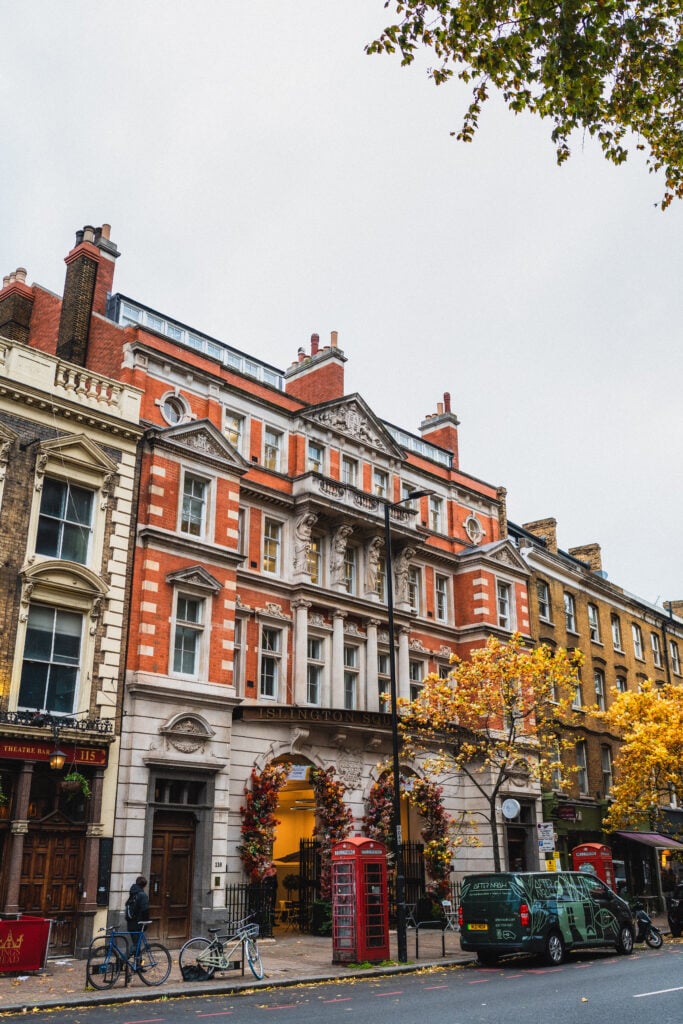
Islington Museum
If you want to learn more about Islington’s history, then you should start with this small free museum in the basement of the local library. The exhibitions focus on prehistory right up until the present day, detailing the changes and everyday local life that have made this borough into what it is today.
A brief overview: Islington began as a small, humble hamlet, renowned for its dairy farming. In the 17th century, the hamlet grew into a village. It wasn’t until the Victorian era of urbanisation that the area became built up, densely covered with Georgian and Victorian architecture.
After the heavy and destructive bombing of WWII, Islington faced post-war rebuilding efforts, improving the overall appearance of the area. And, by the 20th century, the neighbourhood underwent significant gentrification, becoming an affluent and desirable location for Londoners to live in.
For those who like football, you’ll likely already know that Islington is home to Arsenal FC, and so, there are several displays about this iconic club within the museum too!
Opening hours: The museum is open 10 am – 5 pm (It is closed on Wednesdays & Sundays), and it is closed for lunch (1 pm to 2 pm)
Red Lion Theatre Pub
London’s historic pubs are a staple of the city, and you’ll find these little cornerstones of life on almost every street you wander down. Thanks to its vibrant cultural scene, all across Islington, you’ll find tiny little theatres, which were often housed in, of course, pubs.
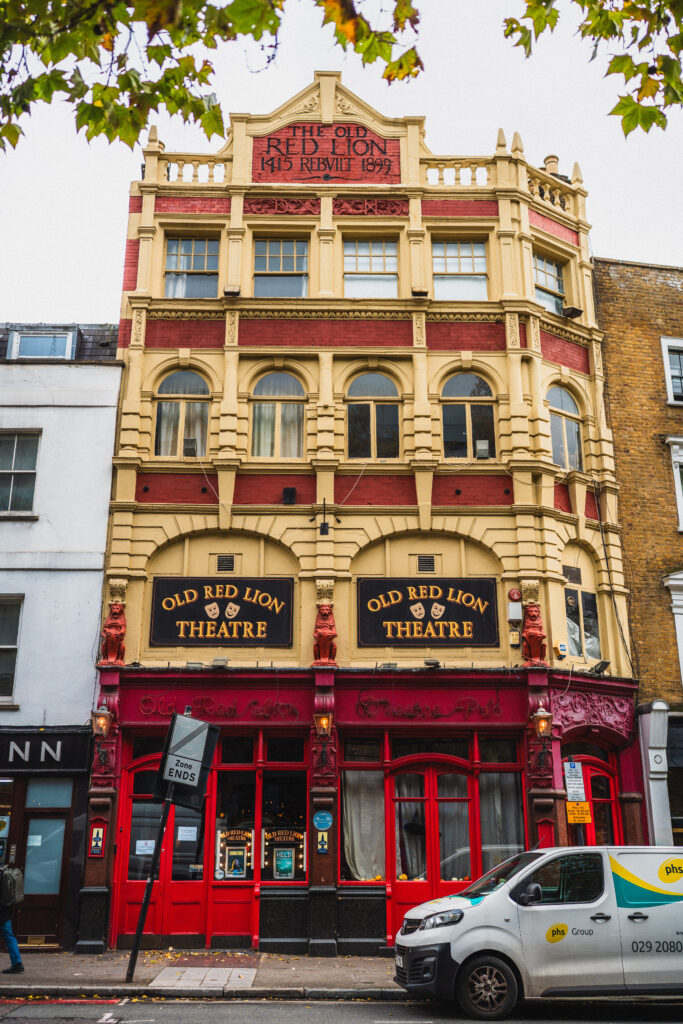
The most famous of these theatres is the Old Red Lion, an iconic landmark of the neighbourhood that dates all the way back to 1415. A pub has stood at this site since Islington was still a rural village, making it one of the oldest pubs in London. But it wasn’t until 1979 that the theatre was founded.
The upstairs of the pub was transformed into a ‘fringe theatre’, a place where actors, directors, designers, writers, and technicians could experiment. Though there have been several threats of closure to this small theatre, it continues to thrive and stands as a testament to Islington’s creativity and vibrant local entertainment scene.
Camden Passage
Next, you’ll want to wander along the prettiest street in the neighbourhood, Camden Passage. This pedestrian-only street is lined with cafés, boutiques, and independent shops, making it the perfect place to stop for a bite to eat or a coffee. Some highlights along the passage include:
- THE ANTIQUE PAPER COMPANY – offering original antique maps, prints, engravings, ephemera and books, dating from the 1600s to 1920s.
- Honey Tilley Antique Silver Plate London – selling antique silver plate and various crockery.
- Compane – a stylish coffee shop which serves delicious coffee and matcha in the most beautiful ceramic ware!
Camden Passage is also home to a lively antiques and vintage market, which opens on Wednesdays and Saturdays.

Regent’s Canal
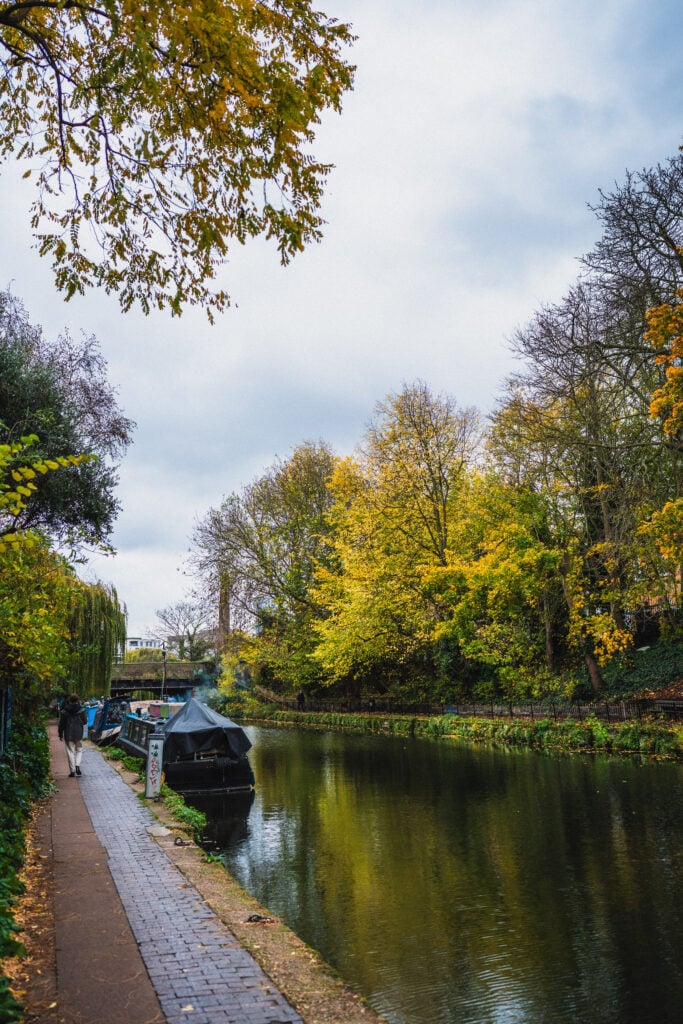
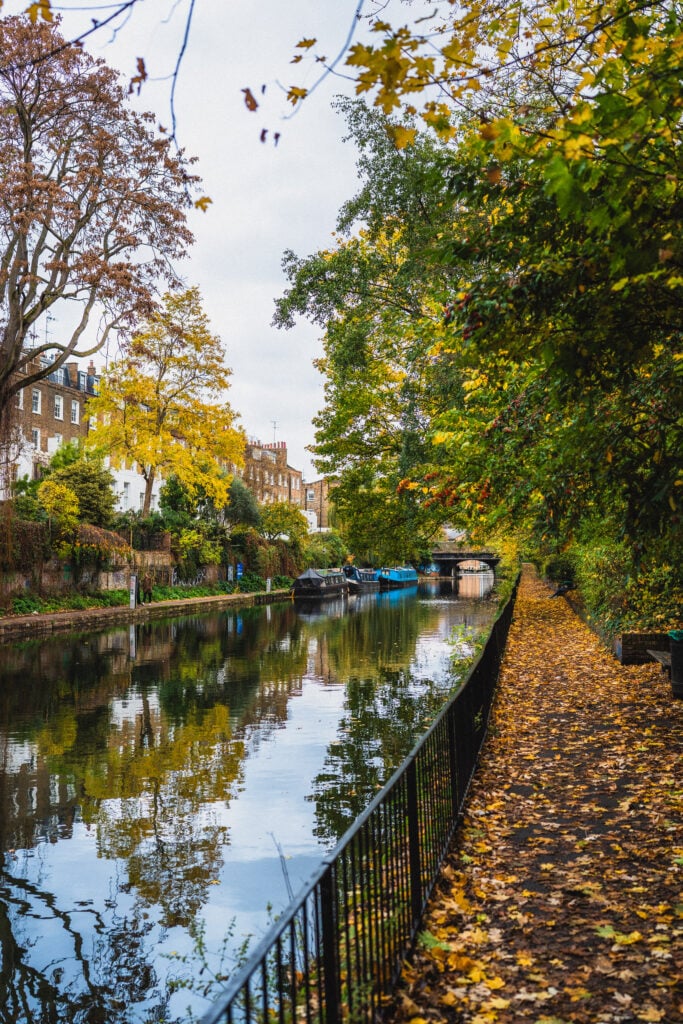
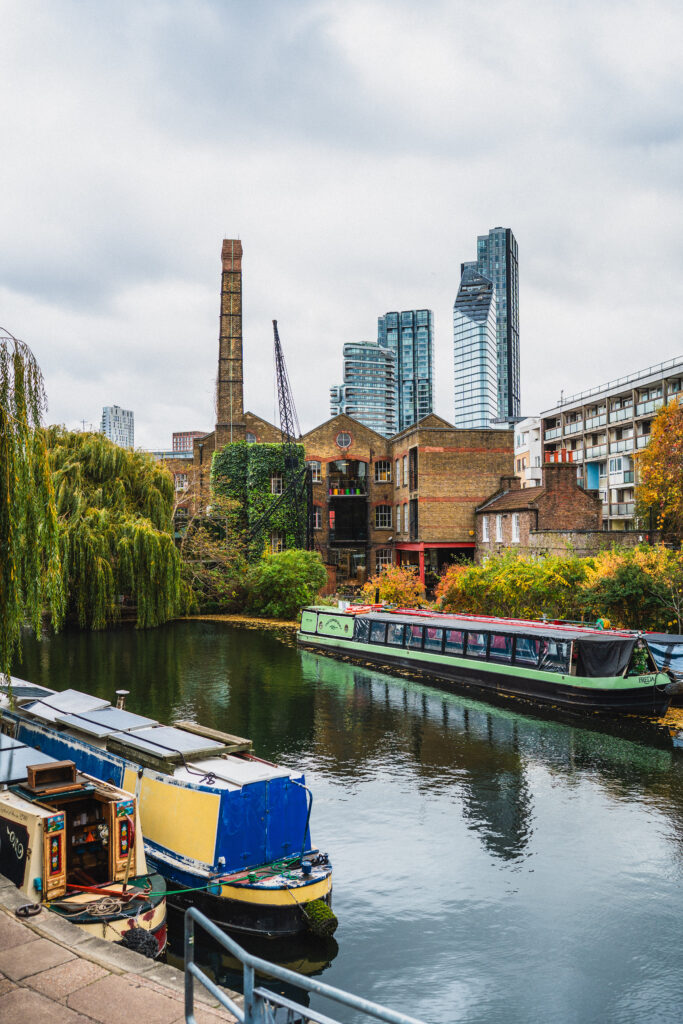
Another added charm to Islington is its easy access to canals, the most famous being Regent’s Canal. Enjoying leisurely walks beside the water has to be one of the best things to do in Islington, and it’s even possible to rent small boats here if you happen to be feeling adventurous in the summer.
The English phrase “legging it” actually originated from the canals of London. In the days before engines, boatmen had to lie on their backs on top of the boats and use their legs to push against the undersides of bridges to move them forward – so that’s where the expression comes from.
Duncan Terrace
Despite being close to the canals and beautifully leafy in the autumn months, you might be surprised to learn that Islington actually has the fewest green spaces of any borough in central London. However, if you know where to look, then it’s easy to find quiet pockets of calm in the neighbourhood.
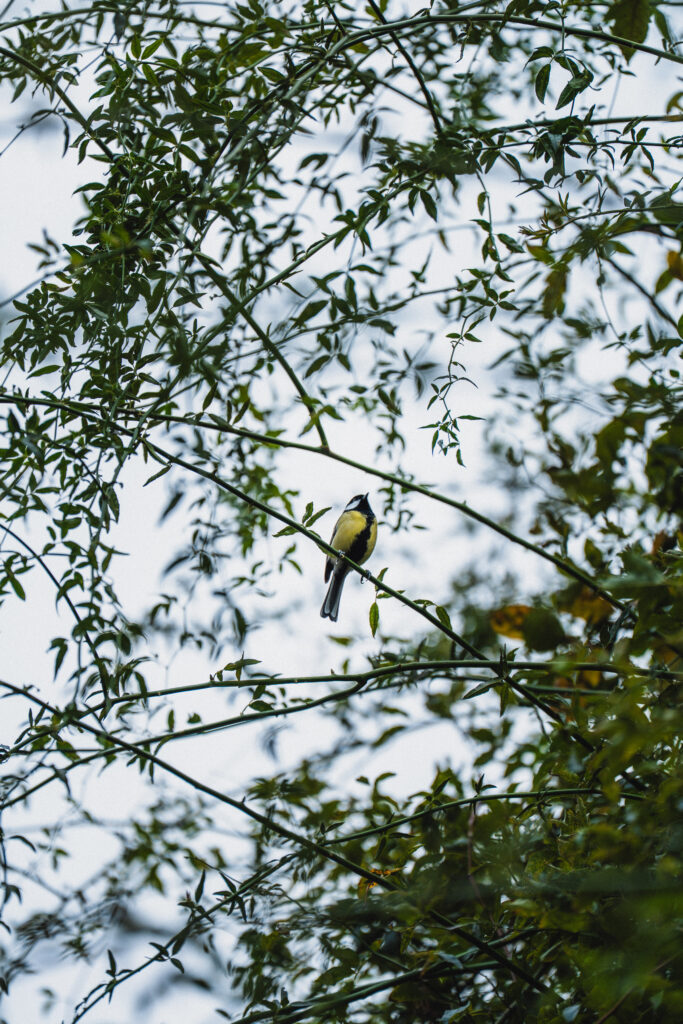
Duncan Terrace is where you’ll find a small garden area, the perfect place to sit and soak up the local wildlife…mainly squirrels and domesticated cats, but it is central London after all! It’s an ideal place to relax with a book and a coffee right in the heart of the borough.
Chapel Market
Chapel Market is a daily street market (except it is closed on Mondays) where locals and visitors alike can flock to peruse everything from fresh fruit and veg, to flowers and cards, gifts, toys, and household goods. If you want to read more about the various other markets the city has to offer, you can read our guide to London’s best markets.
Culpeper Community Garden
Another of the few green spaces found in the borough is the Culpeper Community Garden. Self-described as “a little oasis in the city”, this valued green public space was created in the 1980s on a former waste site. It is named after the 17th-century botanist Nicholas Culpeper, in honour of his work.
Upper Street
Islington’s Upper Street was once described by Charles Dickens as being the “noisiest and most disagreeable thoroughfares” in London. While I have to agree, it’s pretty loud, several gems along the street make it worth visiting. Here are some of the street’s top highlights:
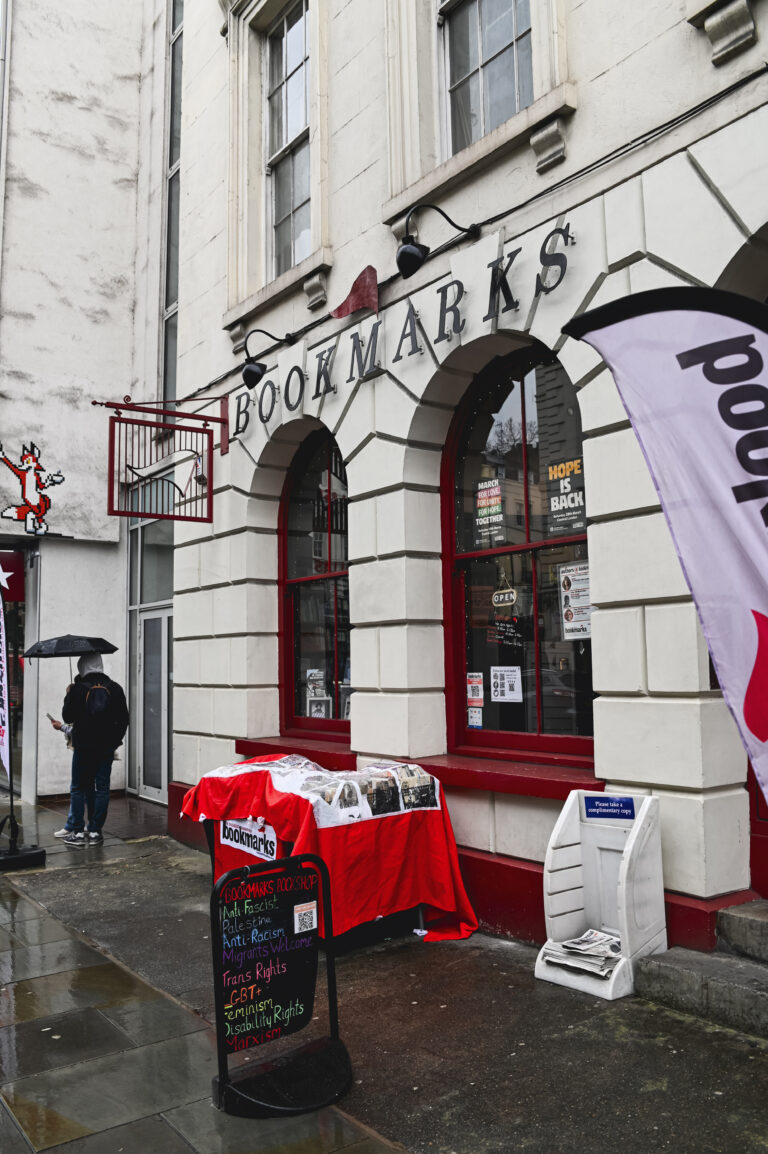
Upper Street Bookshop – this delightful independent store sells everything from children’s books to fantasy novels.
Business Design Centre – (formerly known as the Royal Agricultural Hall), this is where the first film screening in England took place. Today, it’s one of London’s most popular conference & exhibition venues.
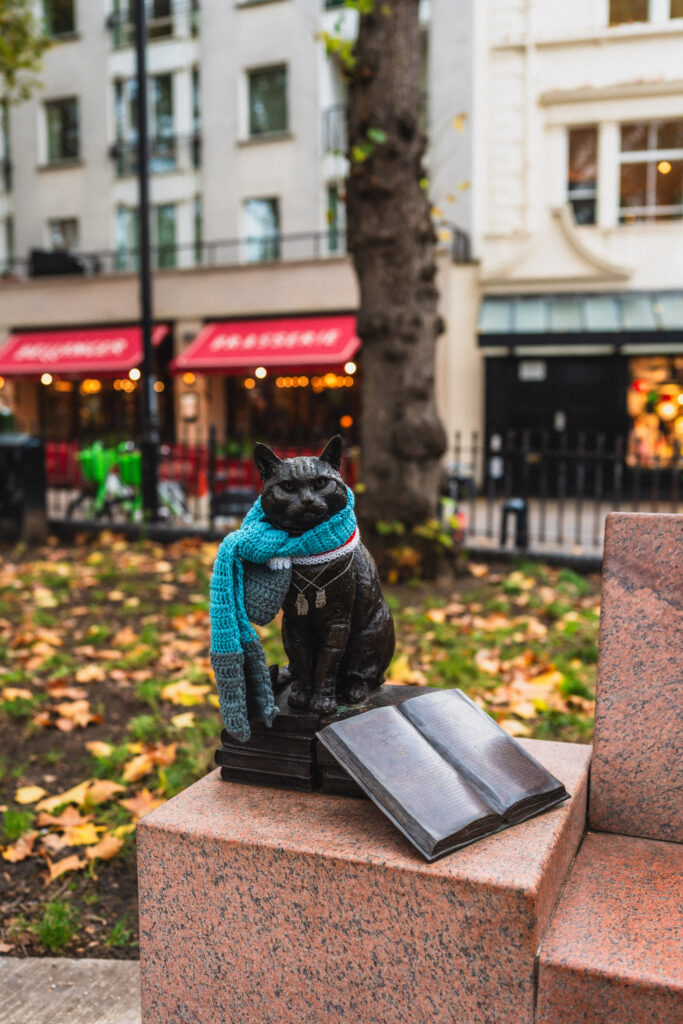
Islington Green – a lovely small green space where you can find a cute statue known as Street Cat Bob, a memorial dedicated to the heartwarming story of Bob the cat.
Street Cat Bob
The story goes that James Bowen was struggling with addiction at the time when he came across a ginger cat in poor health. He took the cat to the RSPCA, and once it had recovered, it started following him around, eventually helping him on his own path to recovery.
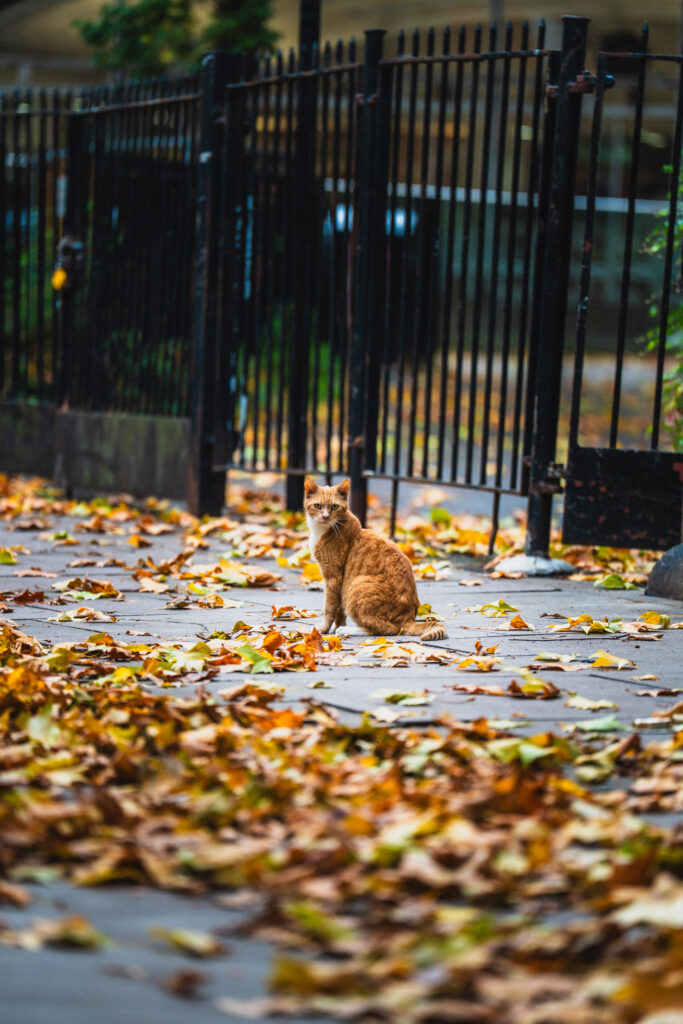
Today, a beloved and touching bronze memorial to Bob can be found surrounded by benches featuring quotes from James Bowen himself. And, if you’re lucky, you may even spy out cats yourself in the area!
The Screen on the Green
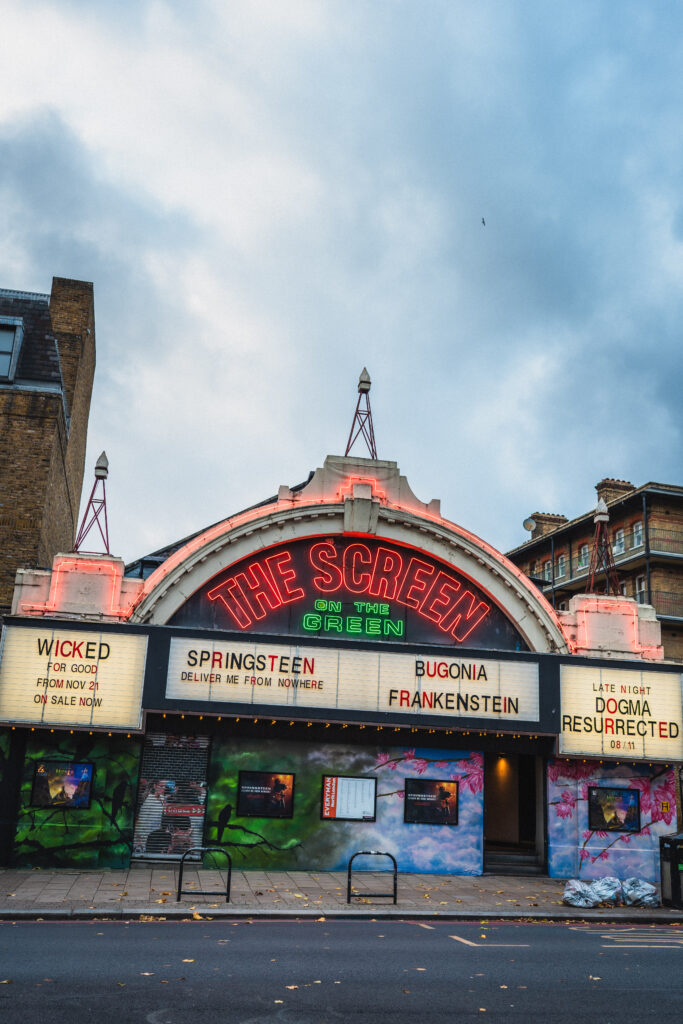
Facing Islington Green, you’ll find the iconic facade of Screen on the Green. This single-screen cinema was first opened in 1913, making it one of the oldest continuously running cinemas in the UK. It’s one of many purpose-built cinemas constructed in accordance with the Cinematograph Act of 1909.
Today, the cinema has been taken over by Everyman, and you can see the latest titles. Obviously, there are only a few screenings per day as there is only one place to see the films, but it remains a solid part of Islington’s entertainment scene.
St Mary’s Church
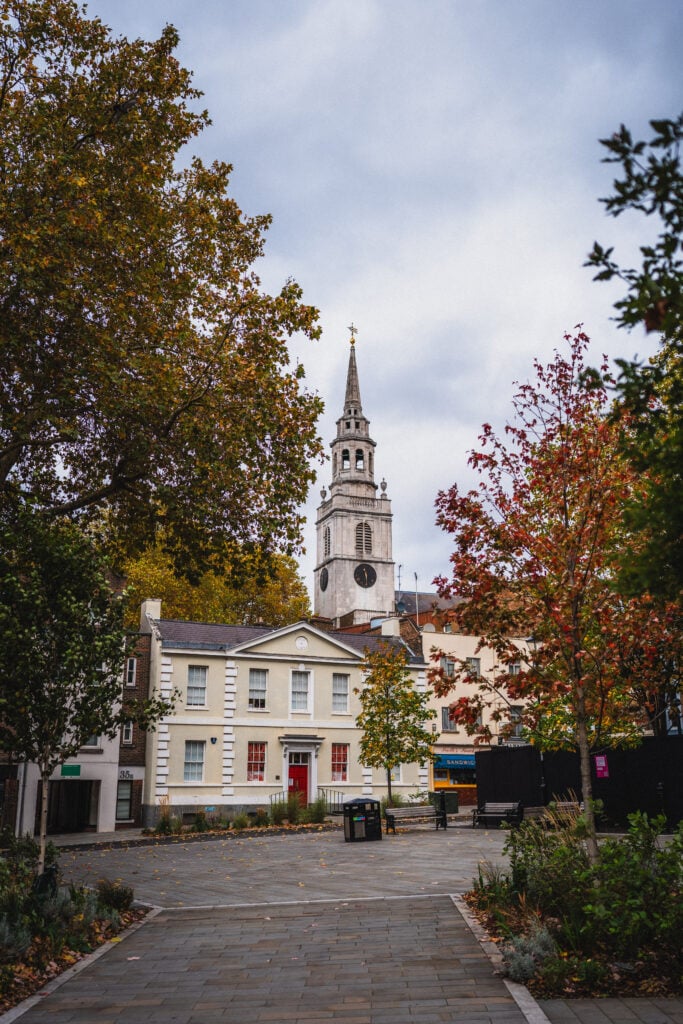
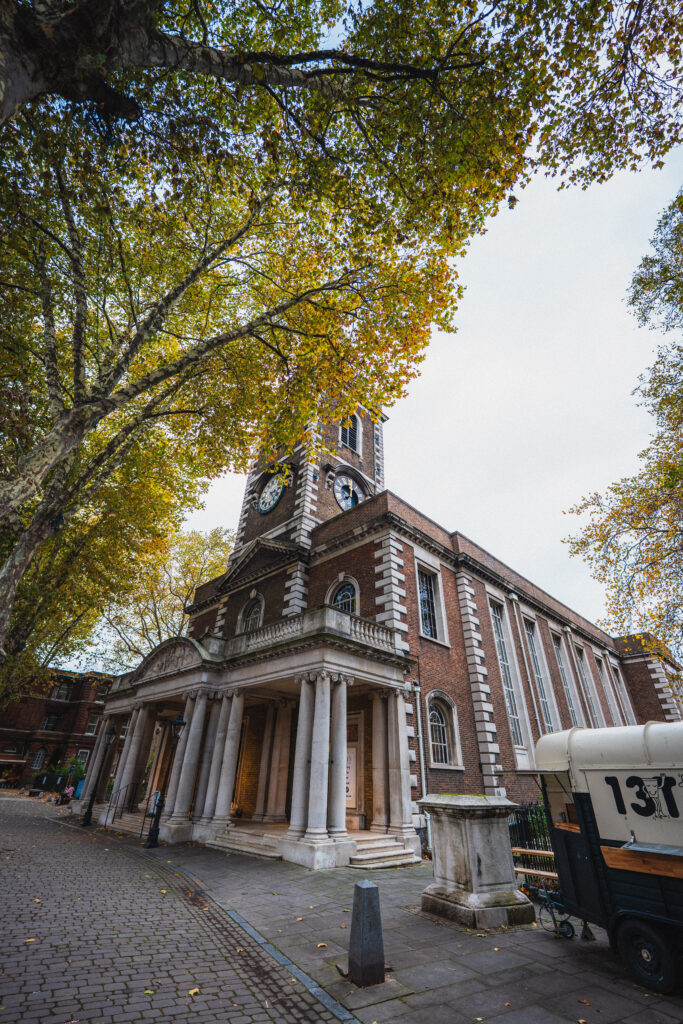
Next, pay a visit to one of Islington’s ecclesiastical sights, St Mary’s Church. Although St. Mary’s was probably founded as far back as the 12th century, the building you see today was constructed in the 1950s after the previous church was destroyed during World War II. Step inside, and you’ll find a surprisingly modern design.
Right next door is the churchyard, which served as the parish burial ground for hundreds of years. A church is thought to have stood on the site shortly after the Norman Conquest, and many locals were laid to rest here. In 1885, the space was converted into a public garden, and it was renovated once more in 2001.
High Ground
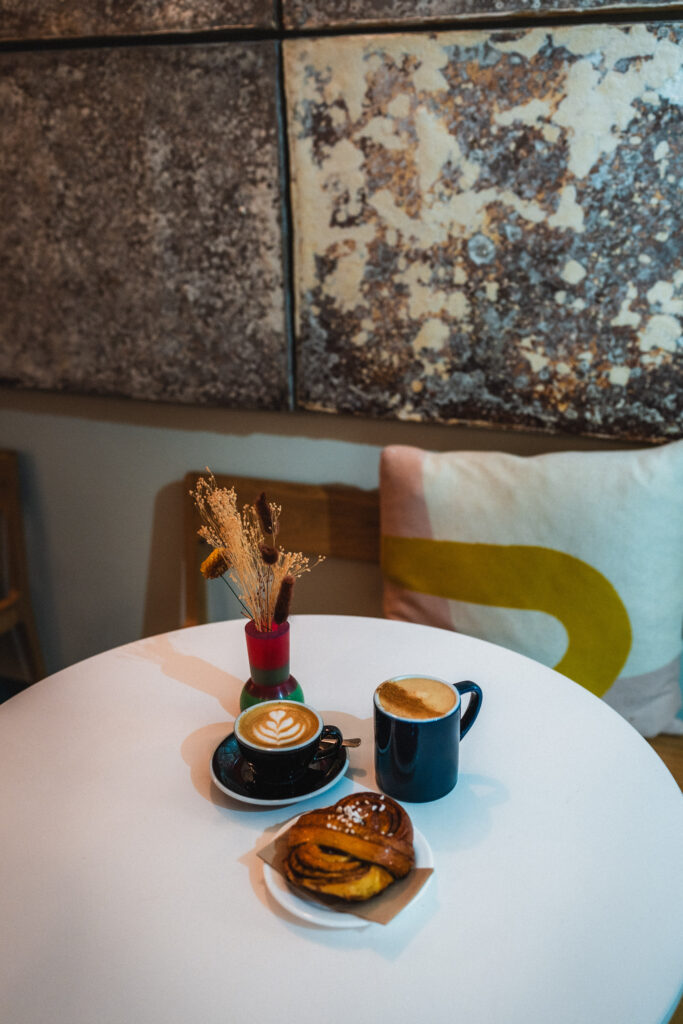
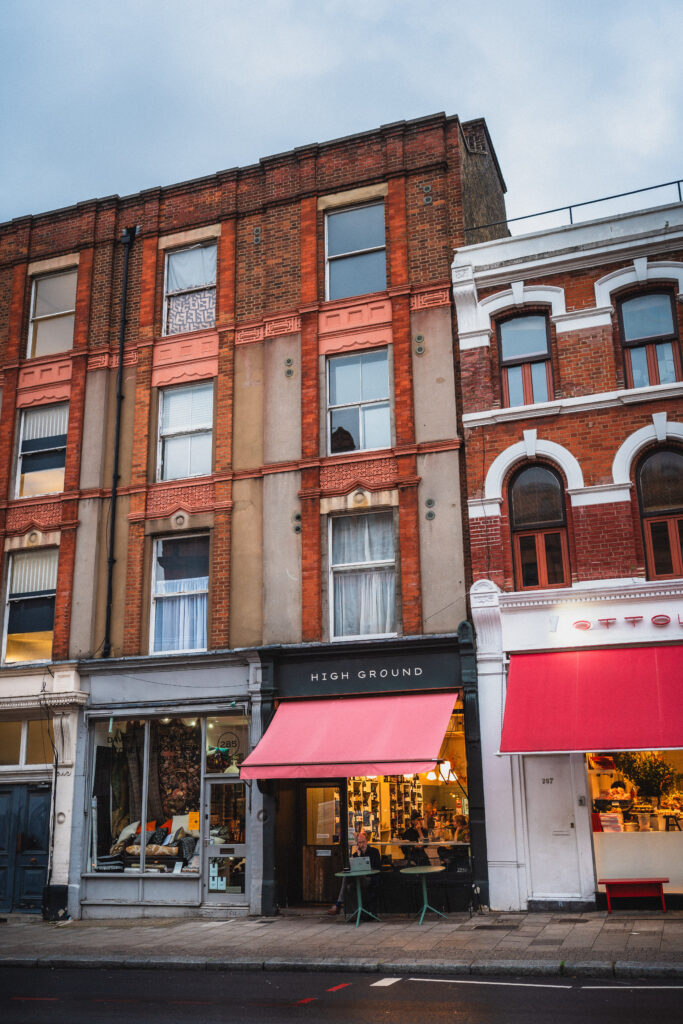
There are plenty of cute cafés and speciality coffee shops dotted throughout Islington, so it’s pretty hard to choose where to go as they all look cosy. I recommend stopping by High Ground if you like coffee with a side of pastries. It was delicious! And, this place transforms into a wine bar come evening time, making it the perfect hangout spot for all times of the day.
Lonsdale Square
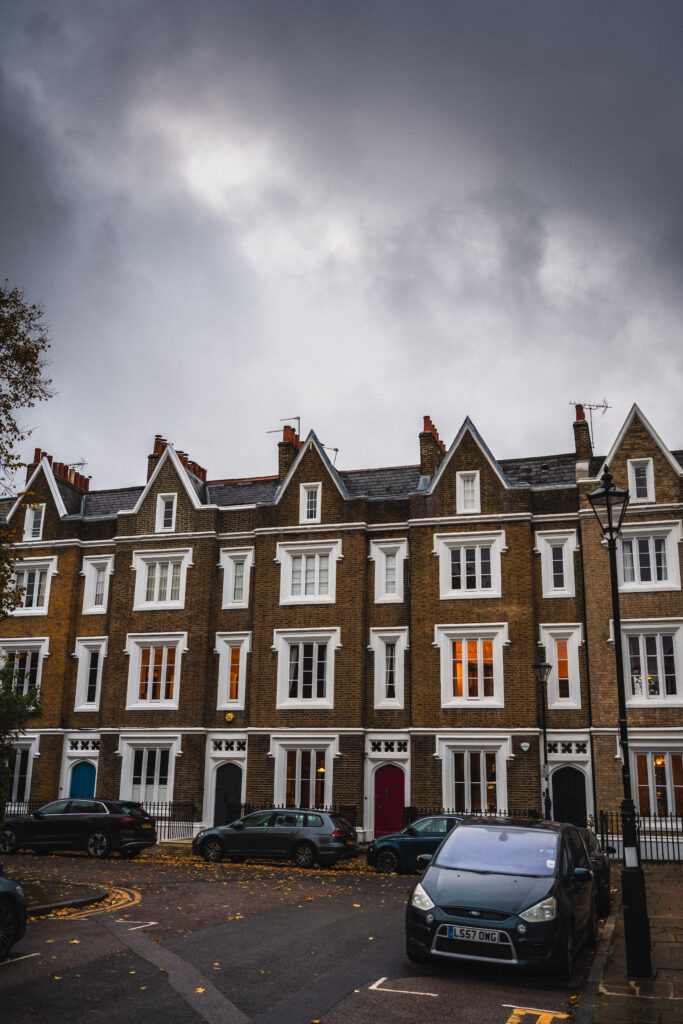
Lonsdale Square is a garden square in Islington with a Tudor twist. The square was laid out sometime between 1838 and 1845 on land once known as Gossey Field, which had previously served as rural farmland and cattle pens.
Designed by Richard Cromwell Carpenter for the Drapers’ Company, the square is really unique in that it’s built in Tudor Gothic Revival Style. Look closely, and you’ll see plenty of intricate details on the facade of the houses here. Every single building in this area is listed.
Canonbury Square
Canonbury Square is yet another charming corner of Islington, and there are a few attractions of note here. Most notably, you’ll find the historic collection of 20th-century contemporary Italian art. But there is also this green plaque dedicated to the famous writer George Orwell, who lived in the square from 1944 to 1947.
Gas Lamp at Canonbury Place
While not a landmark as such, but rather a piece of history, it’s worth stopping to take a look at the gas lamp that resides at Canonbury Place. In times gone by, London was lit entirely by the use of gas lamps. Nowadays, only 500 or so remain, one of which can be found in this spot.
Canonbury Tower
Last of the historical landmarks to see in Islington has to be that of the Tudor tower, Canonbury Tower. And, interestingly, it’s a place Thomas Cromwell, Sir Francis Bacon, and Washington Irving all have in common.
Indeed, at one point in time or another, they all owned or occupied Cannonbury House and Cannonbury Tower. This is actually the oldest building in Islington, as parts of it date all the way back to the 16th century. On the second Friday of each month, the tower is open for guided tours to the public.
Where to stay in Islington
Islington make for a charming place to stay while visiting the Big Smoke, but it should be noted that, thanks to its central location, prices can be pretty high. Here are some suggestions of where to stay (based on web-reviews):
The Hanbury Townhouse – This charming boutique guesthouse offers a cosy “yet refined” escape. There’s a restaurant bar downstairs to enjoy, and guests have commented on the comfort and cleanliness of the rooms. Check prices and availability here.
Hotel nhow London – This modern hotel is just a 10-minute walk from Angel tube station. Featuring graffiti-style art, the funky rooms, as well as tea and coffee-making facilities, it makes for an excellent city stay. Check prices and availability here.
Watch the Youtube video
Enjoyed reading our guide to how to spend one day in Islington? Pin this article now, and read it again later: