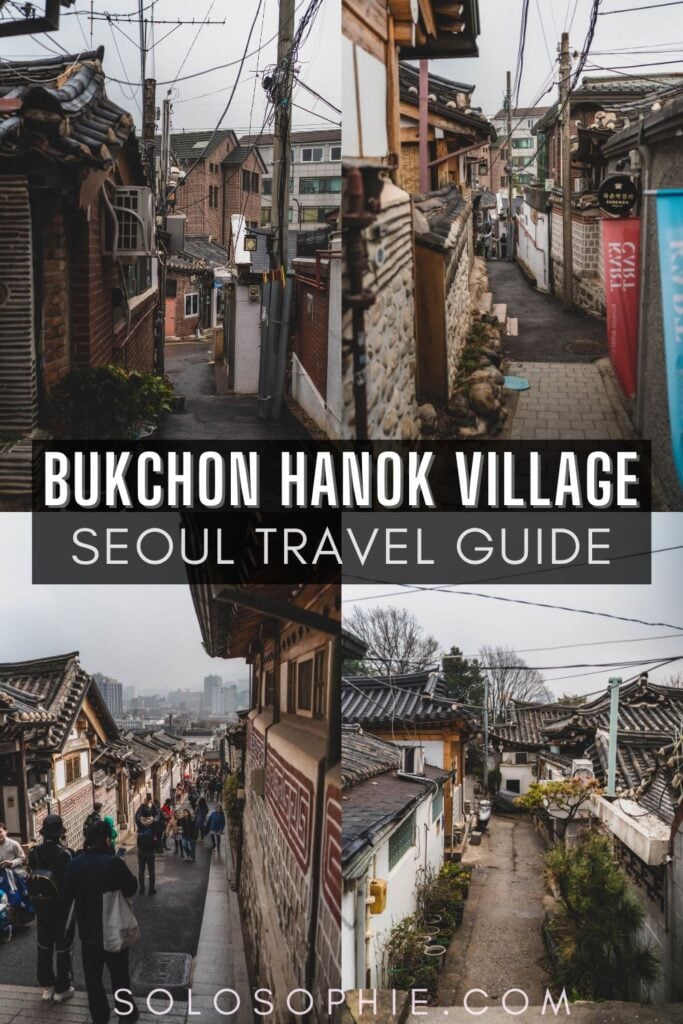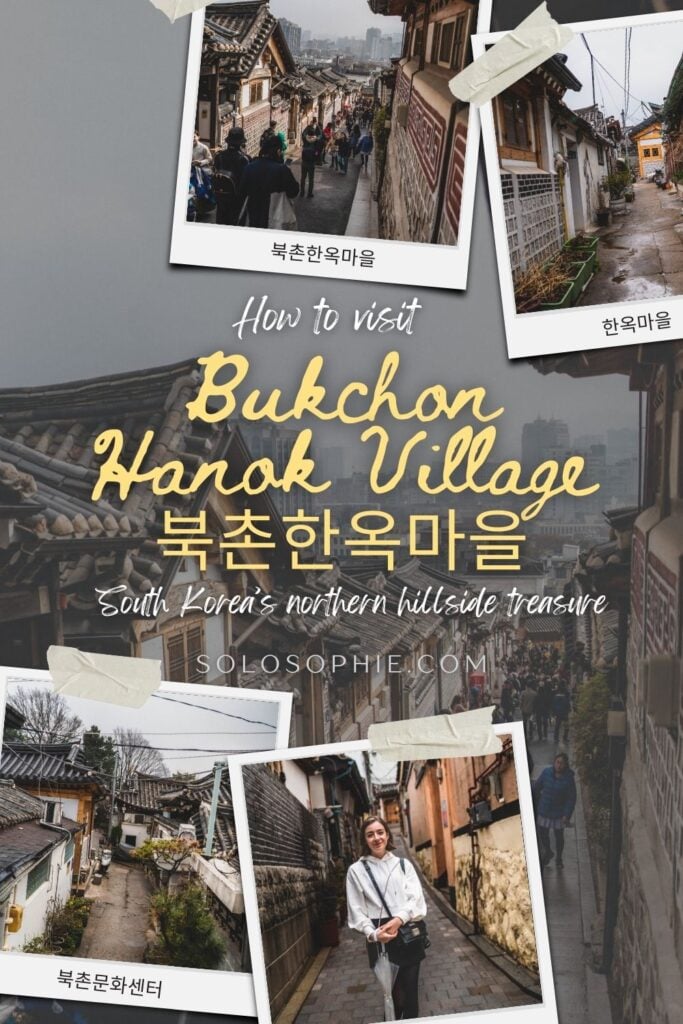

Bukchon Hanok Village, 북촌한옥마을, Seoul’s Northern Hillside Treasure
Last Updated on 1st July 2024 by Charlotte Nadeau
This post may contain affiliate links. Please check out my privacy policy and disclosure for more information.
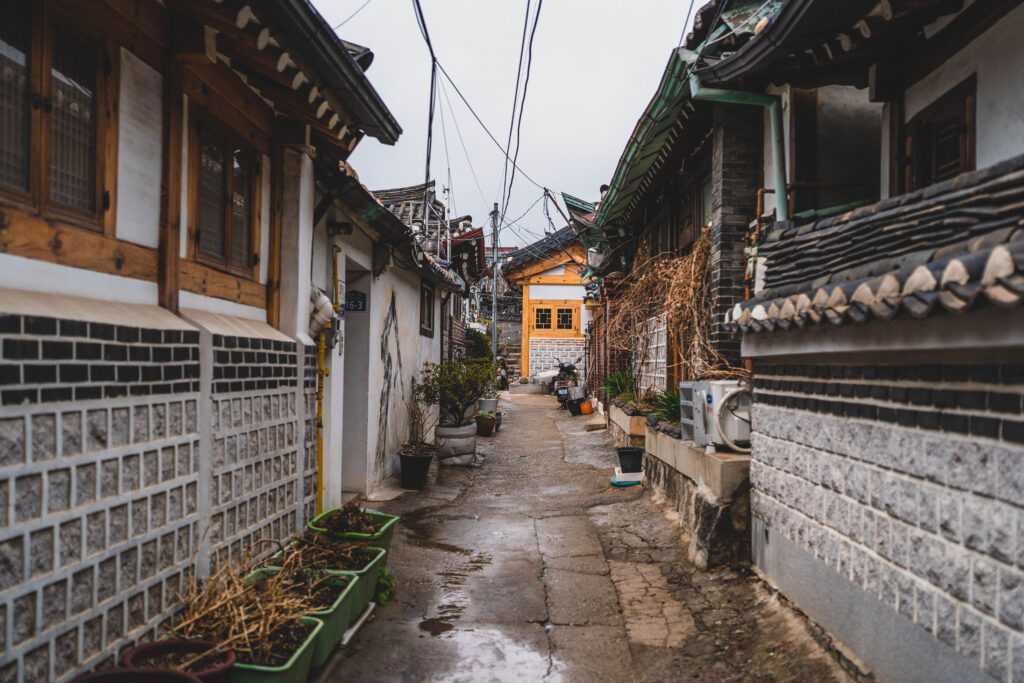
The name Bukchon translates literally as ‘northern village’. This charming little pocket of the city is filled with hanok, which are traditional Korean houses that first came about in the 14th century. A maze of narrow lanes, quaint teahouses and traditional architecture, here’s your guide on how to visit Seoul’s Northern hillside treasure, Bukchon Hanok Village, 북촌한옥마을.
A brief history of Bukchon Hanok Village
One of the quaintest neighbourhoods of the city, Bukchon Hanok Village is located in the Jongno District of Seoul, in South Korea. The original use of the village was built to house people of notability and high-ranking government officials during the Joseon period, in the 14th century.
The village remained practically untouched, this was until the movement of urbanisation in Seoul in 1997, which led the Korean government to think about how they might preserve the traditional hanok of the village without actually removing them.
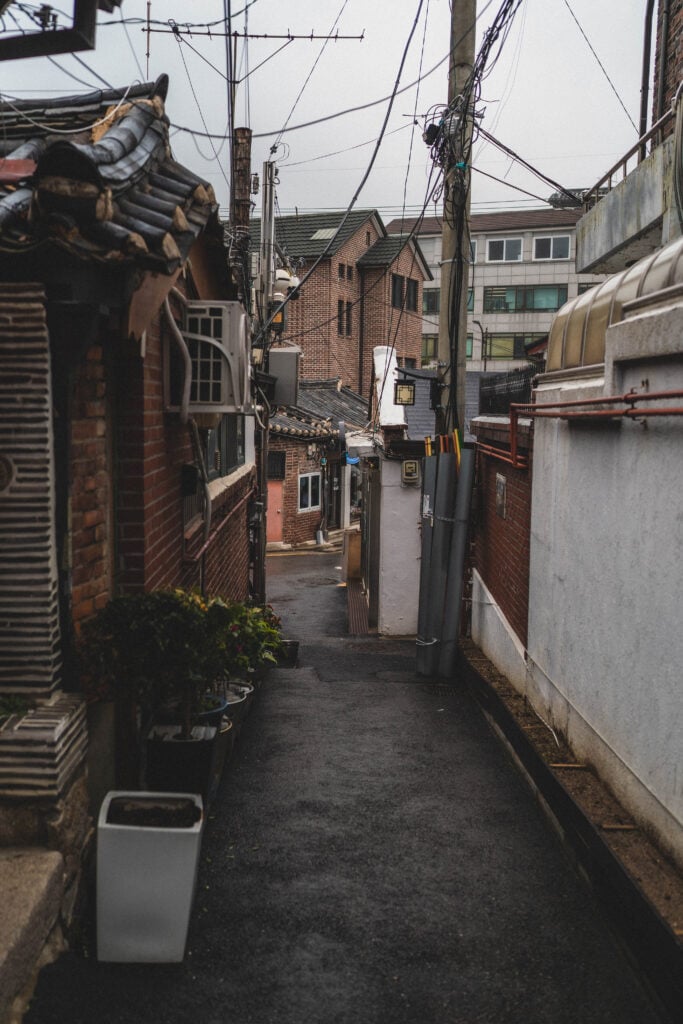
By 2000, a huge movement for maintaining the hanoks began and Bukchon Hanok Village was modernised, installing glass windows, new doors, enforcing the roofs with iron sheets, etc.
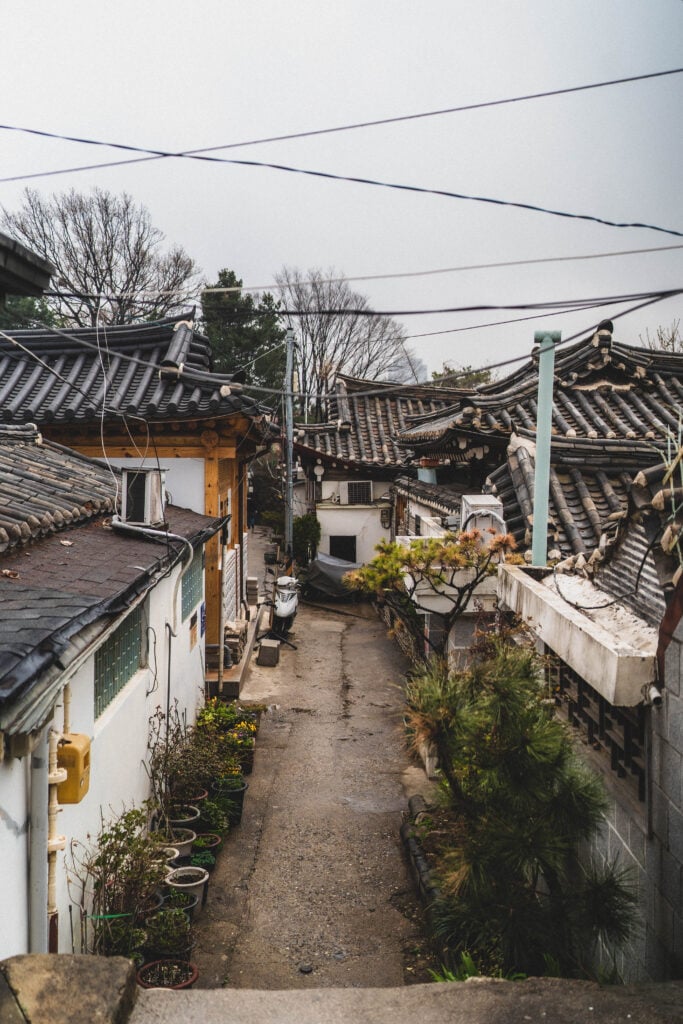
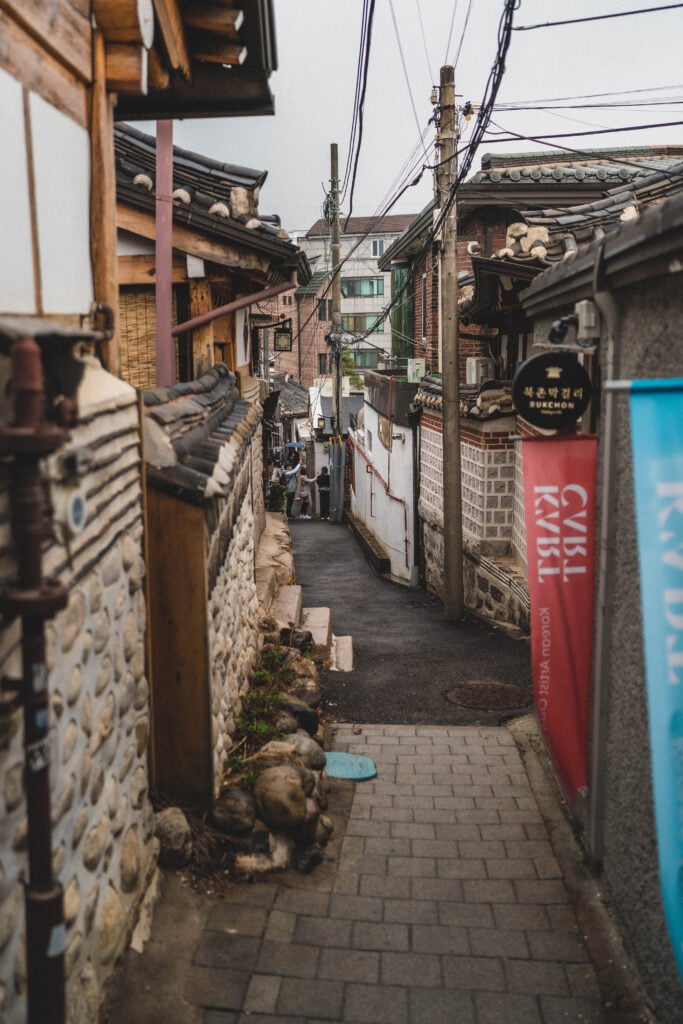
Today, Bukchon Hanok Village has been preserved in modern society and is a unique tourist sight. Although mostly residential, many of the hanok operate as teahouses, small museums, restaurants and guesthouses which allows visitors to experience the interior of these traditional Korean dwellings.
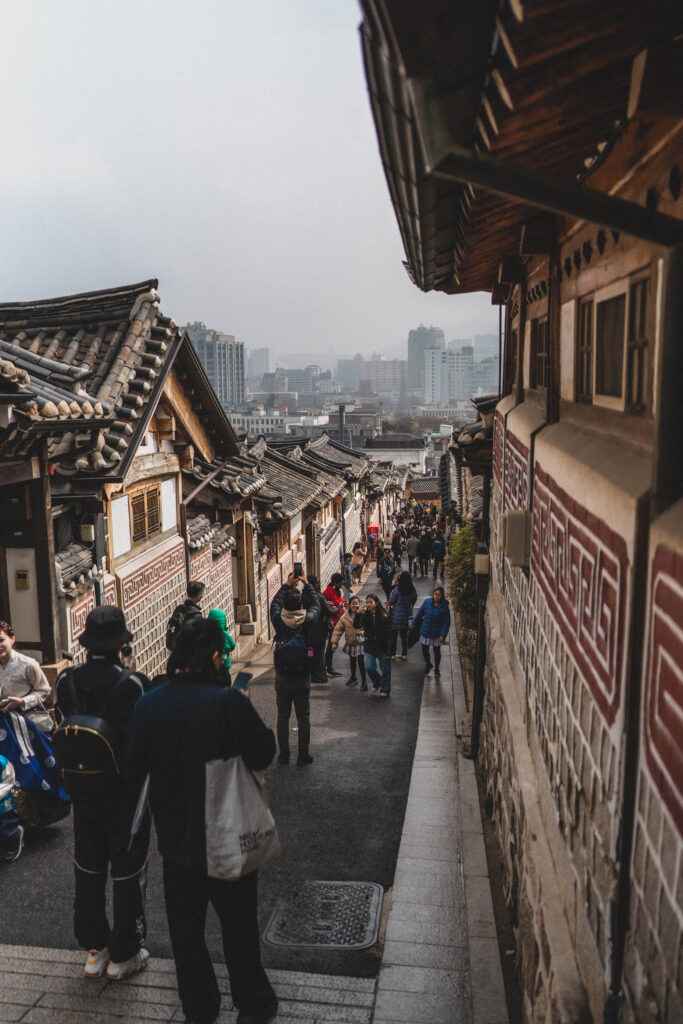
However, the tourism influx in this area has risen, particularly thanks to its proximity to the major tourist attraction Gyeongbokgung Palace, and to being featured on television programmes and reposted on social media many times. In fact, today a visit to Bukchon Hanok Village is considered to be the fourth best tourist activity to do in Seoul!
As a result, this has led to some tension among the residents, so when visiting, always remember that this is (albeit a very cool spot) but more importantly, people’s homes.
How to visit Bukchon Hanok Village
Etiquette when visiting the village
Entrance upon visiting the village is completely free, however, it’s important to note that the village is largely a residential area. Many of the hanok are people’s homes, so be sure to be respectful when visiting this area and don’t walk up too close to the windows and doors, and be aware of your noise levels.
You are allowed to take photographs, but again, just be sure to do so with respect and the people who live here in mind!
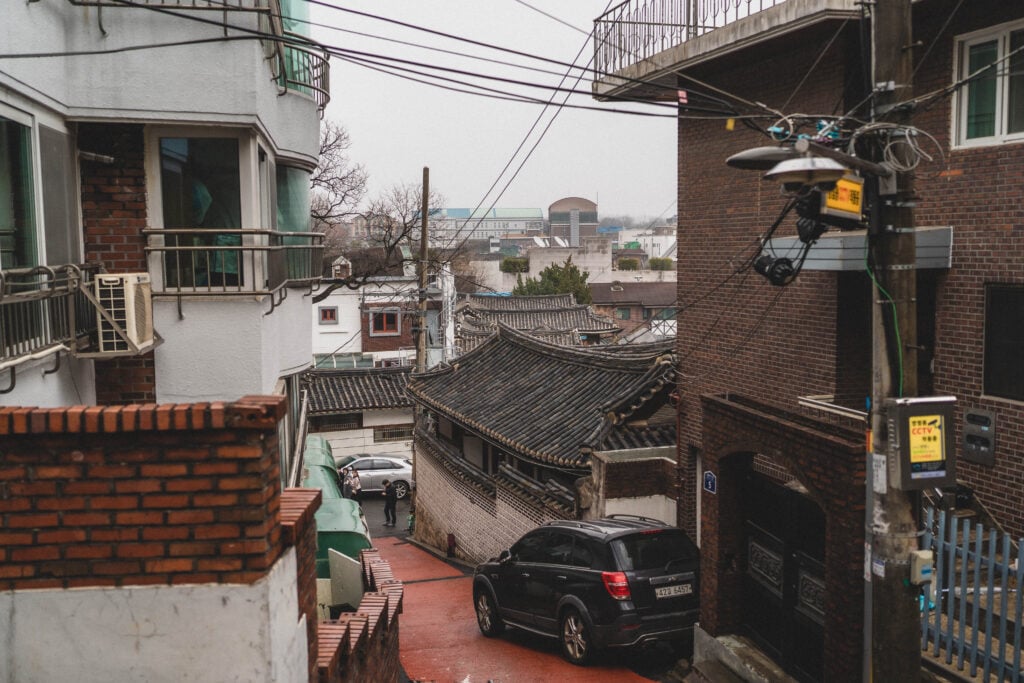
Admire the architecture
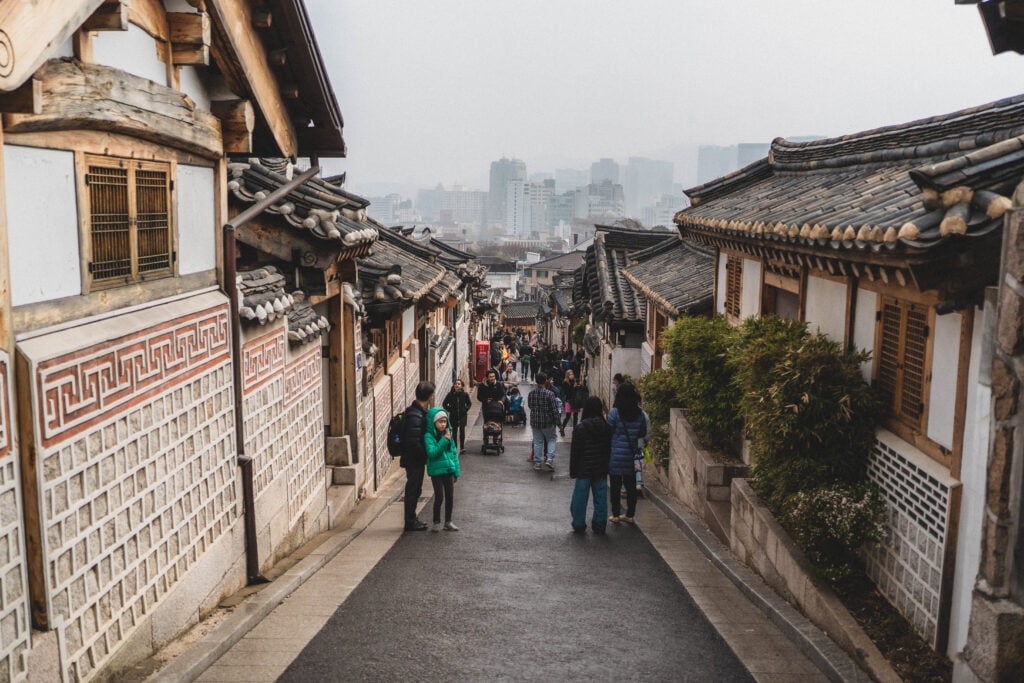
The best way to experience and explore the village is to simply wander around and get lost down the maze of narrow streets, admiring the traditional historic structures and architectural features. Most streets are so narrow that they’re actually pedestrian only.
The traditional house of Korea is called hanok (한옥), their overall layout can differ depending on the region or the position of the house concerning its surroundings. Hanok were traditionally built using a wooden framework and soil-baked roof-tiles.
Visit a teahouse
Sip on green tea, known in Korean as Nok Cha, in a traditional teahouse! Offering a tranquil and quiet place to wind down, one of the best ways to experience the village is by soaking up the peaceful ambience in a teahouse, overlooking stunning views of the landscape beyond.
Bukchon Culture Center, 북촌문화센터
The best place to learn more in-depth about the village is to visit the educational information centre. Offering cultural experiences, here visitors are encouraged to learn about the hanok, and even have the option to attend classes and lectures on traditional calligraphy classes, tea ceremonies and learn about Korean crafts!
Bukchon Art Museum, 북촌미술관
This small art museum houses a collection of around 150 pieces of modern Korean art, 200 pieces of Chinese art, and old documents of the Joseon dynasty.
Found within, there is also a small teahouse with a balcony boasting stunning views, and you can view ancient pieces of pottery that date back to the 5th and 6th centuries.
Bukchon Museum, 북촌생활사박물관
Another small museum in the village where you can learn about local history, the Bukchon Museum displays a collection of preserved everyday household items that were previously used by former residents.
The idea behind the museum is to document the urban development of the area. Visitors are even welcome to touch some of the artefacts!
The entrance fee for the museum is 3,000 KRW, and the museum opens from 10 AM – 6 PM, the last entry is 30 minutes before closing time.
Best time to visit Bukchon Hanok Village?
There are no official hours to visit, of course, the best time is during the opening hours of the teahouses and museums. Also, as it’s largely a residential area, the residents prefer it when visitors observe during regular hours of the day.
How to get there
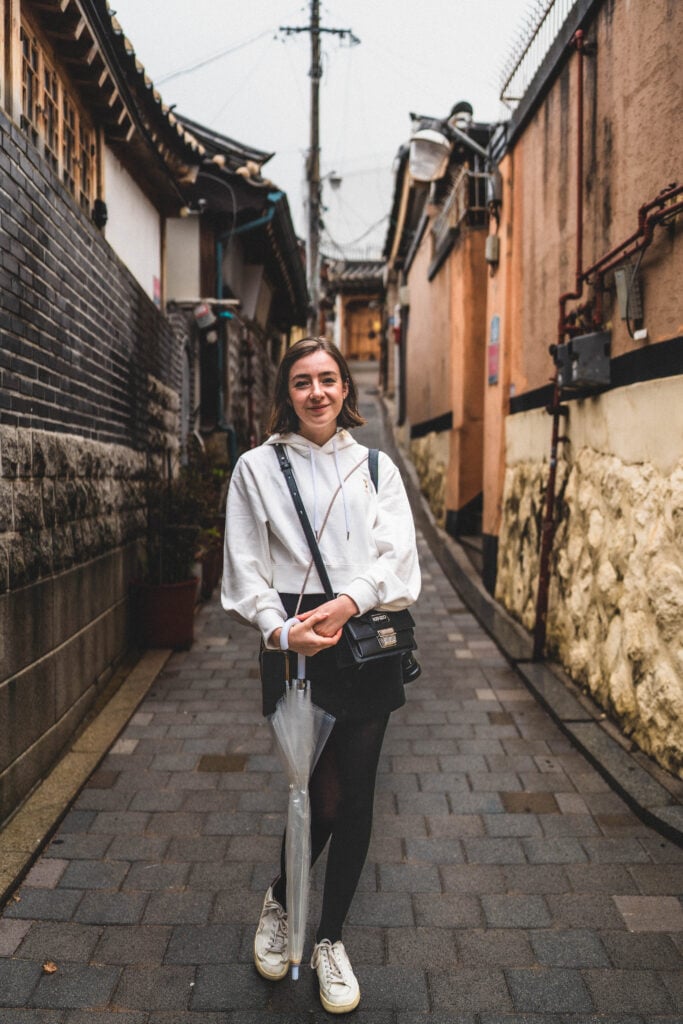
To reach Bukchon Hanok Village from the city centre you can take the Seoul Subway Line 3 to reach Anguk Station. After exiting the station through exit 3, you’ll see the signposts leading to the village, around a 200-metre walk away, you’ll reach a small alley to the left.
Top tip: When travelling in South Korea, you’ll quickly realise that Google Maps is not optimised for this destination, so you won’t be able to use it for walking around. While you can use Maps for public transportation, there will be no walking directions. Therefore, you’ll want to download Naver Maps, which is the local maps app.
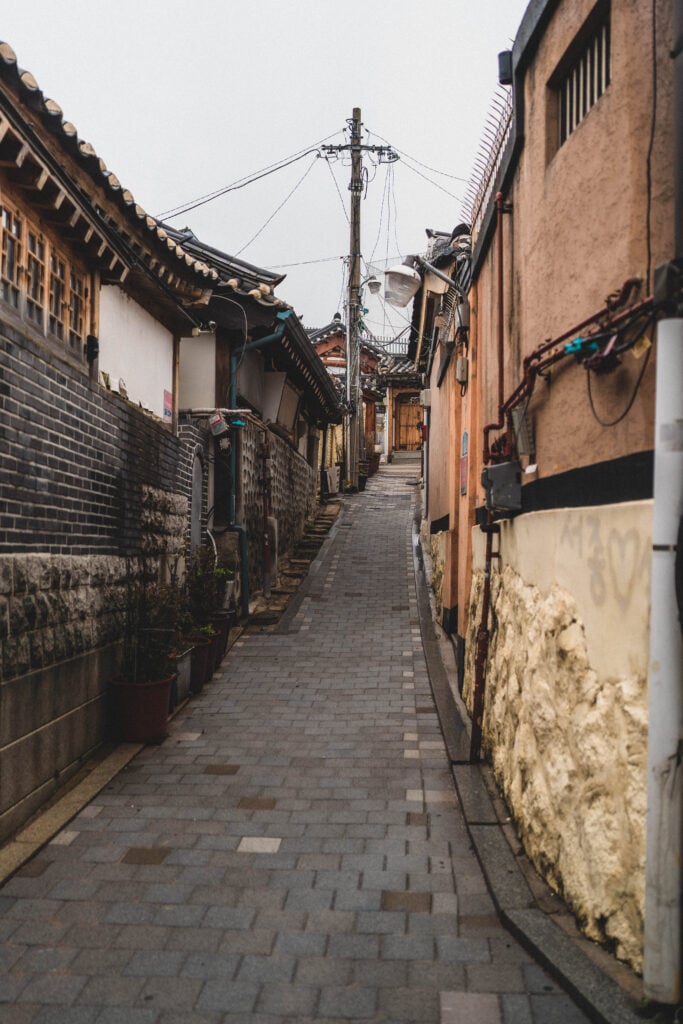
Enjoyed reading about Bukchon Hanok Village, Seoul’s hillside treasure? Pin this article now, and read it again later: