

2 Days in Mount Fuji Itinerary: Beautiful Views and Hidden Gems
Last Updated on 24th October 2024 by Sophie Nadeau
This post may contain affiliate links. Please check out my privacy policy and disclosure for more information.
From exploring lava tubes to thatched villages and soaking up views of the snow-capped mountain, there’s no shortage of things to do in the area. Here’s your itinerary on how to spend 2 days in Mount Fuji, as well as top tips to know before you go!
The majestic Mount Fuji stands as Japan’s highest peak and is listed as a UNESCO World Heritage. The iconic mountain rises above villages and emerald green forests, surrounded by five crystal clear lakes.
What is Mount Fuji?
Mount Fuji is an active stratovolcano (a volcano built up of alternate layers of lava and ash) located on one of Japan’s four main islands, Honshu. With a summit elevation of 3,776 meters it is the tallest peak in Japan and is famed for its perfectly symmetrical conical form, combined with its majestic size.
Written in Japanese “富士山” , Mount Fuji translates to “peerless one” meaning there is no other mountain in Japan quite like it. Legends say that this supreme, sacred peak harbours the secret of immortality in its depths.
The mountain has come to be both an iconic and cherished sacred symbol of the country. It’s popularity particularly grew after the Japanese artist Katsushika Hokusai published a series of woodblock prints named the 36Views of Mount Fuji (which includes the iconic print The Great Wave off Kanagawa).

Note: On a clear day, Mount Fuji can be seen from plenty of far away locations, including Tokyo, Enoshima Island and Yokohama. However, your best chance of seeing the iconic mountain up close is to head to Fujikawaguchiko.
The Five Lakes surrounding Mount Fuji (Fujikawaguchiko)
The Fuji Five, known locally as Fujigoko 富士五湖, is a region that lies at the northern base of Mount Fuji, approximately 1,000 meters above sea level. The five lakes are called: Yamanakako, Kawaguchiko, Saiko, Shojiko and Motosuko.
The lake resort area is a popular spot for those who enjoy outdoor pursuits such as hiking, fishing, camping and snow sports etc. There are also a number of hot springs, museums and various other attractions that can be found in the area.
The most accessible of the five lakes is Lake Kawaguchiko. There are direct trains and bus connections from Tokyo. The other lakes are a little harder to reach. Lake Yamanakako is the largest and closest to Mount Fuji.
Day 1 in Mount Fuji suggested itinerary
Arrive at Mount Fuji
Begin your trip by arriving in the Mount Fuji area. We chose to spend a full two days here, as it allows you to fully explore the surroundings and on the off chance you happen to be visiting when it’s overcast (like it was for us) then you’ll leave yourself more opportunities to see the snow-capped top of Mount Fuji.
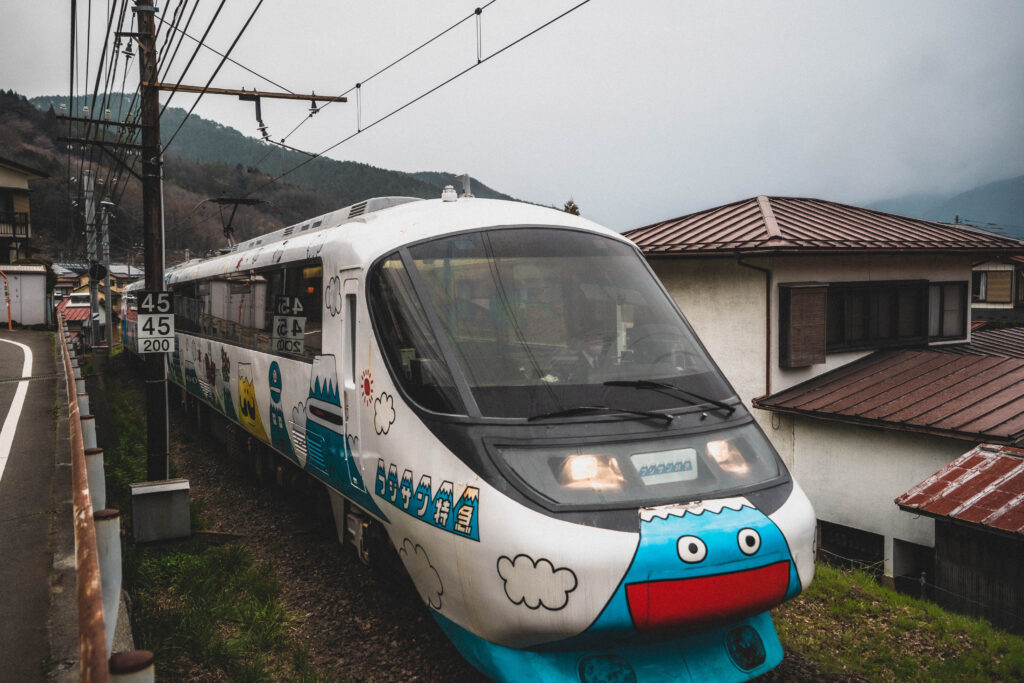
You can visit as a day or weekend trip from Tokyo. There are direct trains from Tokyo but we personally preferred to rent a car as this gave us greater flexibility to move around the region at our own pace. Check car rental comparison prices here.
Narusawa Ice Cave
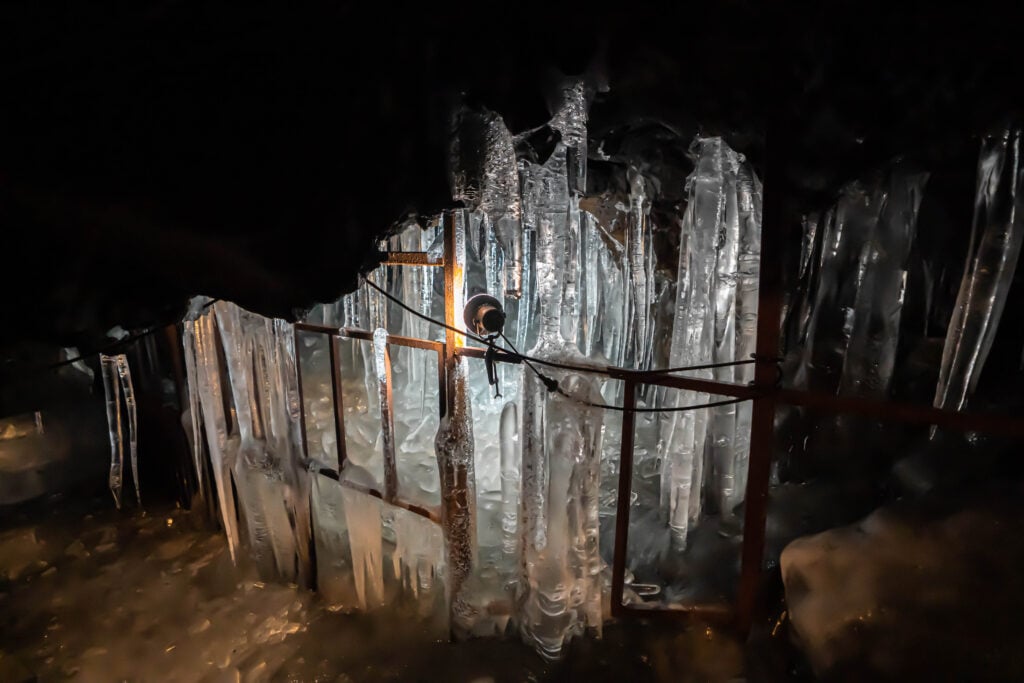
Our first stop was to one of the three larger lava tubes situated at the northern foot of Mount Fuji, the other two caves being Fugaku Wind Cave and Lake Sai Bat Cave.
There are over 100 caves in the area and they are all created by volcanic eruptions. In fact, it’s very rare to have such a prolific number of caves in one single spot. Inside the ice cave you’ll see plenty of ice pillars, some of which measure over 3 meters in length!
The path that takes you through the cave loops back, forming a figure of eight and at its lowest point the tunnel goes 21 meters underground.
As the name suggests, the cave can be pretty chilly with temperatures remaining between 0-3 Celsius. Be sure to bring a jumper with you (even during summer) and also wear comfortable shoes as the paths going through the cave can be steep and quite slippery. It is considered to be a difficult route.
Truth be told, you only really need 10 minutes to see the cave, so I wouldn’t necessarily come out of your way to visit unless you have your own transport. And, it has to be said that this is certainly not the place for you if you’re claustrophobic!
Fugaku wind cave
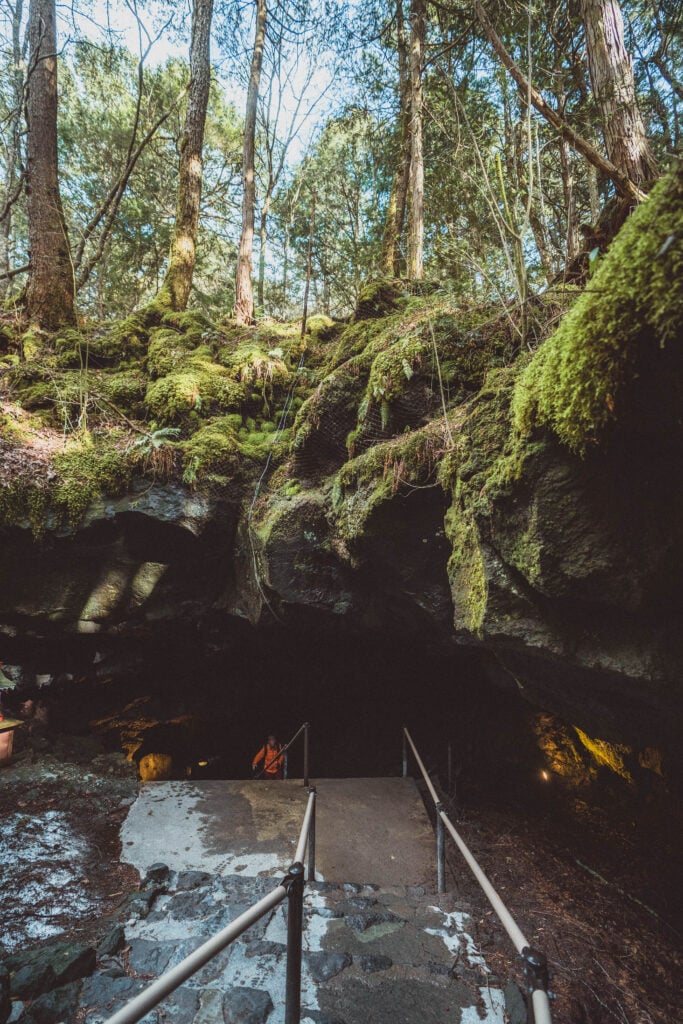
Just a 2 minute drive or 20 minute walk away you’ll find the wind cave. This was noticeably much busier as the route is more accessible and considered to be easier.
Again, this lava cave was made by volcanic eruptions and inside you can see lots of fascinating rocks and lava formations with interesting textures. It was also once used as a seed bank for which to store goods, thanks to the cool temperatures within the tunnels.
Both of the caves mentioned are designated as Japan’s natural monuments, and it’s true that they are a remarkable wonder of nature to see!
Worth noting, you can buy a combination ticket for both the ice and wind cave and because they’re only a few minutes drive away from one another, I recommend seeing both! To visit the caves individually it costs 350 yen.
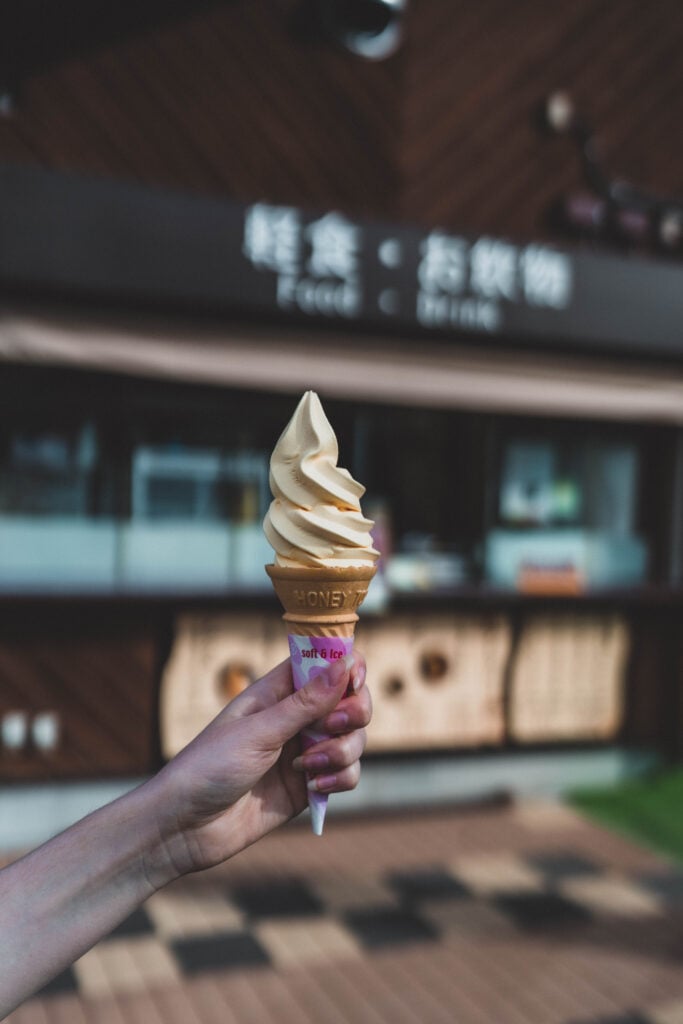
If you are looking for a particularly unique snack, then there’s a stand selling soft serve sweetcorn ice cream close to the cave’s entrance. While you can enjoy it plain, it’s popular to salt the top of this snack to make for a sweet and salty treat!
Saiko Iyashi no Sato Nenba
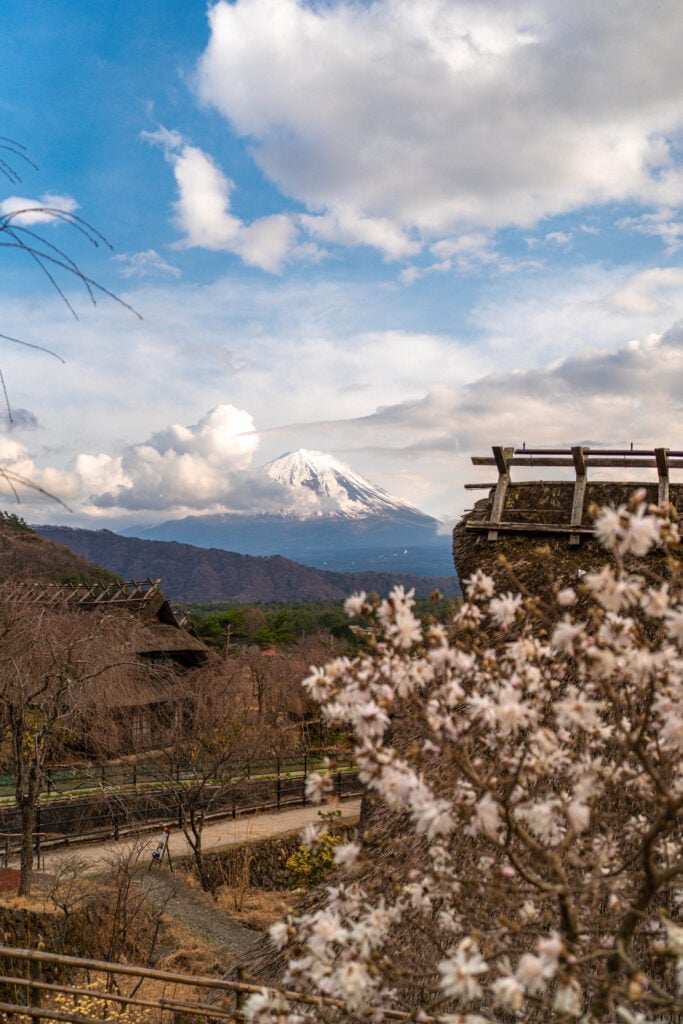
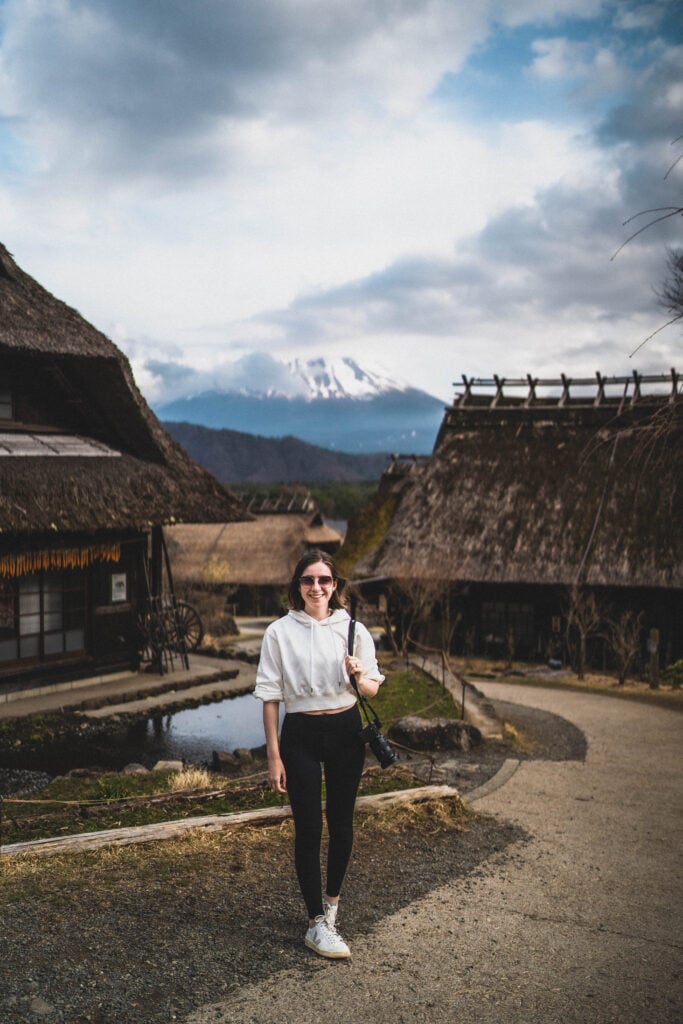
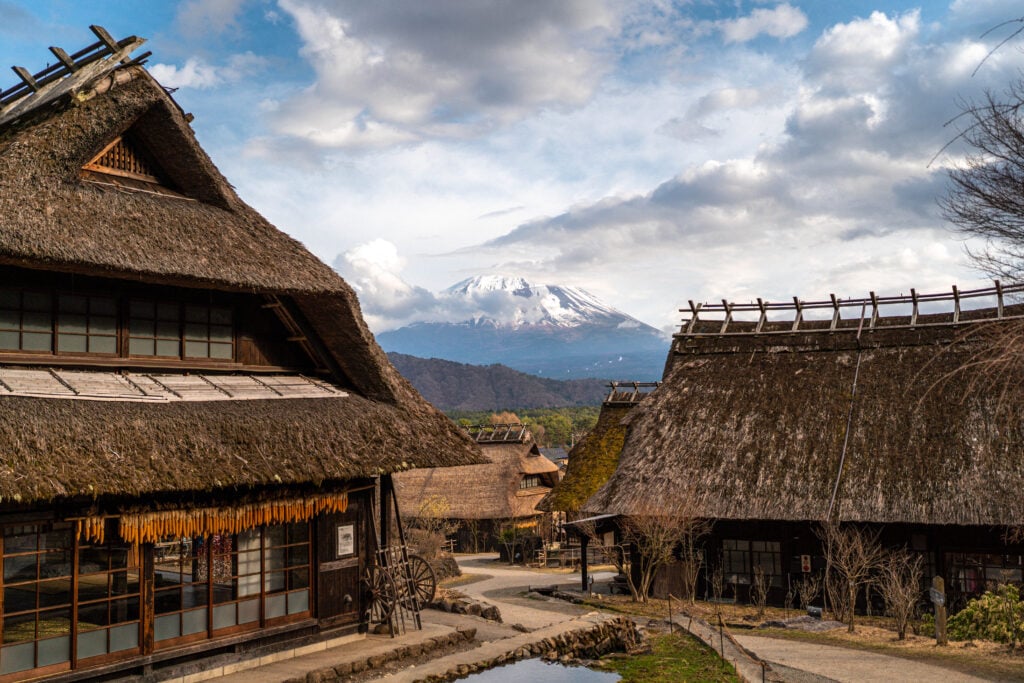
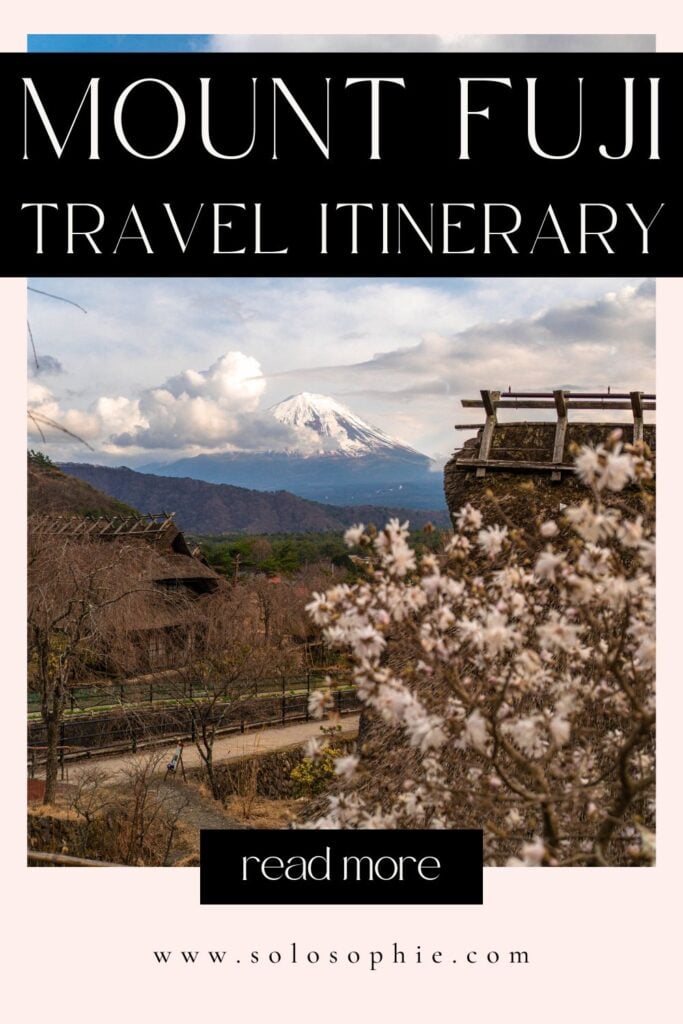
Next, head to the thatched village for a chance to see the mountain. On a clear day, this spot offers amazing views of snow-capped Mount Fuji. This reconstructed traditional Japanese village of thatched roof houses did feel a little less authentic than that of some of Japan’s other thatched villages like, Kayabuki no sato, but it is pretty nonetheless.
You actually have to pay 500 yen to visit the village, but it’s worth it to see this charming spot and if you are lucky you’ll also be blessed with beautiful views of Mount Fuji.
Nenba village has a sombre history. Up until 1966 there was a vibrant farming community of over just 40 houses. However, all of that changed when a huge mud slide washed away most of the village. Today, around 20 of the thatched roof homes have been reconstructed and transformed into shops, galleries and museums.
Local activities in the village include, figurine painting, shopping for souvenirs and tasting local produce! There’s also the Sabo Museum which displays an exhibition of the mud flow disaster, showing life in photographs prior to the accident as well as discussions on how to learn from and prevent the same tragedy occurring again.
On our visit the clouds were pretty dense, but they did briefly part and Mount Fuji revealed itself to us for the briefest of moments, making the visit all the more magical!
Day 2 in Mount Fuji suggested itinerary
Yamanakako
Start your second day at Lake Yamanakako, which is the largest and closest to Mount Fuji of the Fuji Five. The charming village that lies on the shoreline of Lake Yamanaka has a few things of interest:
- Hirano Beach – This is the spot to see the iconic Mount Fuji reflected into the water. Be aware, swimming is completely prohibited.
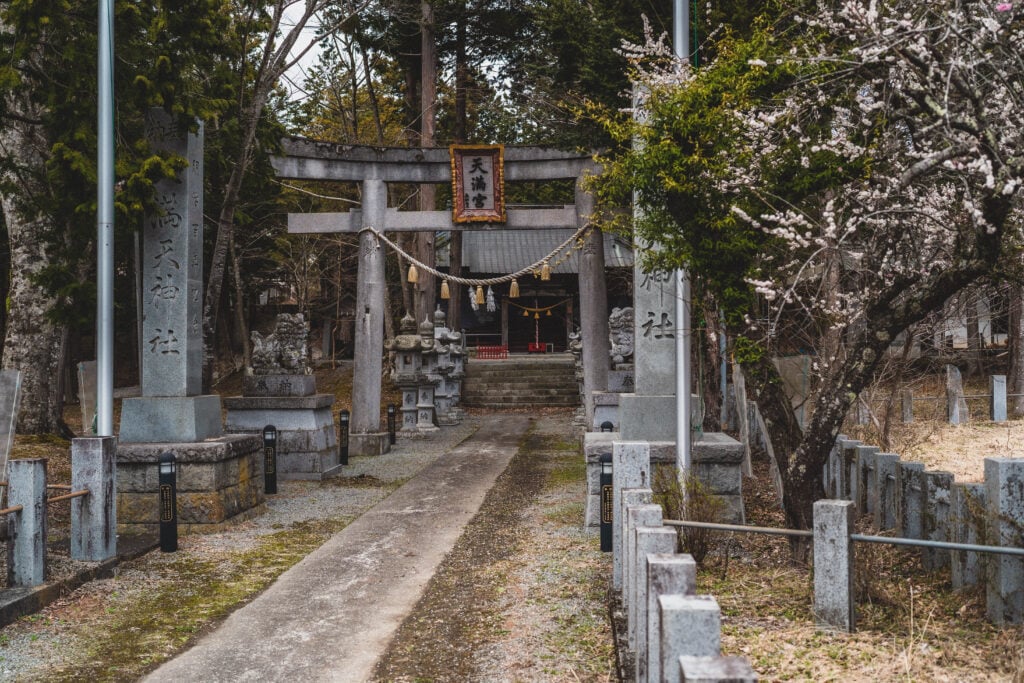
- Hiranoten Shrine – The main Shinto shrine in town.
- Patisserie HACONIWA Yamanakako – This delightful café even has a rooftop where you can enjoy views of Mount Fuji if the weather is clear enough! They don’t have any specific vegetarian options but were happy to make me an omelette without the usual accompaniment of a beef stew served together with a green side salad.
Yamanakako Hana no Miyako Park
It’s then just under a 10 minute drive to reach the the beautiful flower park. Best visited during late spring or early summer when you can enjoy gorgeous flower fields. The vibrant colours change colour with the season and stretch over 300,000 square meters with Mount Fuji majestically sitting in the background.
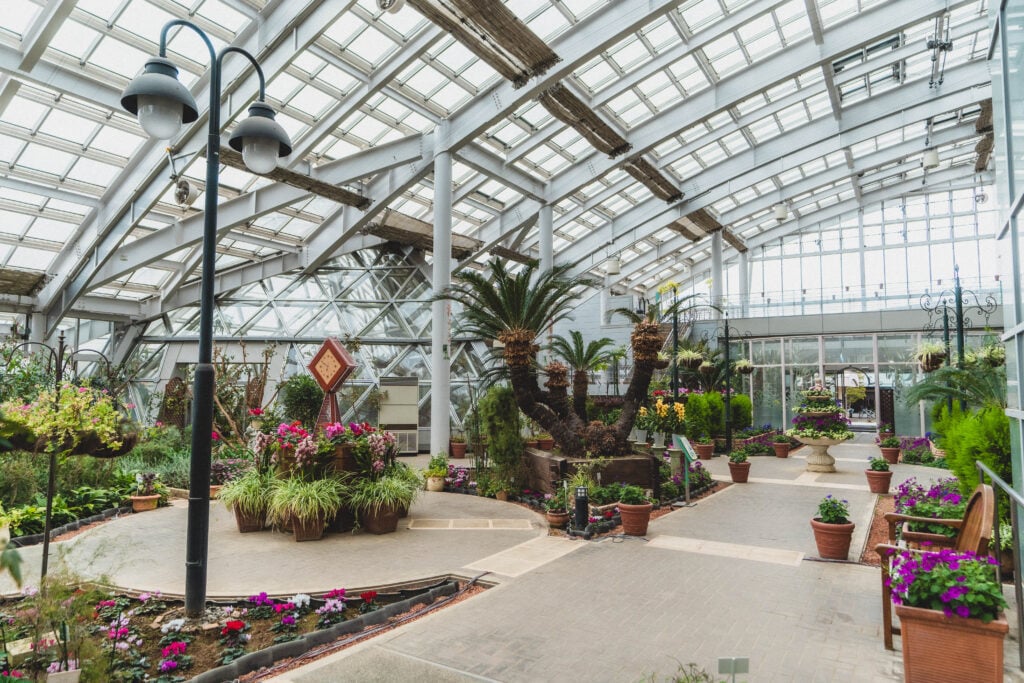
If you happen to visit during the winter or early spring, you won’t be able to see the flowers in bloom. However, there’s a small botanical greenhouse area which has beautiful flowers all year round.
That being said, it only takes 10 minutes to walk around the greenhouse, so it’s not necessarily worth going out of your way to visit. Luckily the price to visit the gardens is much lower in the low season when there isn’t as much to enjoy!
Oshino Hakkai
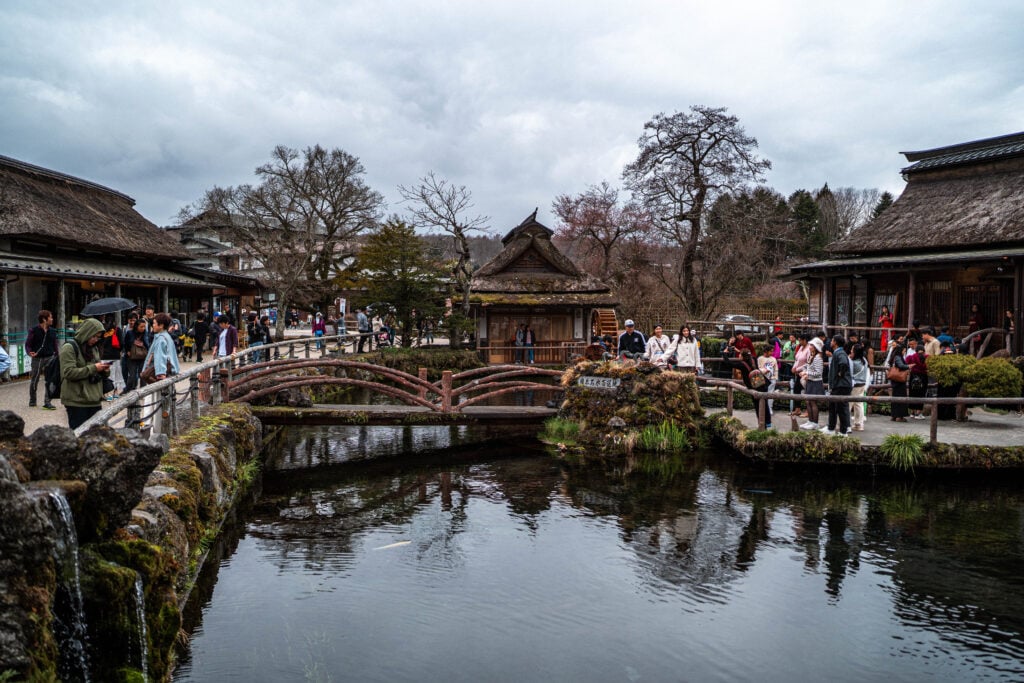
Driving just ten minutes down the road will transport you to Oshino. This picturesque mountain village is known for its set of eight crystal clear spring ponds, which are considered to be sacred. The springs are part of Mount Fuji’s UNESCO World Heritage Listing and as such are a Natural monument of Japan.
Since ancient times people have been making the pilgrimage to the summit of Mount Fuji and these eight springs are the place from which many people have made the journey, they are thought to be a place of purification.
The ponds are fed with snow from Mount Fuji and lots of them are filled with fish. Apparently if you wear polarised glasses its much easier to see the fish through the water! In the area there are temples and shrines nearby to explore, as well as a museum where you can learn a little more about the history of the area.
Dotted around the ponds as you walk around are watermills and bridges, adding to the charm and tranquility of the setting. It’s seemingly the perfect spot for a rainy day, which makes sense as there’s quite a lot to see in the area.
Kitaguchi Hongu Fuji Sengen Shrine
Set against the backdrop of a dense and ancient forest, this stunning shrine is one of the most important in the region and is one of over approximately 1,300 Asama shrines in Japan.
Sengen and Asama shrines are a type of Shinto shrine that are centred around the worship of the kami of volcanos, more specifically and often, Mount Fuji.
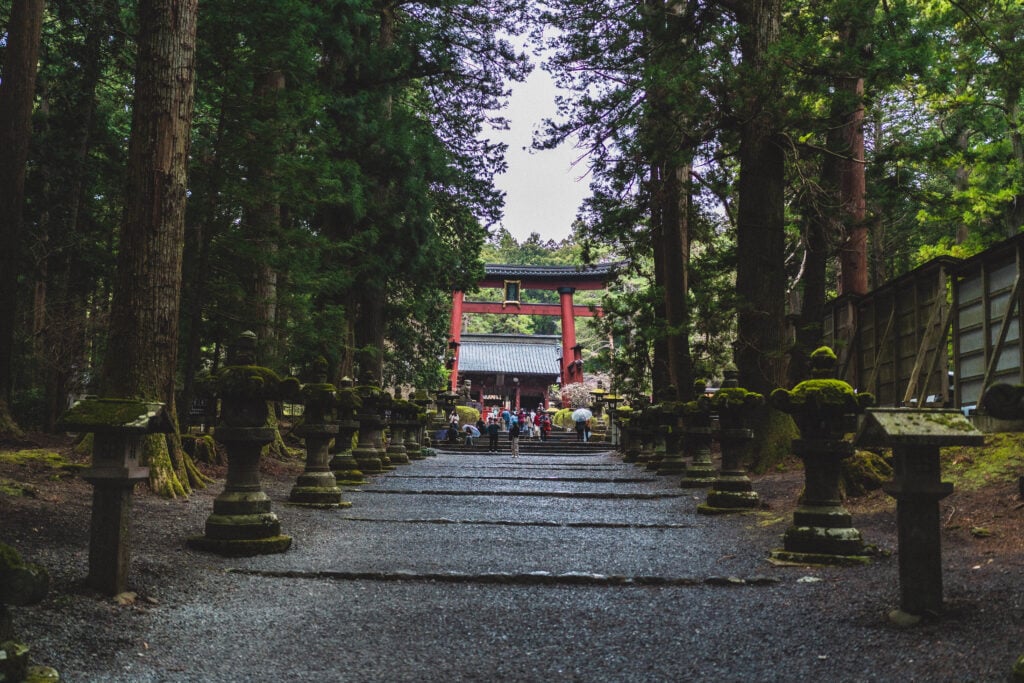
Kawaguchi Asama shrine
Asama shrines are dedicated to Konohanasakuya-hime, the cherry blossom princess, who is the goddess of Mount Fuji and all volcanoes in Japanese mythology.
This shrine is famed for its Torii Gate which has roots dating back all the way to the 15th century. It stands at an impressive 70 meters high, making it the highest Torii gate that’s wooden, in all of Japan.
Within the grounds of this particular shrine you can see four Japanese cedar trees which are believed to be over 1,000 years old. It is also the start of the main train which many people take, leading them to the summit of Mount Fuji.
Chureito Pagoda (忠霊塔, Chūreitō)
For another mountain viewpoint, head to the one of the most famous and iconic spots to (hopefully) soak up the view of Mount Fuji!
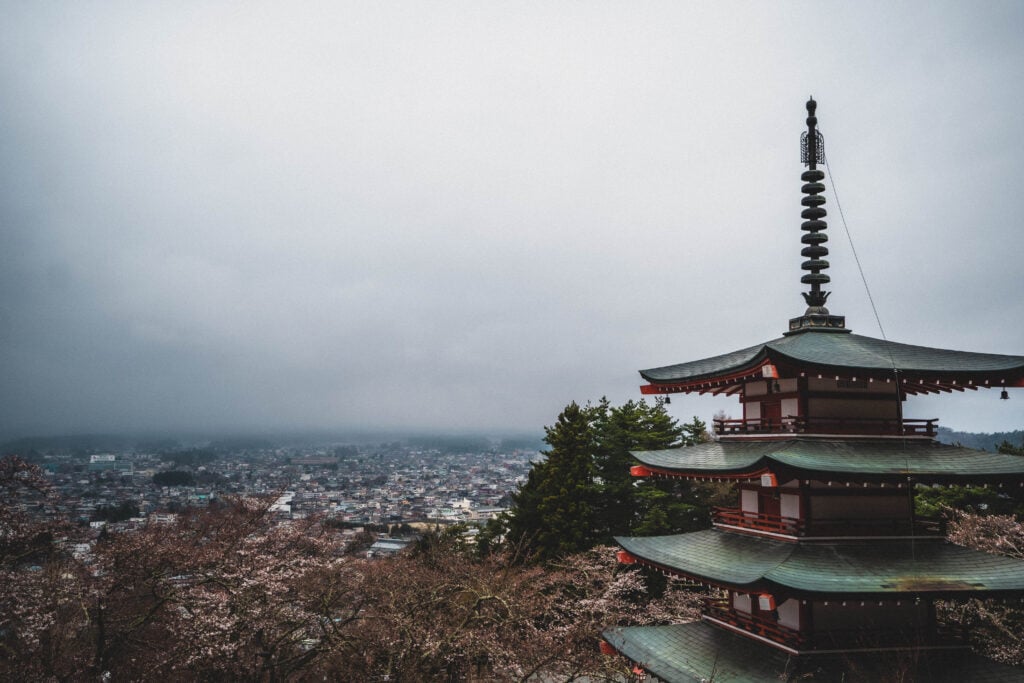
This five storied pagoda overlooks the city of Fujiyoshida and is situated directly opposite Mont Fuji, so you can expect to see stunning views. Unfortunately on our visit the weather was overcast, but we still enjoyed the views over the city along with the cherry blossoms.
Overall there are a total of 398 steps to reach this iconic red and white pagoda. Visiting both the pagoda and the surrounding park are completely free to wander around, although it can get pretty busy as it’s one of the most popular things to do in the region.
Shimoyoshida Honcho Street
Located around a fifteen minute walk away from the pagoda, is Honcho Street, which is a street that runs through the centre of Fujiyoshida and connects the city to Mount Fuji.
Famed for its retro signs, this streets is both a shopping and residential area which has become popular among tourists for the unique views of Mount Fuji (when it’s not an overcast day!) looming over the busy city below.
There are several warning signs as well as online information asking that visitors take photos with caution and don’t just step out into the middle of the roads (yes, some people do forget there whereabouts when getting snap happy) it’s a busy city and can be dangerous to just stop on the roads for a photo.
Best views of Mount Fuji
- Mt. Fuji Panorama Ropeway
- Koyo-Dai Lookout Platform
- Sanko-Dai Lookout Platform
- Rooftop of Fujisan (Mount Fuji) Station
- Please note that, as of 2024, it is no longer possible to view Mount Fuji from Lawson Kawaguchiko
Where to stay near Mount Fuji
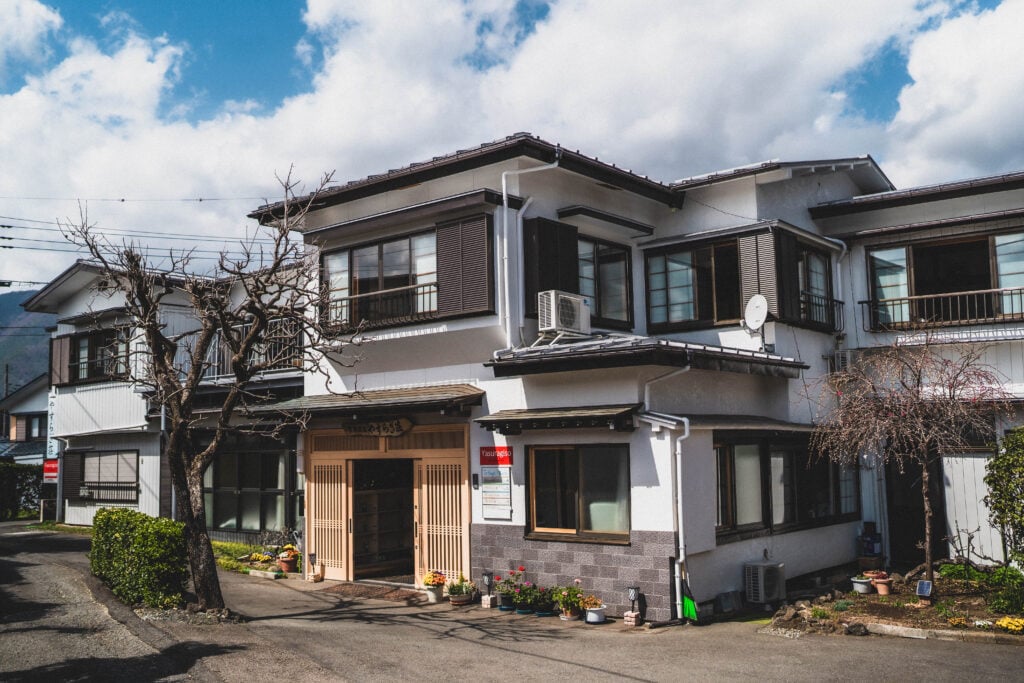
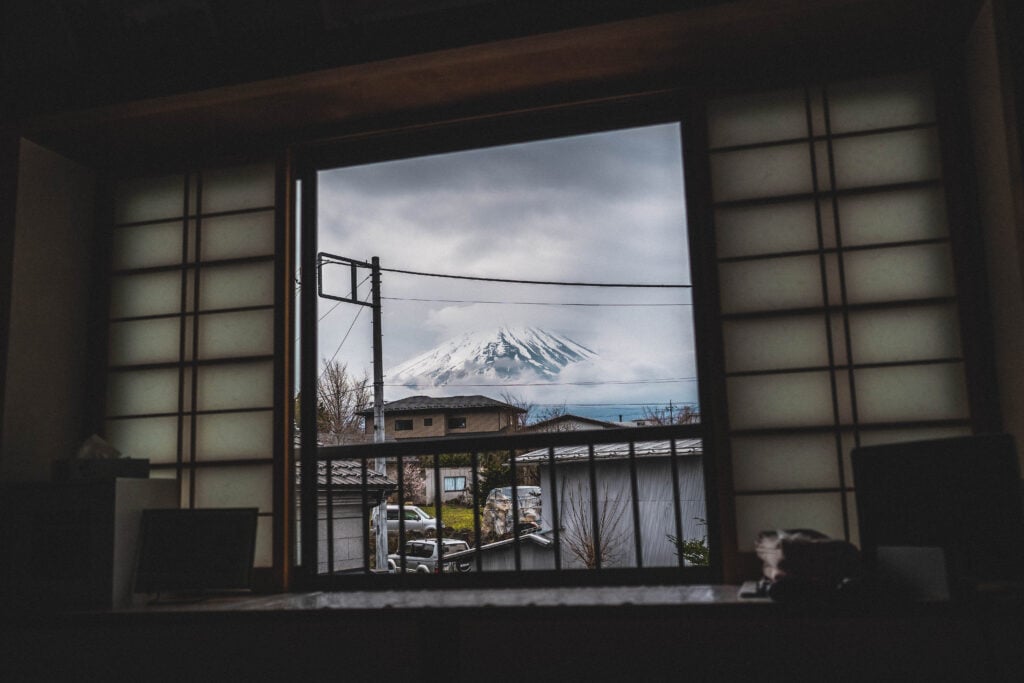
Yasuragiso – We stayed at Yasuragiso which is a traditional guesthouse where you sleep on futon on tatami! If the weather is in your favour, then you can awake to gorgeous views of Mount Fuji from your bedroom window. The guest house is clean and comfortable and makes for a great base from which to explore the wider region.
Watch the Mount Fuji vlog
Enjoyed reading about how to spend the perfect 2 days in Mount Fuji? Pin this article now, read it again later:


Hey, thanks a lot for the excellent blog post, we are very excited for our trip to Japan in October !
I’ve been trying to find ways to book a couple nights at Yasuragiso which looks dashing but could not find any platform, website, contact, etc. Did you go straight there and managed to find a room or did you manage to book in advance (if yes, how?)
Thank you for your comment- I hope you have a wonderful time in Japan! They are actually only available on the Airbnb platform as far as I know and so we booked through Airbnb! Do be sure to book at least several months in advance (particularly if you want a room facing Mount Fuji).