
How to Visit Kinkaku-ji (Kyoto’s Golden Temple)
Last Updated on 27th June 2024 by Sophie Nadeau
This post may contain affiliate links. Please check out my privacy policy and disclosure for more information.
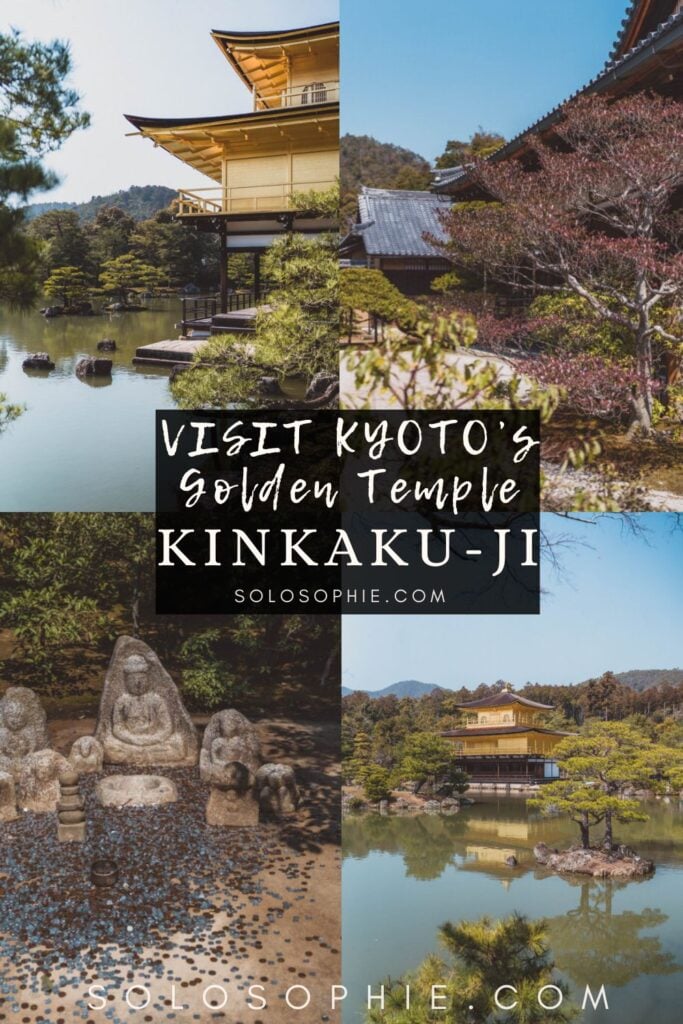
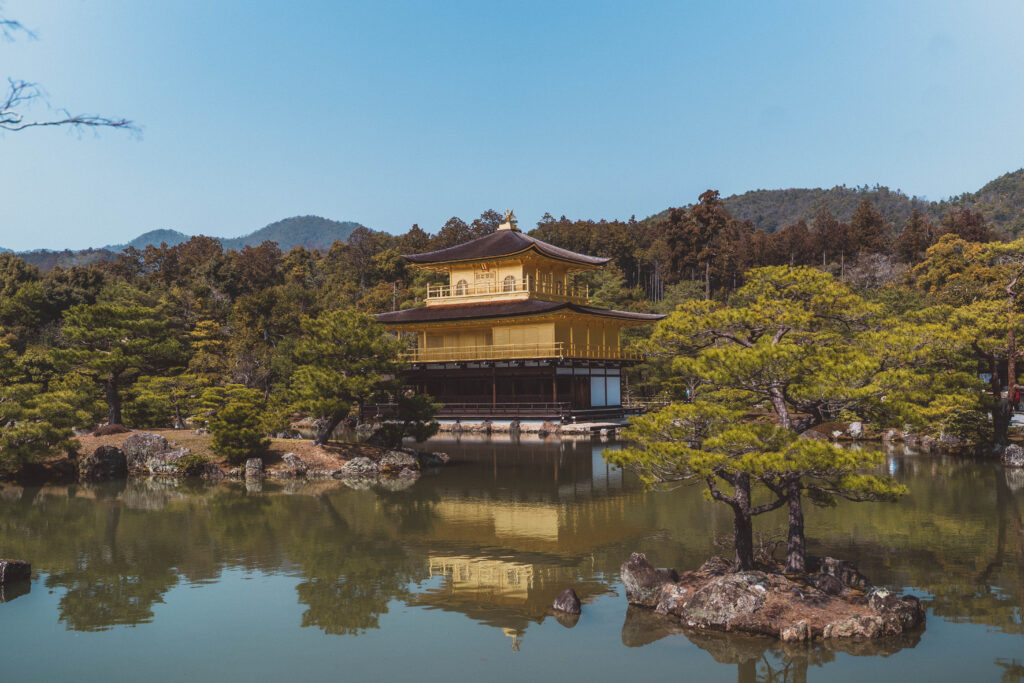
Kinkakuji, officially named Rokuon-ji and known as the ‘Golden Pavilion’ (金閣寺) is Kyoto’s gold leaf covered treasure. Situated in the north of Kyoto, this beautiful Zen temple is a unique structure that stands glowing, reflecting the water of the Mirror Pond below.
Here’s your ultimate guide on how to visit Kinkaku-ji as well as top tips to know before you go.

A history of Kinkaku-ji
With a history dating back as far as 1397, the site was formerly known as Kitayama-dai and was a complex of buildings, with the Kinkaku-ji being the retirement home of shogun, Ashikaga Yoshimitsu, until his death in 1408. After Yoshimitsu’s passing and by the wishes of his final will, the pavilion was converted into a Zen temple by his son and given to Zen Buddhist monks.
During the civil war (Ōnin war, 1467–1477), in which most of Kyoto was destroyed, all of the buildings in the retirement complex aside from the temple were burnt down.
However, on the 2nd of July in 1950, there were reports of a fire breaking out at the temple, which was intentionally set by a young student and apprentice monk, Hayashi Yoken, who suffered from mental illness. There were in fact seven fire alarms installed in the temple at this point, but unfortunately the batteries in them had burnt out a few days prior, rendering them useless.
Unfortunately by the time the fire brigade reached the temple the flames were too strong and there was nothing they could do, leaving Kinkaku-ji completely burnt down. Thankfully no one was harmed in the fire, bute a national treasure of Kyoto was lost, including the original statue of Ashikaga Yoshimitsu (which has since been restored) and several sutra scrolls.
The pavilion structure we see today dates back to 1955, and was rebuilt to be as close a copy to its original as possible. In 1994 Kinkaku-ji was designated as a UNESCO World Heritage Site, becoming one of the 17 sites that can be found in Kyoto.

The interior of the Golden Pavilion
Unfortunately visiting the interior of the Golden Pavilion is usually closed to the public, but you are able to see parts of the inside from afar.
Esteemed for its beauty! The three-story temple was built to echo the style of the extravagant Kitayama culture, which was developed in the wealthy aristocratic circles of Ashikaga Yoshimitsu’s times. Each floor of the temple is built in different architectural styles:
Shinden style
The first floor is decorated in an architectural style that was created in the Heian period, often used for palaces and residences of nobles. Adorned with natural wood pillars and white plaster walls, there are statues of both Shaka Buddha and Ashikaga Yoshimitsu (which was restored after the fire). Although you can’t go inside, the statues can be seen from a distance.
Bukke style
The second floor is built in an architectural style which was used for the homes of military families. Inside is a statue of Kannon Bodhisattva (a popular and frequently depicted deity in Japanese Buddhism), surrounded by statues of the Four Heavenly Kings (protectors of Buddhism who guard against evil forces from the four directions).
On this floor the exterior is completely covered in gold leaf, glowing from the reflection of the water below.
Style of a Chinese Zen Hall
On the top floor, similar to the architecture style of a Chinese Zen Hall, which teds to express that of the meaning of Zen, natural and simple. This floor is also covered in gold leaf and sitting on the very top is a golden phoenix.
Highlights of Kinkaku-ji
Golden Pavilion
A shimmering structure richly decorated in gold, this temple is one of the most famous in Japan and is certainly the star of the show when you visit!
Overlooking the large Kyoko-chi, or Mirror Pond, the Golden Pavilion stands as a timber frame with a clay tile roof. You can enjoy views of it from all angles, the best being from across the water where it’s surrounded by luscious trees and doubles in size with its reflection stretching across the still water.
Gardens
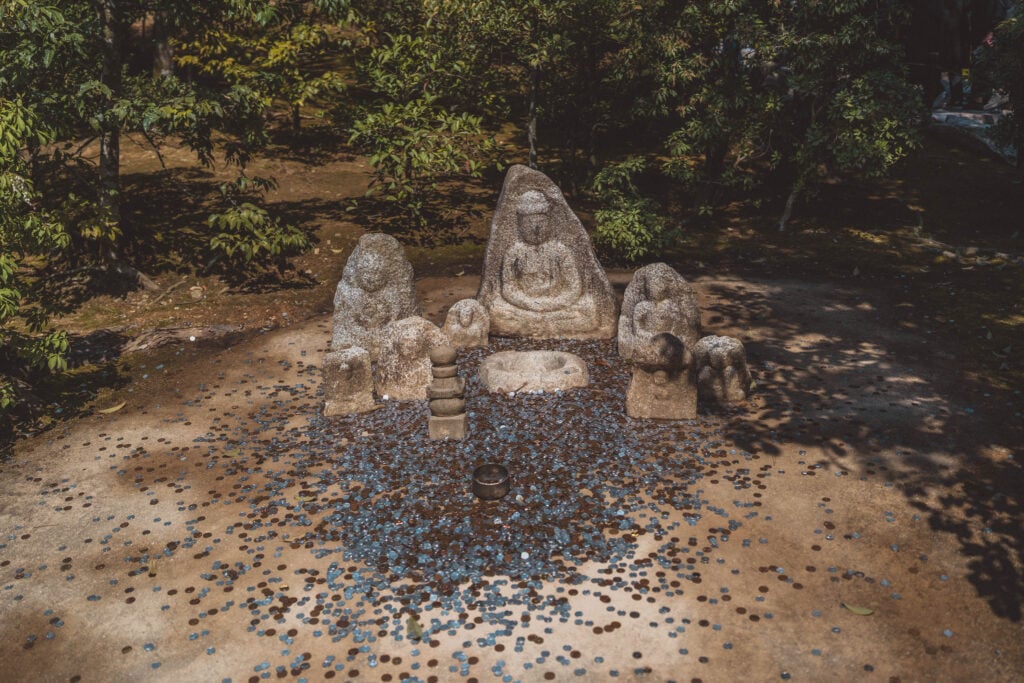
After you’ve seen the Golden Pavilion, you’ll carry on the trail through the Temple’s Gardens. Designed like that of a traditional Japanese stroll garden, which is common of the Muromachi period style of gardens, the space is not only to be enjoyed visually, but it is also a place of reflection.
Wandering through the paths around the pond of this meditative space is extremely calming, filled with symbolic features, such as an array of statues. It’s also a great place to enjoy views of the Golden Pavilion.
Tea Garden
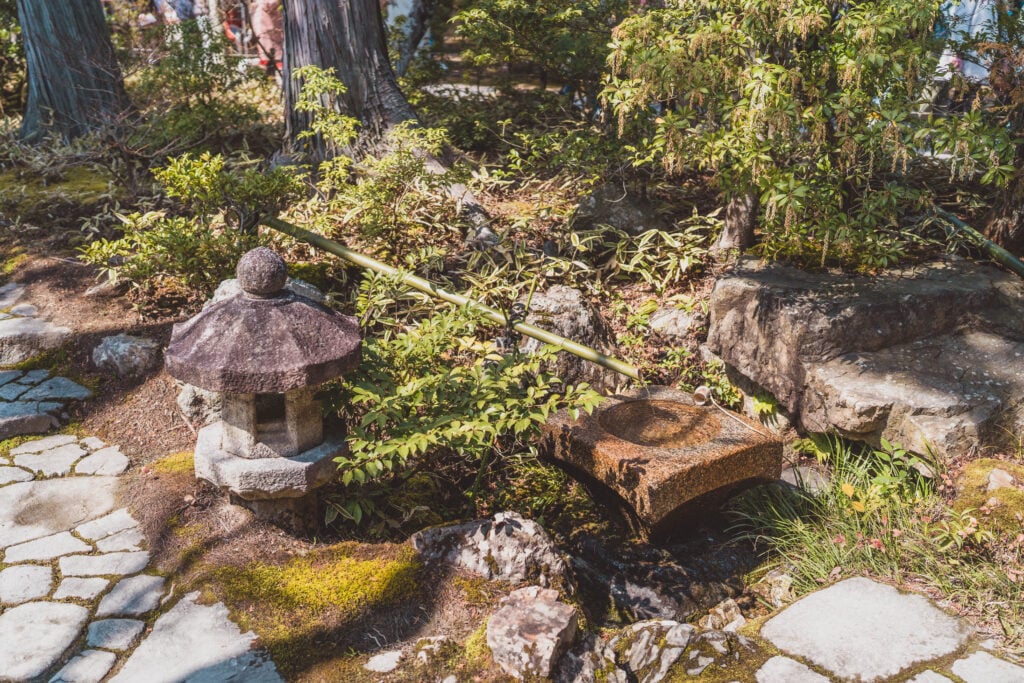
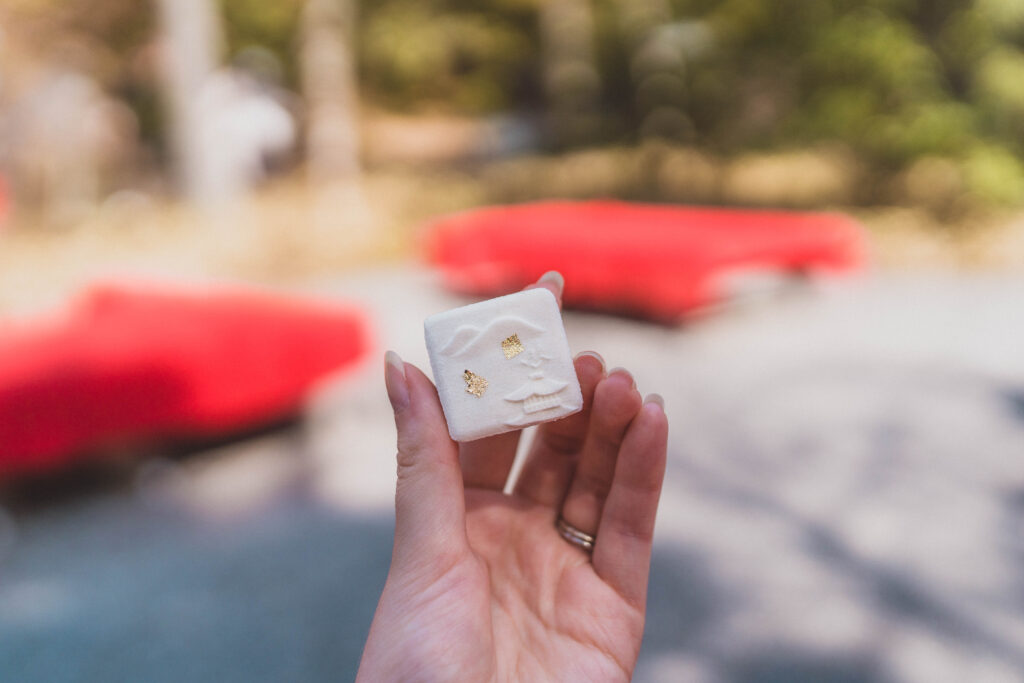
After you’ve wandered around the garden, you can sit out in the garden or in a traditional interior (complete with tatami where you’ll have to take your shoes off before entering) and enjoy a matcha tea with a traditional sweet cake for 500 yen. At the entrance to this part of the garden, you’ll even find a beautiful bamboo fountain.

Snack area
Directly outside of the Temple Complex area you’ll find stores selling goodies like soft serve matcha ice cream and other popular snacks. You can also buy drinks. Please note that no food or drink is allowed to be consumed within the actual grounds of the Temple as this is a sacred place of worship.
How long do you need at Kinkaku-ji?
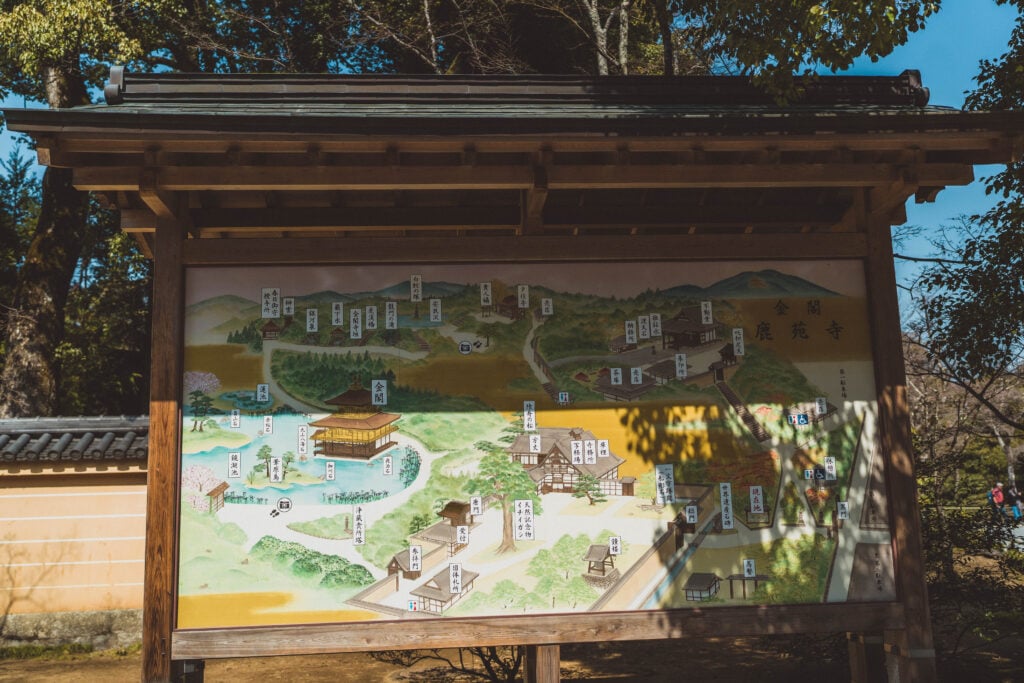
To be honest the trail loop isn’t very long and so you only need half an hour or so to follow the trail, snap photos, and admire the beauty of the place. If you want to get a tea at the end of the trail, then set aside an extra half an hour.
All in all, we spent an hour at the temple and found this a sufficient amount of time to explore.
Best time to visit Kinkaku-ji
The best time to visit is definitely mid-week, and ideally if you can, I suggest going closer to 9am when the temple opens as it will be much quieter for photo opportunities.
That being said, if you plan your visit around light, the late afternoon glow of the sun can be a really special time to visit! Just be sure to allow yourself enough time to explore the area properly.
Kinkaku-ji is open daily from 9am-5pm, all year round. Admission fee is 500 yen (adults).
How to visit Kinkaku-ji
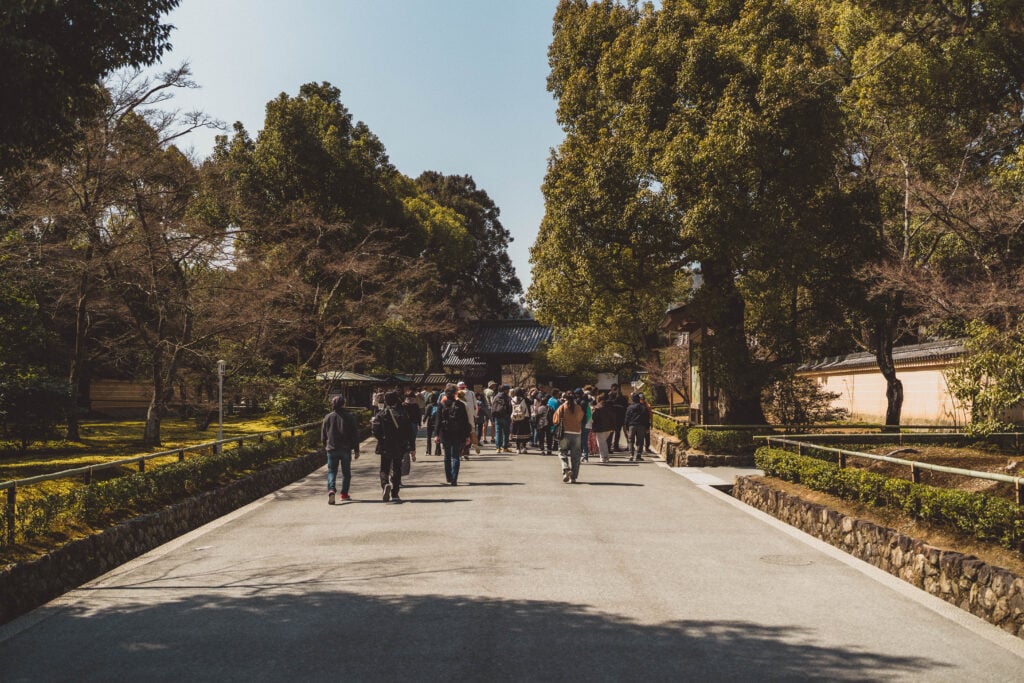
The easiest way to visit Kinkaku-ji is to take the bus from the centre of Kyoto towards the north. The bus you’ll need to take is the 205 and it usually takes just under 40 minutes to reach the temple from Kyoto bus terminal (right outside Kyoto station). At peak times the bus can get pretty busy and you might need to wait for another bus to turn up if the first bus which arrives is too full.
Taking a bus in Kyoto is a bit different from what you might be used to. For starters, everyone forms an orderly line in order to get on the bus. You then board from the back and leave from the front (which is also when you pay). You don’t need to buy a bus ticket in advance.
When you take the bus, you’ll need to pay with exact money (and tickets are cash only). In 2024, the price of an adult bus ticket is 230 yen. If you don’t have the right change, then you should head to the front of the bus and exchange your coins using the coin exchanger.
Looking for more inspiration while visiting Kyoto? Why not check out our guide on the best things to do in Kyoto. Or, better yet, we’ve planned a day for you!
Find out:
- How to spend the perfect one day in Kyoto itinerary here
- How to spend the perfect 2 days in Kyoto
- How to spend the best 3 days in Kyoto
Enjoyed learning about Kyoto’s Golden Temple, Kinkaku-ji? Pin this article now, read it again later: