How to Visit Castello Aragonese d’Ischia (Aragonese Castle)
Last Updated on 26th June 2024 by Sophie Nadeau
This post may contain affiliate links. Please check out my privacy policy and disclosure for more information.
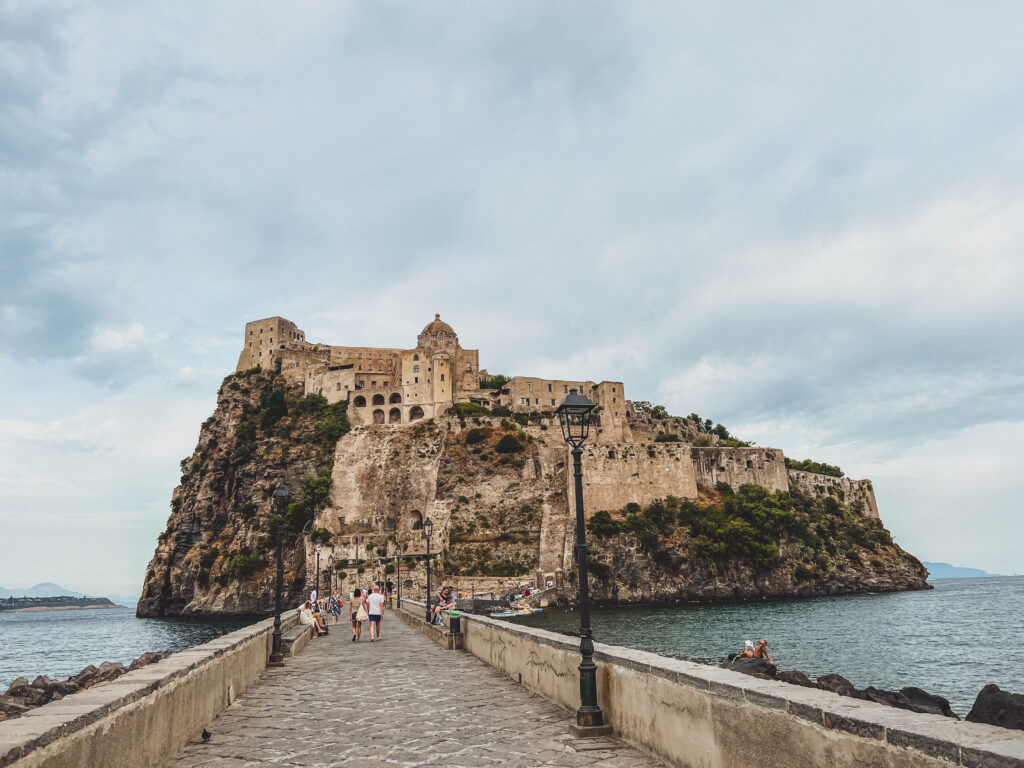
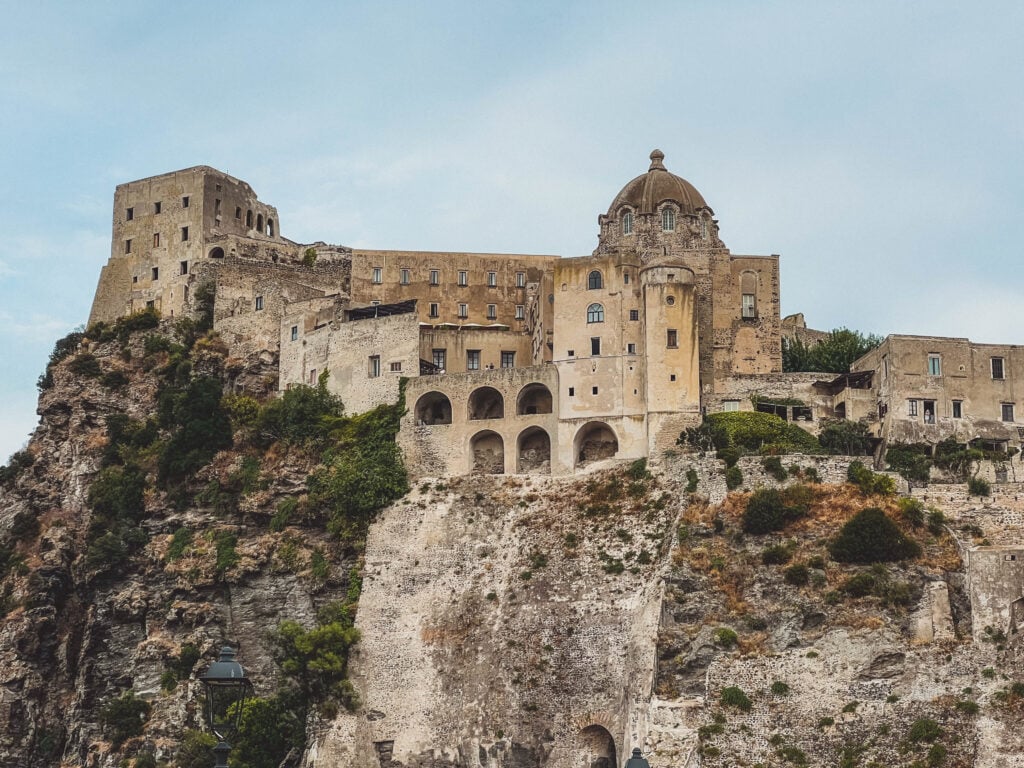
As if straight out of a fairytale, this elegant and dramatic medieval castle perched upon a small rocky volcanic island, exudes history and intrigue. The Aragonese Castle is one of the best things to see when visiting Ischia. Steeped in history that dates back to the 5th-century BC, the walls of this ancient building have lived through and seen centuries of different civilisations.
Here’s how to visit Ischia’s beloved Aragonese Castle, as well as top tips to know before you go.
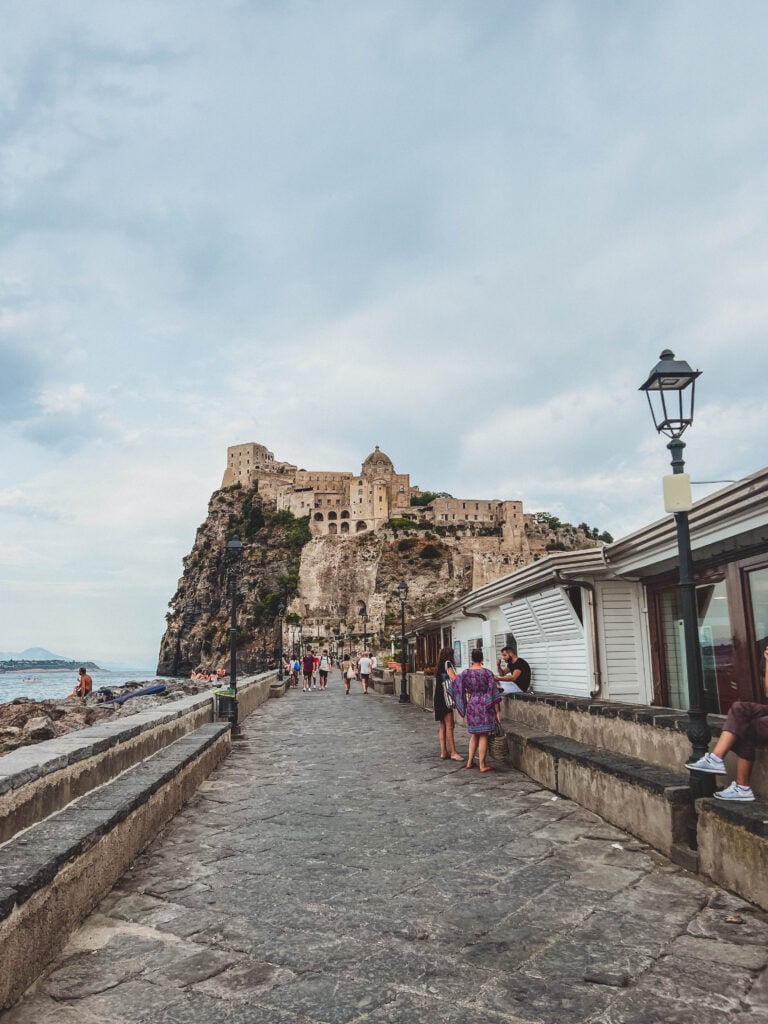
Where is Castello Aragonese?
Built on it’s own small tidal island, it lies just east off the island of Ischia, connected by a cobbled stone walkway, sitting at the northern end of the Gulf of Naples, Italy.
If you are planning to visit Castello Aragonese, why not check out our Ischia itinerary for top tips on where to go and what to see while visiting this area.

A history of Aragonese Castle
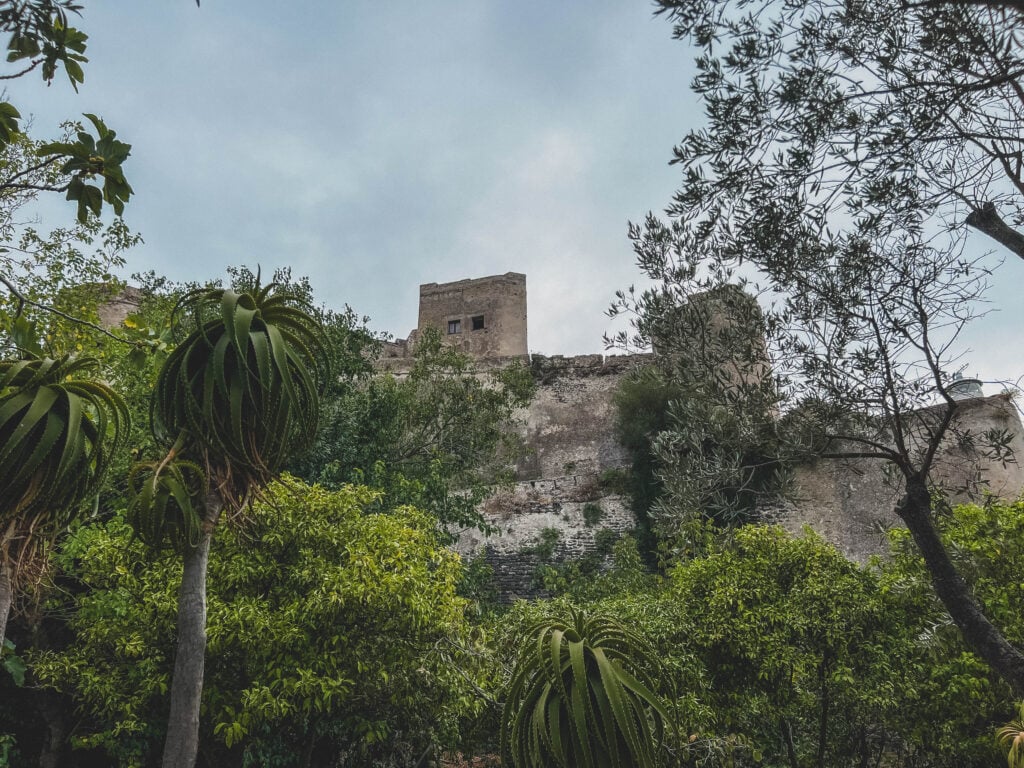
A fortress steeped in history, the first parts of this historic site were built in 474 BC by the Greek tyrant Hiero I of Syracuse, and was originally known as Castrum Gironis, Castle of Geron (Hieron’s brother).
Hiero actually had a small village built within the fortress walls, and two more towers were added on as a means for defence. After some time, the Parthenopeans (the ancient inhabitants of Naples) occupied the volcanic island.
In the 15th century the castle came under control of the the Aragonese dynasty, from which it derives its name as we know it now. During this time the Aragonese Castle became the residence of various noble families as well as a prison for political prisoners.
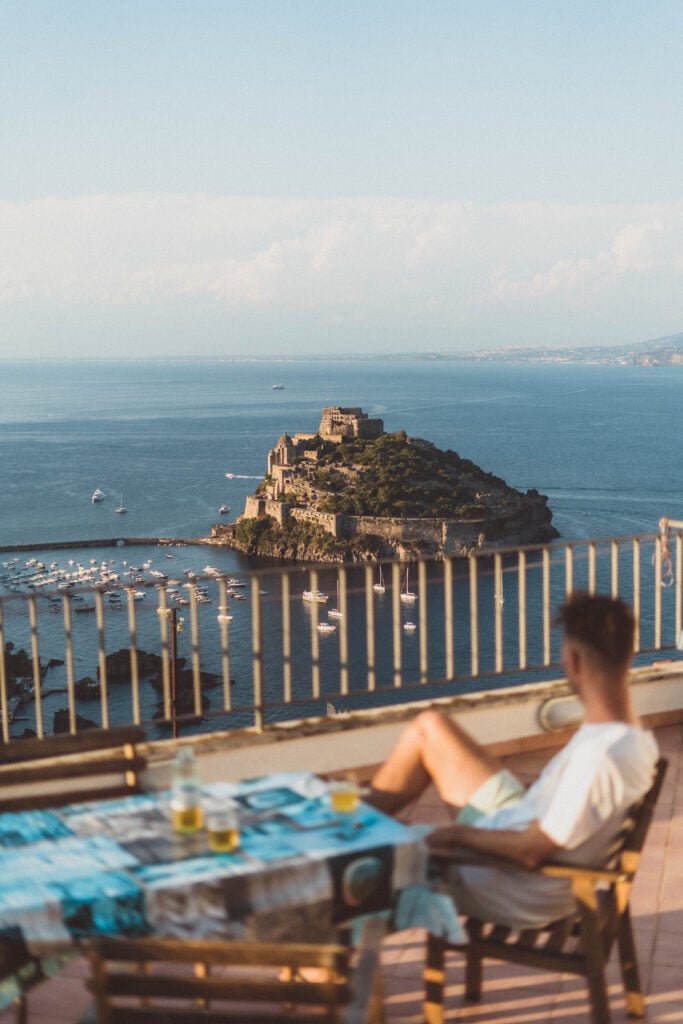
It wasn’t until 1441 that the castle was connected to the main island of Ischia. Alfonso V of Aragon was the one to order a stone cobbled walkway, instead of a wooden bridge (more commonly used) but the walls of the walkway were fortified, as well as further fortifications on the castle itself.
In the 1700s almost 2000 people inhabited this small islet, including a Poor Clares convent. By this time in history there were an impressive number of 13 churches on the island.
Today the third generation of the Mattera family maintain the castle, ensuring that it’s open daily for visitors to wander around and truly be immersed in the deep roots of this ancient castle.
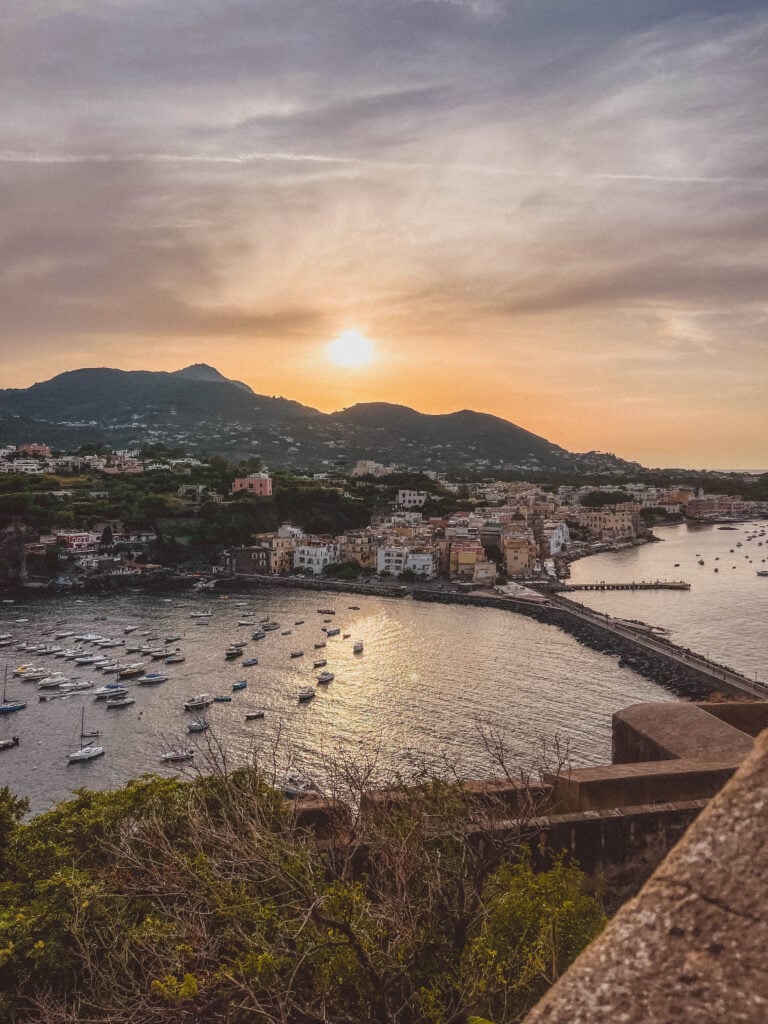
Highlights of Castello Aragonese d’Ischia
There are around two dozen stops on the 2 km walking tour that will take you through the surviving castle buildings. Unfortunately, a number of buildings and areas within the complex are closed to the public, but the route is well sign posted so it will be easy to see where you have to go!
Museo delle Torture
Not for the faint hearted! The Torture Museum is a room filled with grisly tools and instruments that were used as a means for torturing people in a darker and more destructive period of history.
With implements by the names of ‘Head-Crusher’, ‘Eye Spoons’ and …the ‘Testicle-Squashing Trestle’, yes, you read right the first time, it’s lucky these aren’t the forms of punishment we use nowadays!
Church of the Immaculate Conception
The Poor Clares, officially known as the Franciscan Order of Saint Clare, were a Roman Catholic religious order of nuns, founded by St. Clare of Assisi in 1212.
This cathedral was built by the Convent of Poor Clares some time in the 18th century, a simple yet beautiful design that actually left the Poor Clares quite literally, poor! So much so, that they ended up having to sell the Convent’s silverware in order to make ends meet to complete building work.
The façade and exterior are simple and plain, but inside the church are intricately decorated cornices, columns and baroque stuccos.
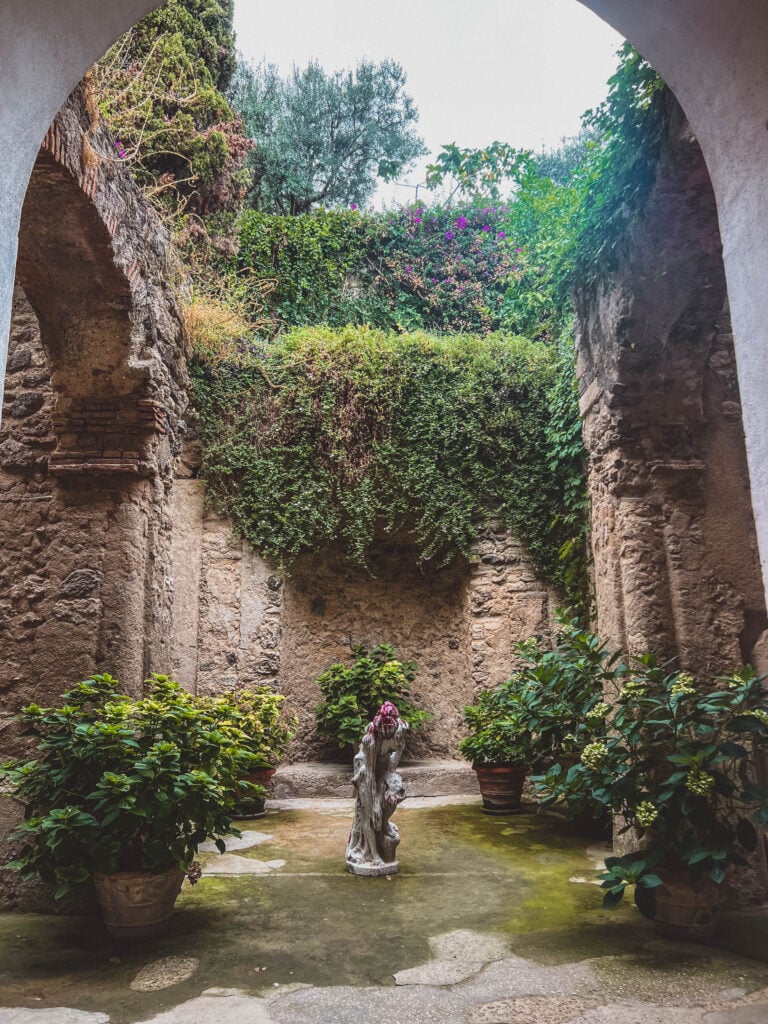
Convent Cloister
Formerly the entrance hall and cloister for the Convent of St Mary of Consolation. This beautiful cloister then homed the Order of the Poor Clares from 1575 to 1810, all of which were mostly the first born daughters of noble families who went into the convent to ensure that the families wealth would be instead inherited by their first male child.
However, following secularisation the convent was shut down in 1810, and thus the sixteen surviving nuns ended up moving to Convent of St. Anthony, on the main island of Ischia.
Nun’s cemetery
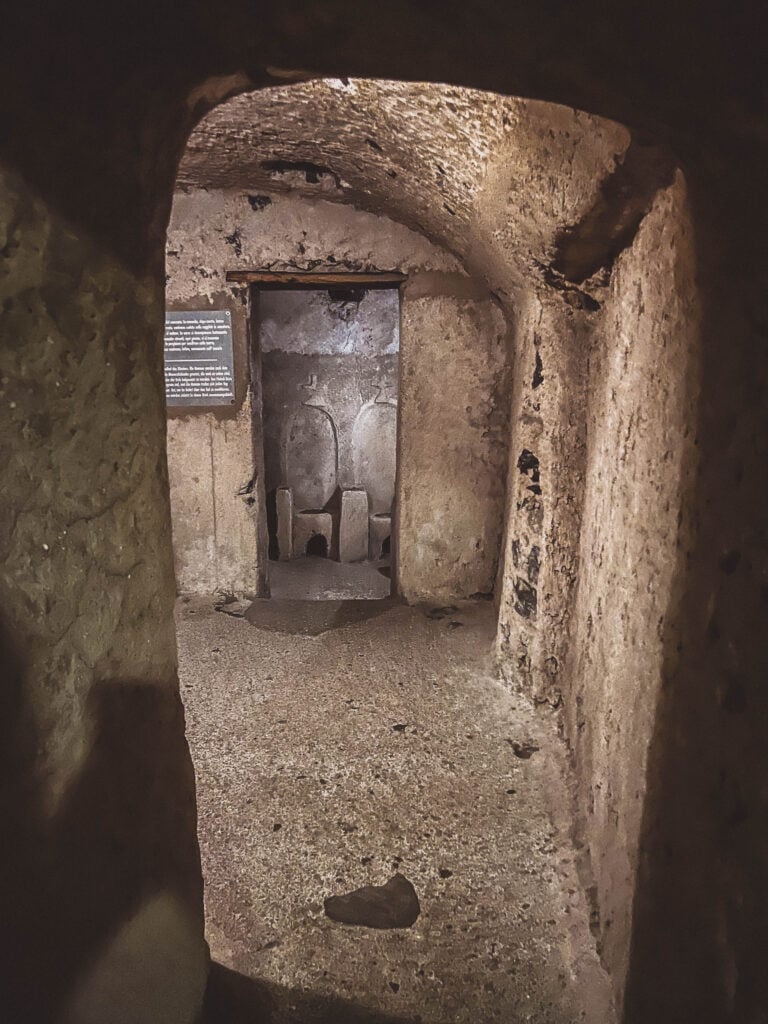
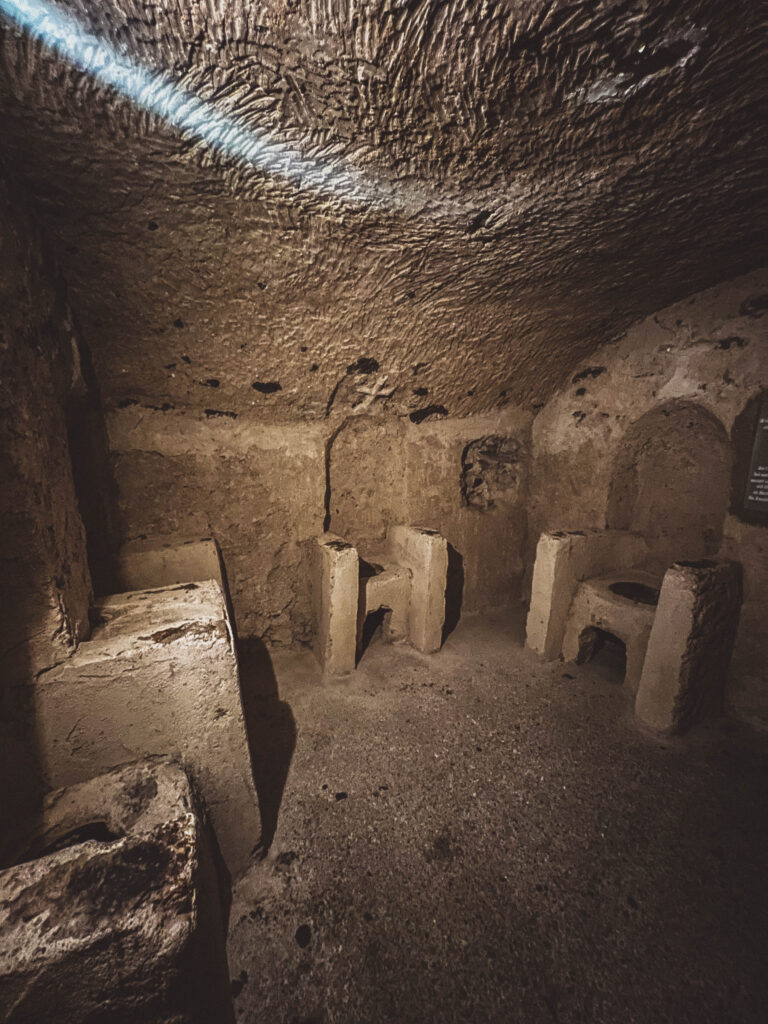
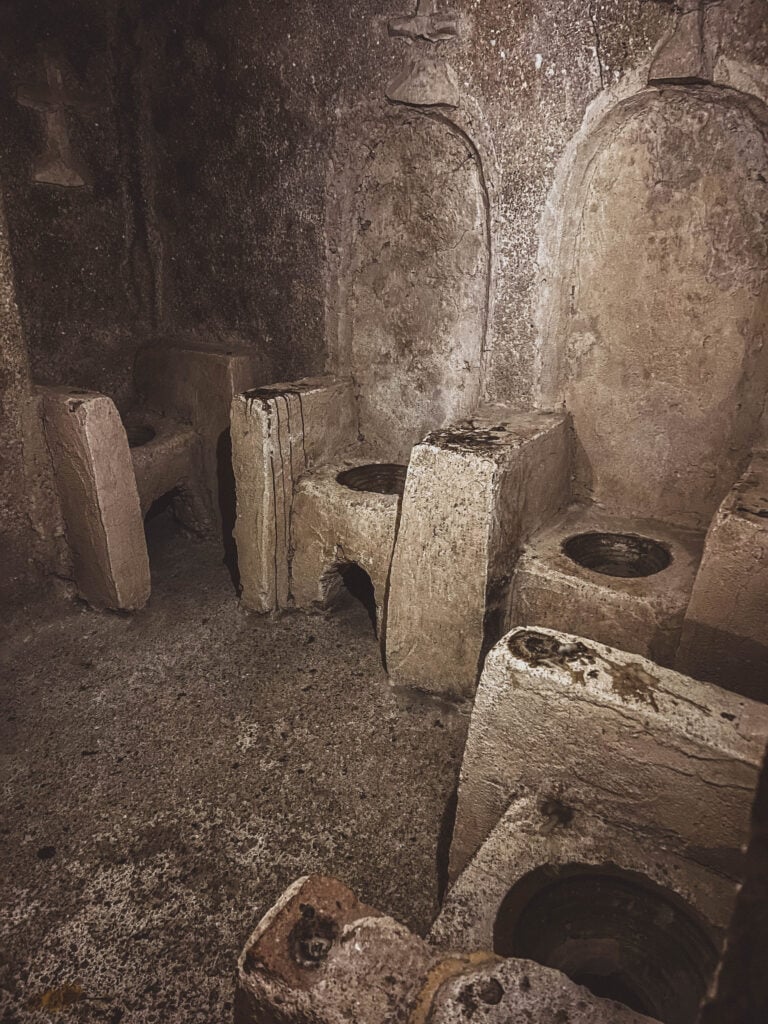
A place where the nuns went to decompose… Arguably one of the most bizarre rooms of the castle, albeit certainly macabre, is that of the ‘death chairs’ located in the Poor Clares Convent Cemetery, situated underneath the Church of the Immaculate Conception.
The Poor Clares beliefs surrounding death and the body are quite unusual to say the least. Believing that once dead, the spirit has left the body leaving merely an empty vessel, therefore a burial of any kind is unnecessary.
Instead, they would put the bodies of the deceased in sitting position on these ‘death chairs’ and leave them to decompose (the holes below were to collect any fluids that fell from the decomposing bodies…I know, so gross!) and then after, the bones would be collected to place in the ossuary. What’s perhaps even stranger is that the surviving nuns would continue to pray nearby to the lifeless bodies!
Church of St Peter at Pantaniello
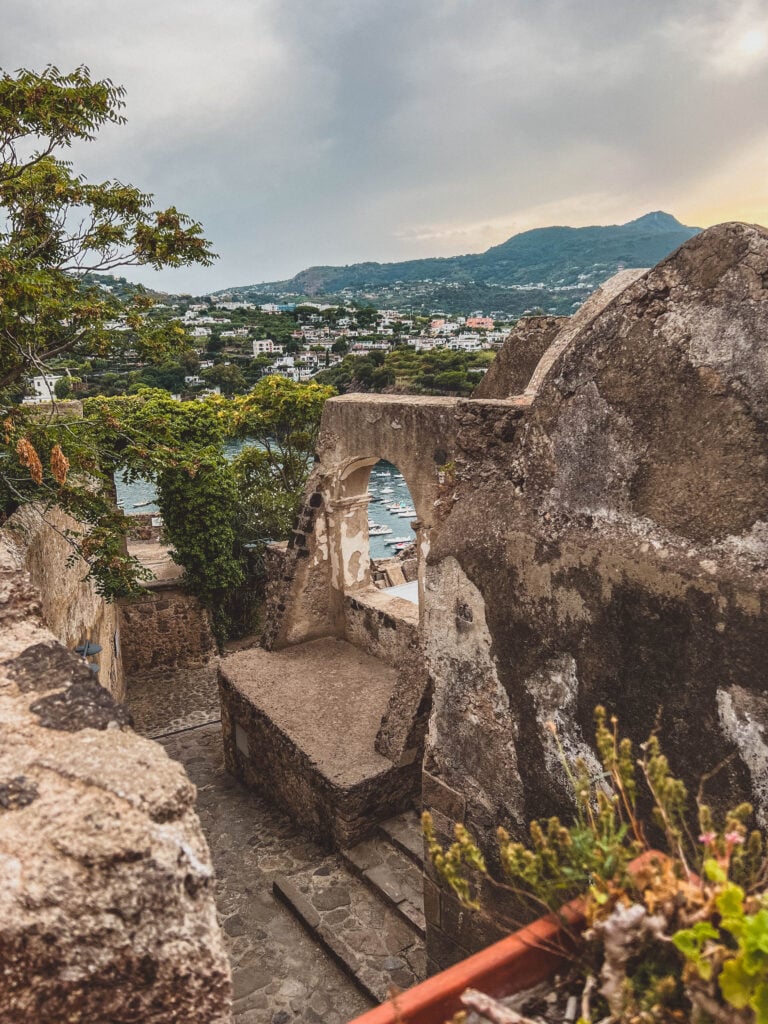
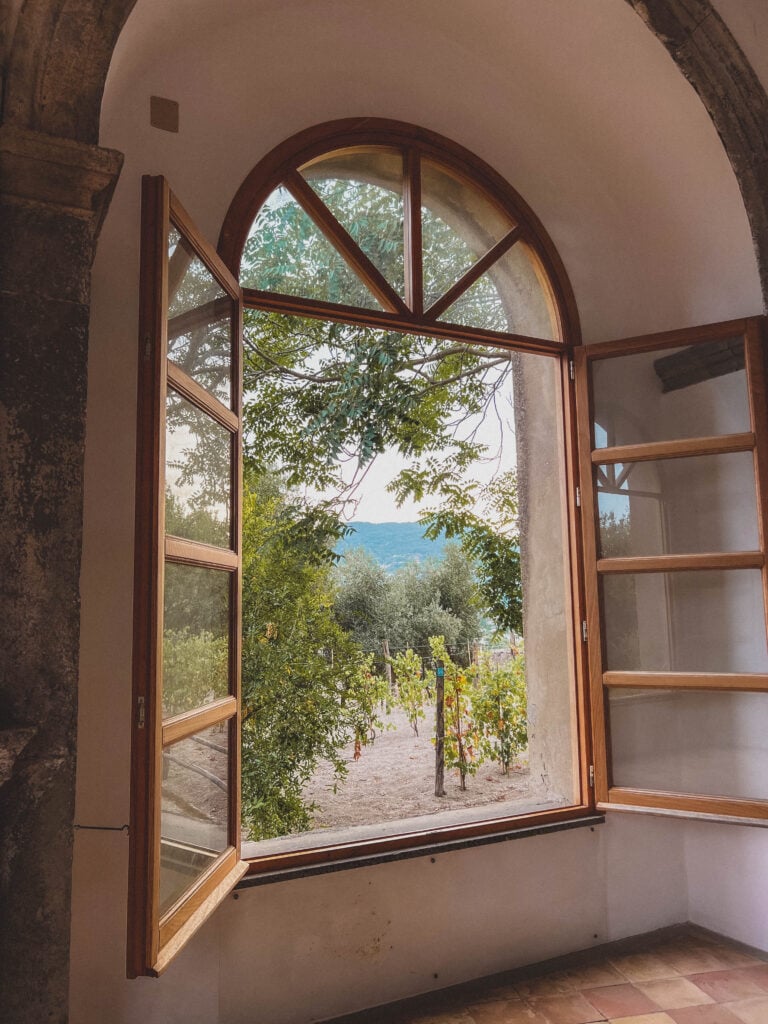
This was my personal favourite spot at the castle and was the loveliest spot from which to take photos! A small 16th century, six sided chapel, adorned with arched windows that reveal gorgeous views overlooking the castle gardens and sea.
The huge windows of the chapel were in fact once the entranceways to five different chapels that surrounded, today the glass walls remain as enchanting lookouts.
Terrace of Olives
This calm and tranquil garden boasts fantastic views of the Bay of Naples. On a clear day it’s possible to look out all the way to Mount Vesuvius in the distance.
The perfect spot for reflection, relax in this serene pocket of the islet and take shade under the looming olive trees that fill the terrace, perhaps indulge on a picnic of delicious local delights!
Bourbon Prison
In 1823, the Bourbons who rules in Naples turned an existing building into a prison. Political prisoners of the Italian Renaissance were imprisoned here, including the well known Poerio, Pironti, Nisco, Agresti and many others.
Bookshop
For those who want to come home with a souvenir from their travels, definitely pop into the castle’s bookshop for in depth knowledge and insight into the fascinating history of this small volcanic rock island and its fortress.
The perfect read for while you relax on one of the beautiful beaches of Ischia!
How to visit Castello Aragonese d’Ischia
The castle is meant to be open every day of the year but I’ve read lots of reports online that this isn’t always the case!
You can visit by heading up from the port. Make sure you wear comfortable shoes as the steps to get up to the castle and back down again are steep and slippery, having been worn out by the passage of time (and tens of thousands of feet).
There is an elevator to get to the top and back down again but unfortunately this is not always in service. The last entrance tickets are issued around an hour and a half before closing, but you’ll probably want to spend more time than this discovering the castle so should head there earlier in the day anyway!
Where to eat at Castello Aragonese d’Ischia
There are two restaurants onsite:
- La cucina del Monastero: a hotel restaurant, be prepared to be left in awe by the breathtaking views as you indulge on delicious Italian cuisine to die for! Serving the freshest of sea food, this is honestly the most romantic spot to have dinner at sunset.
- Bar “Il Terrazzo”: as you can probably tell by its name, this is a terrace bar that again offers mesmerising views that stretch far into the distance of the blue azure. More of a casual dining experience, they also serve great cocktails to enjoy as you soak up the sunshine.
Another option is to bring your own supplies, while in Ischia pop to the local deli and collect some Italian delights to enjoy as a picnic at the Terrace Olive Garden (or any spot on the islet really… no matter where you are, you’re sure to have sweeping views).
Where to stay
You can actually stay at the castle and experience the castle lifestyle!
Il Monastero: set within a 16th-century former monastery, this is a gorgeous hotel that will leave you feeling as though you are featuring in your very own fairytale! It’s also conveniently a 12 minute walk from the beach, so you don’t have far to go to take a dip. Check prices and availability here.
How long do you need to visit Ischia Castle?
We personally spent around two hours visiting the castle, though you could spend up to three or four hours if you want to read all of the information panels, sit down to soak up the views, and getting something to eat or drink at one of the restaurants onsite.
Looking for more travel information on where to go when visiting this hidden gem of Naples Bay? Why not check out our guide to the best things to do in Ischia for more travel tips and what to know!

Enjoyed learning about how to visit Castello Aragonese? Pin this article now, read it again later: