
How to Visit Shinjuku Gyoen National Garden
Last Updated on 26th June 2024 by Sophie Nadeau
This post may contain affiliate links. Please check out my privacy policy and disclosure for more information.
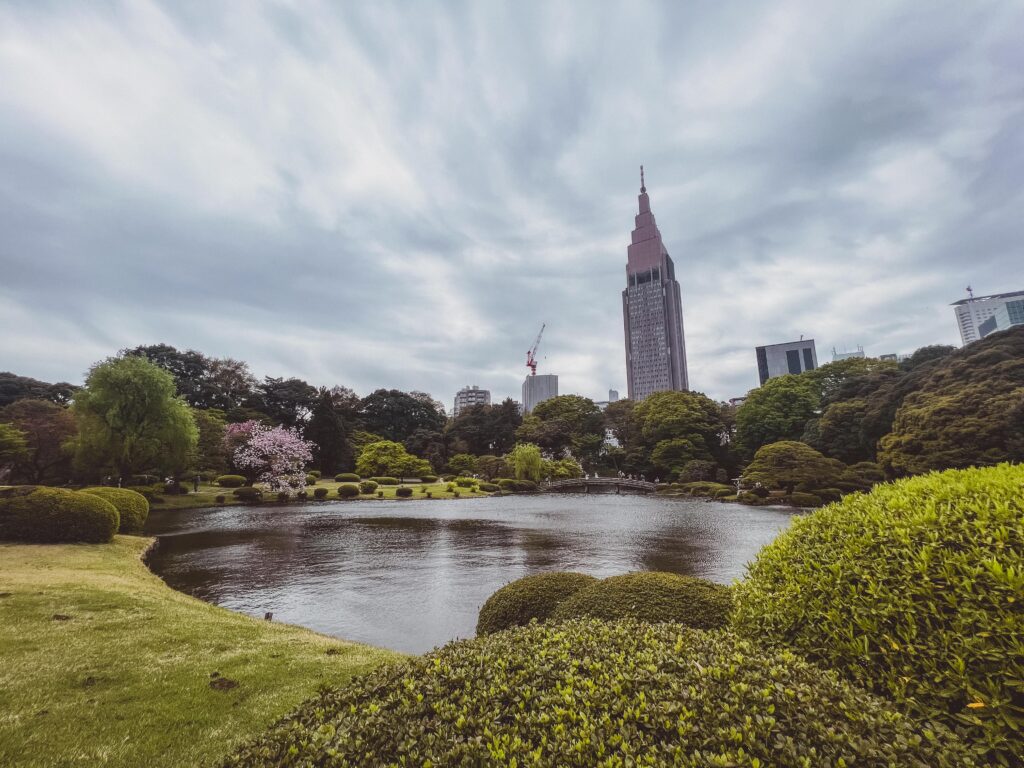
One of the most magical green spaces in Tokyo, particularly during cherry blossom season when pink pops of sakura can be spied all around the park, is Shinjuku Gyoen National Garden. Please note that Shinjuku is translated into English as New Inn and Gyoen is translated as Imperial Garden.
Shinjuku Gyoen is written 新宿御苑.
Situated in western Tokyo, within the district of Shinjuku, Shinjuku Gyoen is one of the largest and most popular of the parks in Tokyo. The park is just a stone’s throw away from Shinjuk station and is home to manicured flower beds, crystal clear ponds, lawns where you can picnic, and even a huge greenhouse filled with tropical plants.
The garden began during the Edo Period (1603-1868), when it served as the residence for a feudal lord, Lord Naito. It was converted into a botanical garden in 1903 and came into the possession of the Imperial Family.
They then used the space as a recreational grounds for their guests. Unfortunately, the gardens were almost completely destroyed during WWII. They were eventually restored and rebuilt and opened to the public in 1949 as a public park. Today the park has over 20,000 trees.
The 2013 anime film, The Garden of Words, was set within the park.
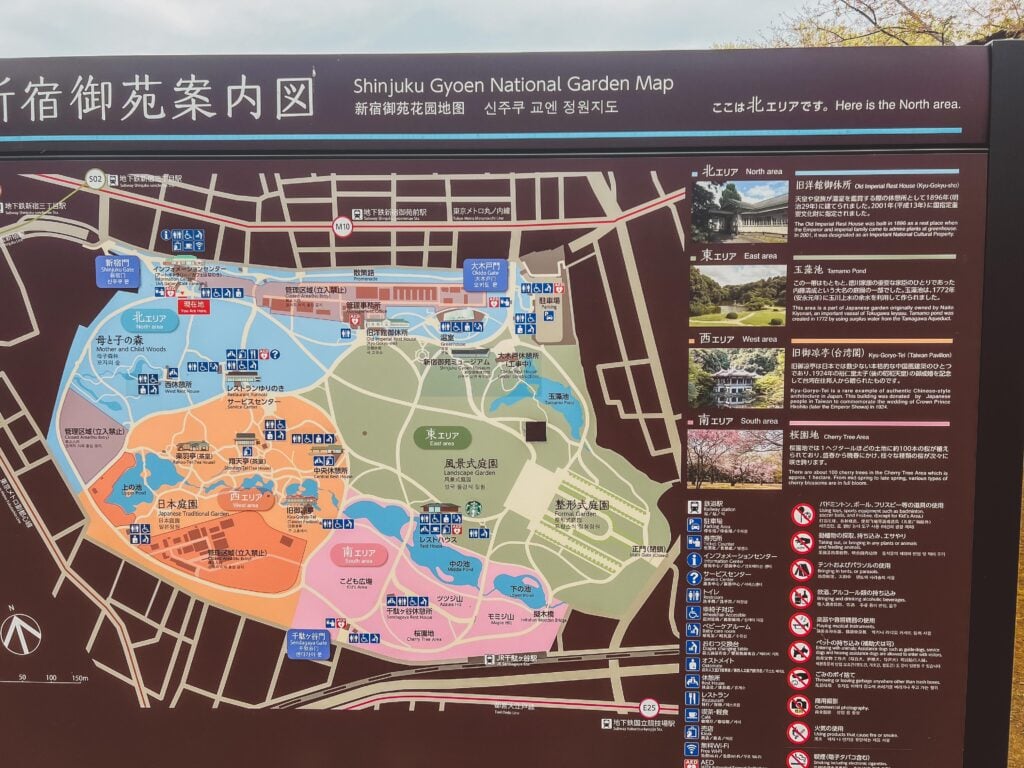
The layout of Shinjuku Gyoen: the 3 gardens
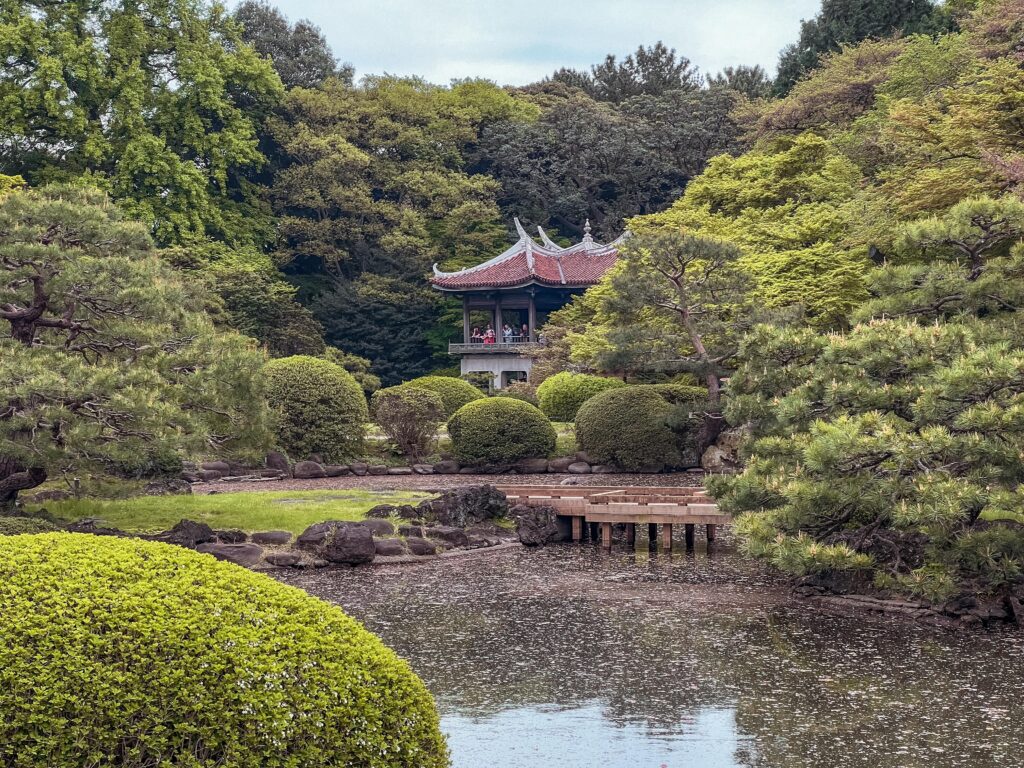
What’s rather interesting is that Shinjuku Gyoen is not just one single garden but rather three types of gardens within one set of grounds; Japanese landscape garden, a French formal garden, and an English landscape garden.
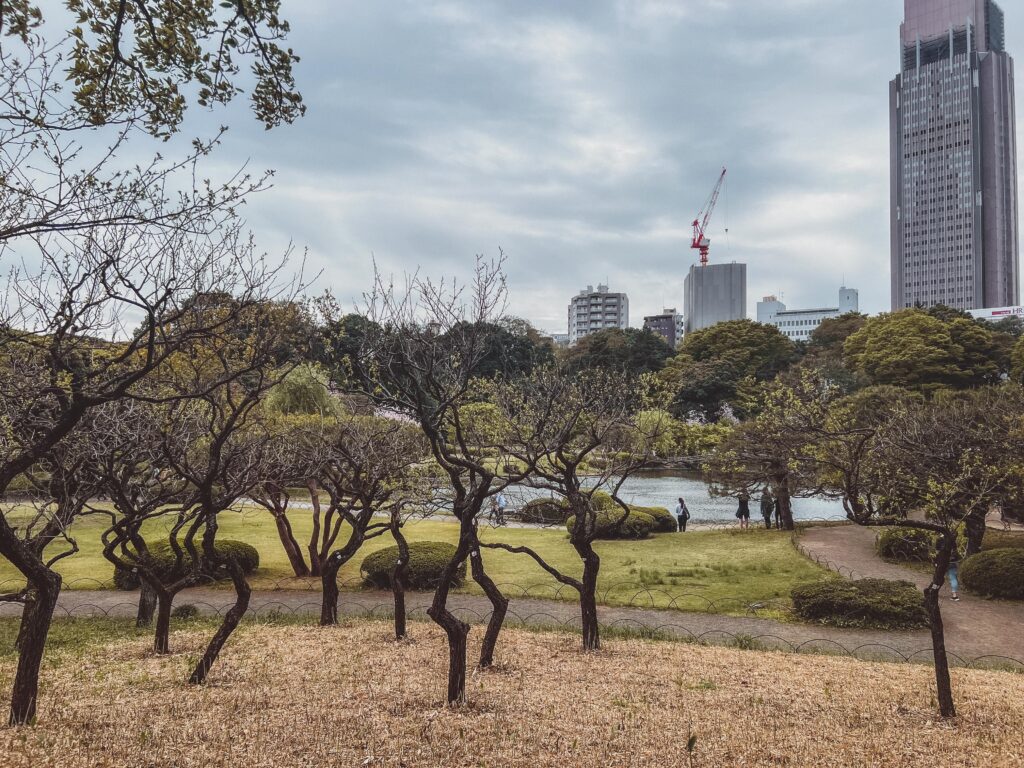
Each of these gardens have their own ambiance and decoration. For example, the Japanese garden boasts manicured shrubs and trees surrounding water. There are a number of bridges traversing the ponds.
There are also several pavilions and other traditional features of the garden include stone lanterns and even a Japanese teahouse. During the first two weeks of November, an annual chrysanthemum exhibit is held.
Meanwhile, the formal French garden showcases a fine example of French landscaping, including plenty of flowers (including roses which are best seen in June) and a symmetrical design. There’s even a sycamore strolling lane. The French formal garden is often considered to be the most romantic of the gardens.
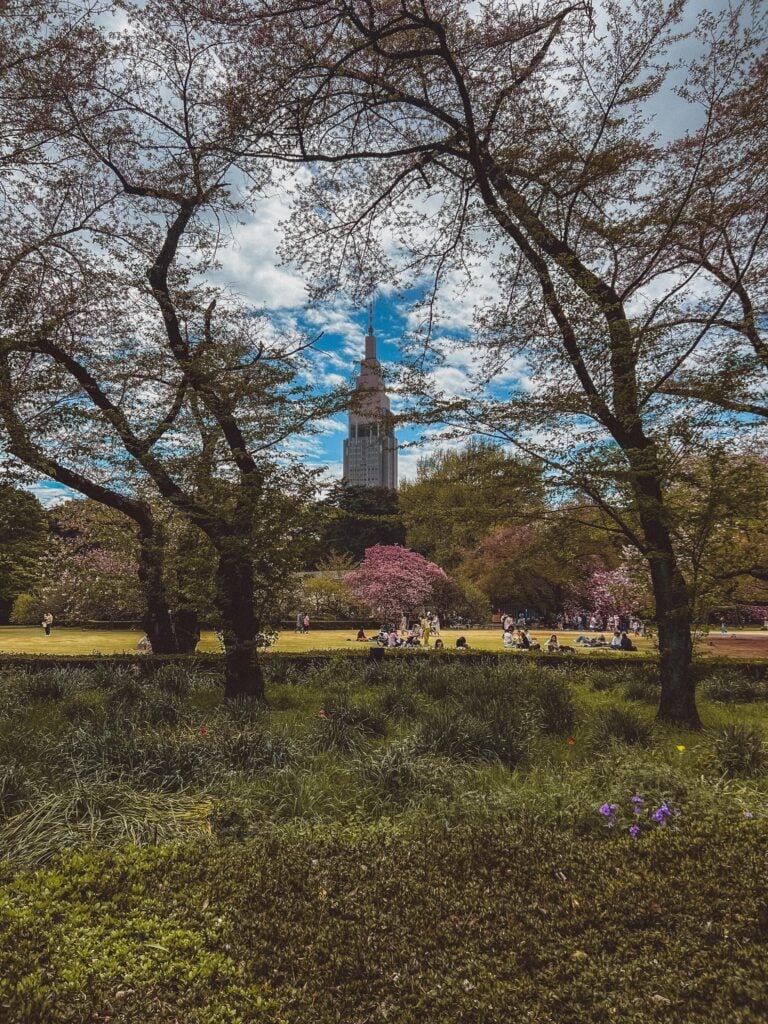
Last but not least, the English garden has sprawling lawns that are home to plenty of cherry blossom trees. In the fall, this is one of the best places to head to in Shinjuku Gyoen to enjoy the fall foliage. Another great place to see the fall foliage is in the Japanese Garden, where you can enjoy Momijiyama (“maple mountain”).
The greenhouse
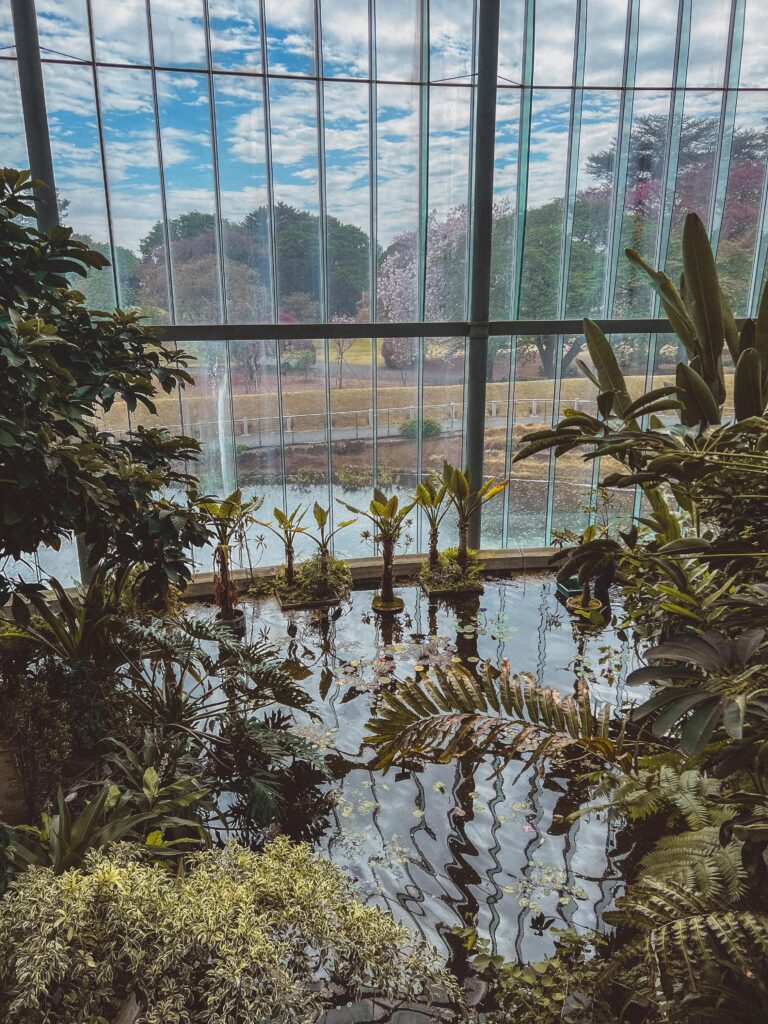
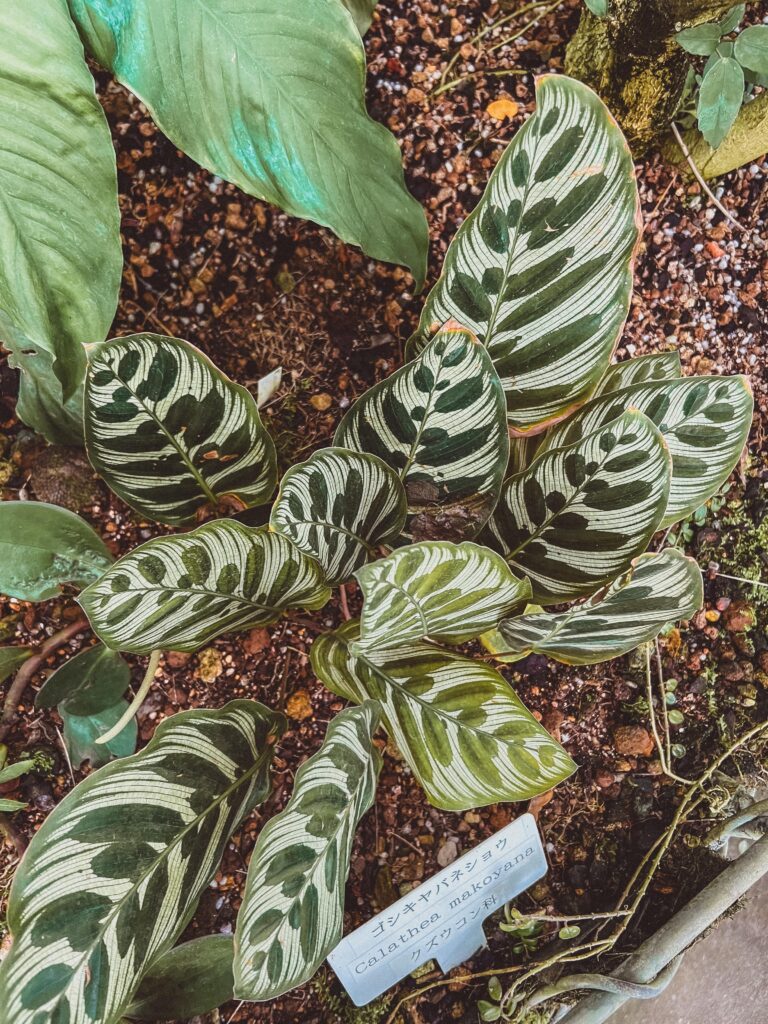
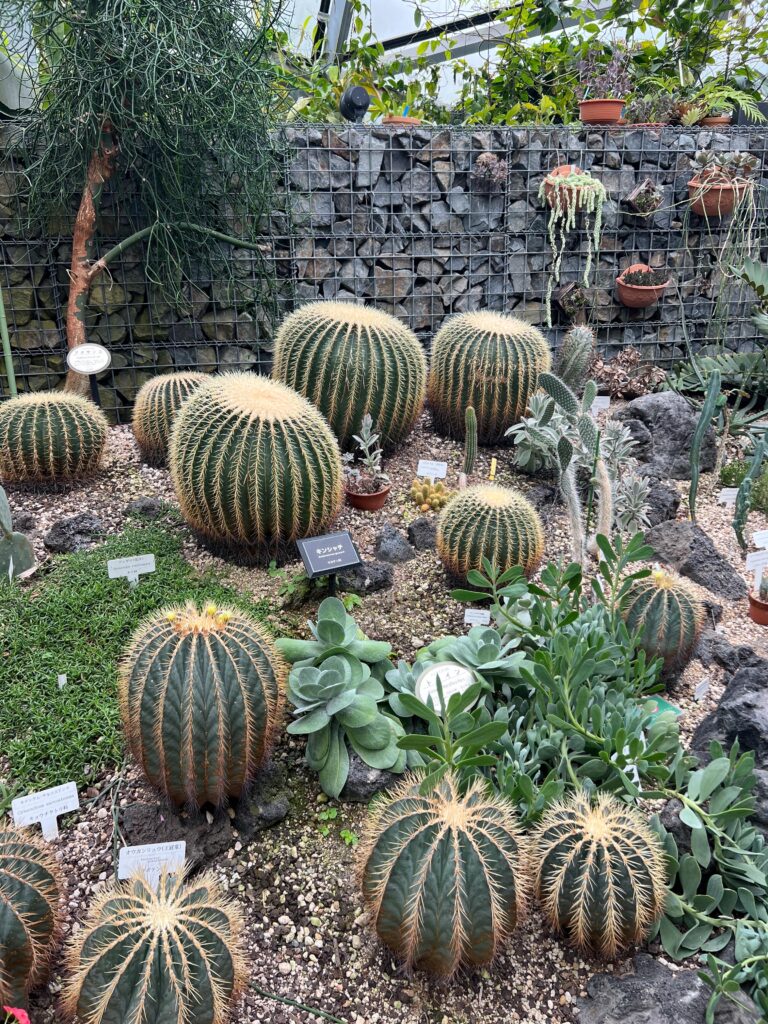
To be honest, my personal favourite area of the garden is the greenhouse. This sprawling building showcases both tropical and subtropical flora and has numerous winding pathways which you can meander through.
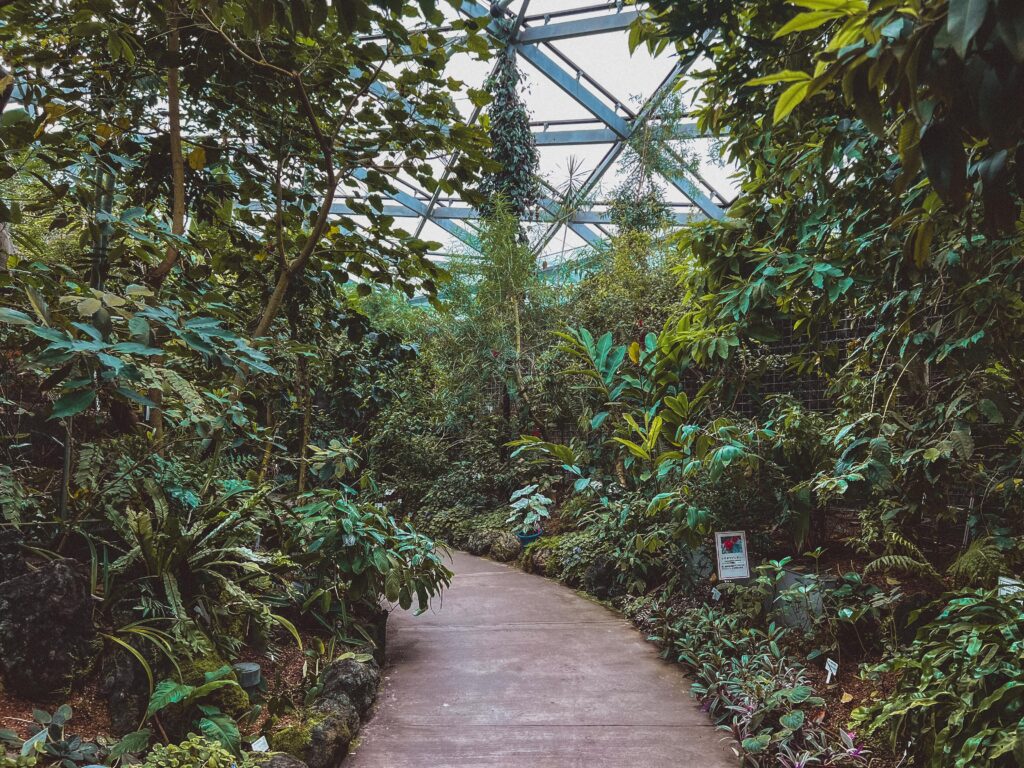
There are unusual plants, plants which are in danger of extinction, orchids, and even ponds and waterfalls. There are two different viewing levels, meaning that you can enjoy this indoor jungle from several different angles. The greenhouse itself is divided intro tropical, subtropical, pond, and desert areas.
Cherry blossom season
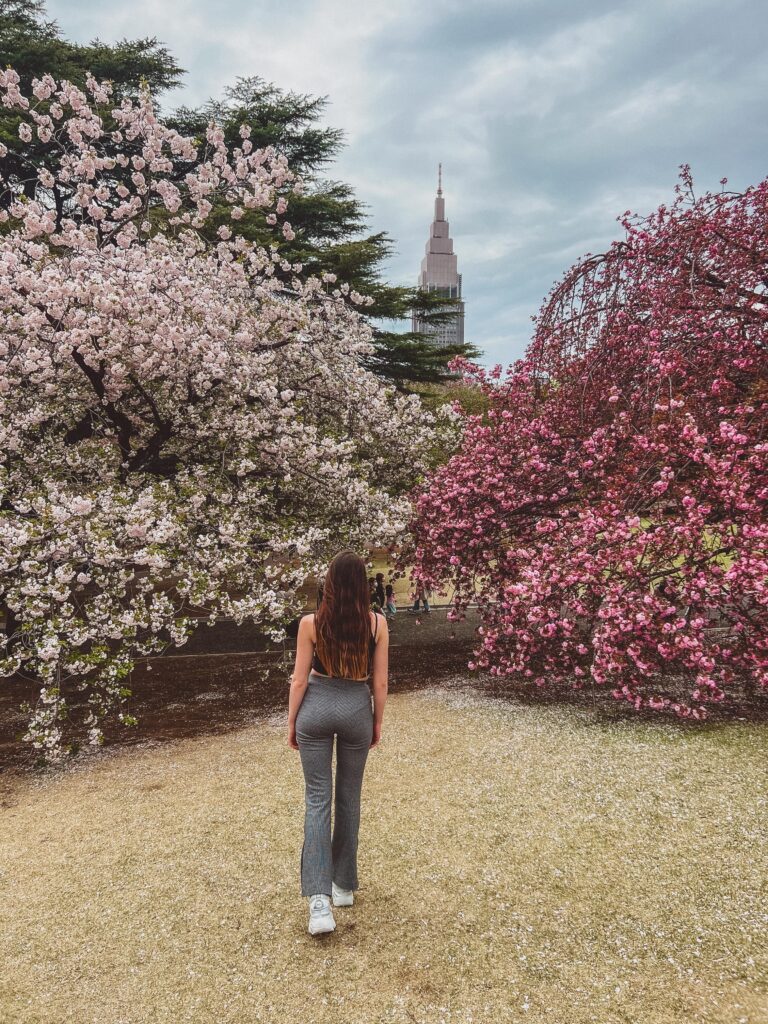
One of the best times of the year to visit Shinjuku Gyoen is during the cherry blossom season where you can partake in hanami (cherry blossom viewing). There are over 1000 different trees and you can have a picnic under the falling petals.
The greatest concentration is in the English portion of the garden, where there are over 400 somei yoshino trees. If you do choose to have a picnic, then you should note that alcohol is strictly forbidden within the grounds. No play equipment is allowed in the gardens either.
There are a few places to buy food and drink on site (including a Starbucks) but the site gets particularly packed and you can end up spending a long time queuing and so it’s best to come prepared with your own picnic supplies.

How to visit Shinjuku Gyoen
The garden is closed on Mondays, apart from during cherry blossoms season (end of March/ beginning of April) and Crysanthenum season (beginning of November). If Monday is a national holiday, then the garden will be open and is closed the following day.
There are three access gates: Shinjuku Gate, Okido Gate, and Sendagaya Gate. The closest stations are Shinjuku Station, Sendagaya Station or Shinjuku Gyoemmae Station. We personally found it easy to get to the Shinjuku Gate from Shinjuku station as it’s only around ten minutes away on foot.
You have to pay to visit the garden, though it’s not too expensive and is certainly worth the price. If you want to visit during cherry blossom season, then you should be sure to reserve a slot in advance as tickets are limited and often sell out ahead of time.
It’s also worth noting that running is only allowed on specific trails (refer to the official website) and running in the garden isn’t allowed at all during the cherry blossom season, apart from during early opening hours. If it’s your first time in Japan, be sure to check out our top Japan travel tips.