How to Spend 3 Days in Marrakech Itinerary (Weekend Guide)
Last Updated on 15th March 2023 by Sophie Nadeau
This post may contain affiliate links. Please check out my privacy policy and disclosure for more information.
Morocco is one of the most fascinating countries in northern Africa, and one of the its most famous cities, Marrakech, is a popular destination easy to reach with a fairly short flight from many European cities. Here’s how to spend 3 days in Marrakech.
Several air routes connect different capitals in Europe to the city while several low-cost airlines have daily flights to this imperial city sitting in the western part of the country which has become, in recent years, one of the top exotic city-break destinations in the Mediterranean region.
Planning a longer stay in the region, check out our suggested 10 days in Morocco itinerary.
Contents
Marrakesh or Marrakech?
Please note that the city is known as Marrakech in French and Marraquech in Spanish. It is known as either Marrakech or Marrakesh in English, though Marrakesh is used more frequently in English.

In this guide, I will take you on a three-day exploration journey of the fascinating city of Marrakech where hundred-years old traditions are part of the city’s everyday rituals and experiences.
You will be able to check out its unique square and the dozens of delicious street food stalls, bargain for unique products at the amazing Souk, and admire the incredible architecture, ancient mosques, and fantastic gardens. Are you ready for the best of Marrakech? Let’s go!

How many days do you need in Marrakech?
3 days is the perfect amount of time to get a feel for Marrakech. This will allow you the opportunity to stay in a riad, to explore the city, and see all of the main attractions.
Best time to visit Marrakech
Although most travelers would expect incredibly hot weather during the whole year, the truth is that seasons are marked by changes in temperature in Morocco and so you’ll want to pack for your trip accordingly.
The country has very cold winters, with snow in many areas (especially the Atlas Mountains), and quite hot summers. Besides, changes in temperatures can be quite drastic along the day, going changing from chilly mornings to hot middays, to cold nights, especially in winter, something to keep in mind when packing for Marrakech.
This phenomenon is much enhanced in the areas near the Sahara. For this reason, visiting Marrakech in spring guarantees relatively mild weather and sunny days.

Moving around in Marrakech
When visiting Marrakech, there is nothing like walking around to explore the city, most of the Medina area is completely car-free so you don’t need anything else to see the most ancient part of the city. Just be sure to wear comfortable shoes as you’ll be on your feet for much of your stay.
To get from the airport to the Medina or when visiting areas outside of it, then taxis can be a good option. Negotiating the fee before getting on a taxi is the best way to avoid scams.
If you’re curious about alternative ways to move around, you can also take a calèche, these typical horse-drawn carriages are located close to the entrance of the Medina as well as near Jmaa El Fna Square.

Where to Stay in Marrakech
The traditional place to stay in Morocco is the riad, an ancient townhouse that often develops around a central patio that often also features a fountain or a swimming pool.
Most roads have terraces with gorgeous city views and they can be both quite spartan and affordable as well as unusually luxurious and offer high-end services and amenities. These are the three best options I recommend for different budget ranges.
Affordable accommodation in Marrakech
Riad Magnolia is a fantastic and reasonably-priced place in town with air-conditioned rooms and private parking in the Medina district. Inside the guest house, you will find a terrace and an indoor pool. Currency exchange is available for guests.
A continental, vegetarian, or gluten-free breakfast is available each morning at the property while there is also a restaurant serving American, Belgian, and French cuisine. Check prices and availability here.
Mid-range accommodation in Marrakech
Riad Alma stands inside the Kasbah of Marrakech, an ancient imperial fortress. The property features two patios, an outdoor swimming pool, and a restaurant that serves traditional Moroccan cuisine. Rooms open onto a terrace and overlook the hotel’s patios. Check prices and availability here.
Luxury accommodation in Marrakech
Dar Anika is located in the Medina of Marrakech, featuring a courtyard swimming pool and a terrace just a 5-minute walk from Jmaa El Fna Square. The rooms have a traditional Moroccan decor and a delicious Moroccan breakfast with fresh fruit and cakes can be enjoyed on the terrace.
Additional facilities at the Riad include a lounge with a TV and fireplace. Check prices and availability here.

Best Things to Do in Marrakech in Three Days
Marrakech Day One: The Souk and the Medina
There are tons of things to do in Marrakech no matter how much time you decide to spend in the city, and choosing to stay on a riad within the walls of the Medina is a practical idea to easily move around on foot exploring the narrow passages and several traditional workshops in town where you will be fascinated by artisan products everywhere you look.
Keep in mind that the Marrakech Medina a UNESCO World Heritage Site since 1985, therefore, there will be no shortage of incredible buildings everywhere you look.
For that reason, I suggest wandering the different areas of the Medina simply to soak in the views and the vibe, leaving the shopping experience for the market.

The best place to see, bargain, and shop for souvenirs is the public market, or Souk in the heart of the Medina. Here you will be spelled by a myriad of colors and aromas, sounds, and magic sights everywhere you look.
Be ready to bargain, this is the norm and the rule and nobody will find it odd or disrespectful. Bargaining is an art and you can get quite a few interesting finds too if you follow your instinct.
Anything from artisan leather shoes to amazing notebooks with detailed leather covers, unique natural beauty products, Berber carpets, sticky Moroccan pastries, bizarre herbal teas, and tons of spices. In the Souk you will find the most incredible collection of spices that will be the delight of any food lover and cuisine aficionado.
Inside the Medina, you can also make a stop at the Old Tannery of Marrakech. Not as big or famous as the tannery in the northern city of Fes, this place will still manage to convey the hard work that backs up the striving leather industry in the country.

Ben Yousef Madras, not far from the Souk area, is a religious school that you can explore to learn more about Islam and its importance in the country.
In the afternoon, it is a good idea to visit one of the several tea houses located in the area surrounding Place Jmaa el Fan, the biggest and loveliest square in Marrakech.
Pick a table on the terrace of any of these tea rooms (my favorite is Le Grand Balcon du Café Glacier) and sip a so-called whiskey marocain (hot mint tea) while you witness how little by little the square gets filled with all kinds of entertainment and dozens of delicious food stalls.
In just a couple of minutes, the square will be the scenario for snake charmers, traditional dancers, water sellers, henna tattoo artists, and more. If you don’t want to fall into any scam or tourist trap, observing the magic scene from the height of these tea rooms is a perfect idea.
When dinner time gets closer, reach for the heart of Place Jmaa el Fna. For a very affordable fee, you can be served a variety of small dishes, including grilled meat, spicy sausages, meatballs, salads, and exotic dips and sauces, but also figs, nuts, and extra tasty, freshly-squeezed orange juice until quite late at night.

Marrakech Day Two: The Blue Marrakech
Arguably one of the most beautiful places in Marrakech is the spectacular Jardin Majorelle. It is not located inside the Medina so grabbing a cab might be the best solution to get there. Asking the concierge of your riad to book a taxi for you is best when you’re not familiar with the language or the city landscape.
Majorelle Garden is located on the well-known Rue Yves St. Laurent, and it’s quite a popular attraction that opens to the public quite early in the morning and closes at 6 pm.
The Jardin Majorelle Foundation recommends purchasing the entrance ticket online before getting there to save time and access the premises without waiting in line.
The garden covers a surface go more than 9,000 square meters, and it is considered the most enchanting and mysterious place in town.
The place has a labyrinth of alleyways set on different levels and boldly-colored buildings that blend Art Deco and Moorish architecture. The garden was purchased by the French designer Yves Saint Laurent in 1980 to save it from destruction at the hands of hotel developers.
Other than admiring the beautiful blue and yellow buildings and discovering one of the best-curated gardens in the country, you can spend a few minutes enjoying a refreshing drink at Café Majorelle, a space inspired by the rammed earth constructions typical of the Berber regions of North Africa.
The interior of the place features small Moroccan salons with fireplaces and an inner courtyard planted with orange trees and white bougainvilleas.
After the visit, it is a good idea to check out the Musee Yves Saint Laurent, next to the gardens. In the afternoon, pay a visit to the tallest minaret in town part of the most important (and biggest) mosque in Marrakech, the Koutoubia.
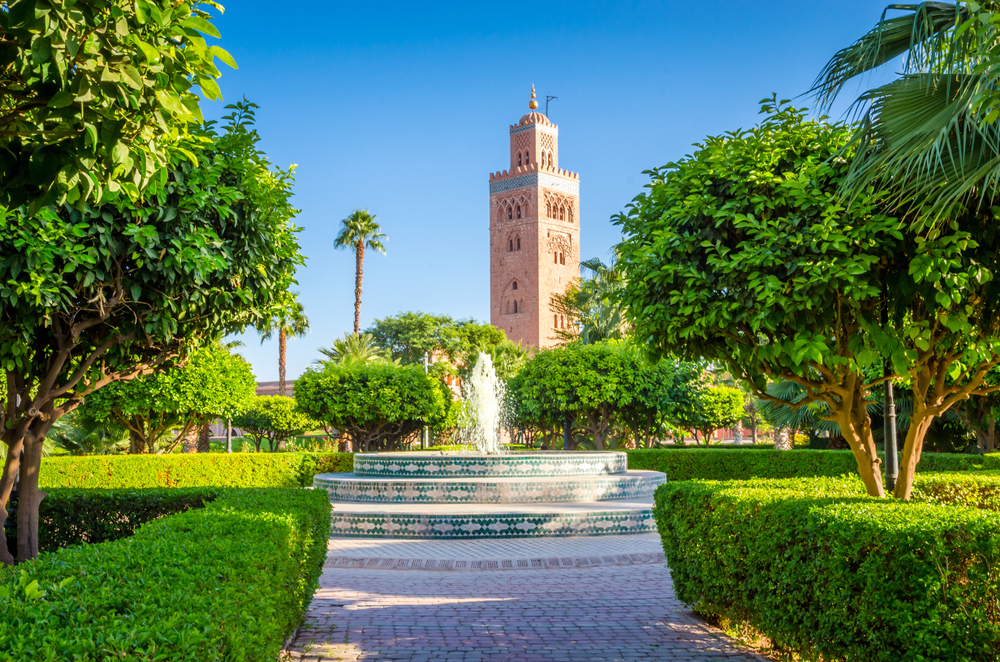
This spectacular square construction, visible from any corner of the city, is just a few meters from Jmaa el Fna Square. And even when access to the mosque is only possible for Muslims, the place is still incredibly beautiful, with unique stone passages and impressive palm tree gardens.
In the late afternoon, go for a traditional snack, the Pastille Marrocaine, a super tasty pie often stuffed with chicken, spices, raisins, and almonds, and decorated with mint leaves. The pastille is a dish with a delicate and balanced combination of sweet and savory flavors.
On the second day, you will probably be more familiar with the local food panorama, so we invite you to dare a bit more by joining a night food tour led by a local, through this experience you will not only be covered for dinner, but you will also learn tons about local traditions, Moroccan culture, and delicious tastes!

Marrakech Day Three: Traditional Marrakech
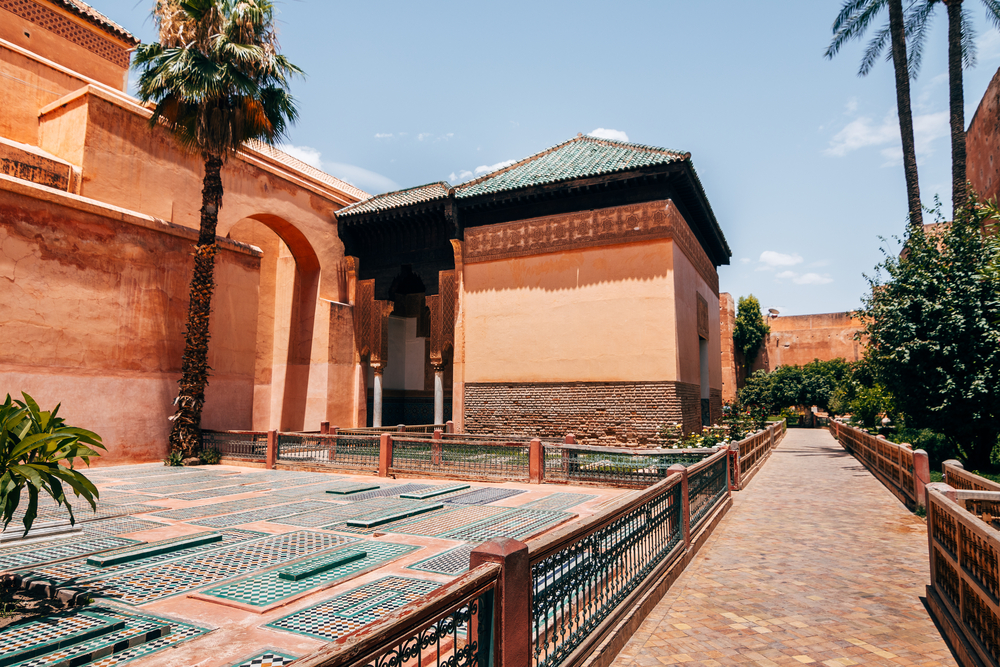
Today we will devote most of the time to exploring some of the best sites in town. Starting with one of its historical highlights the Saadian Tombs.
This is a series of graves and mausoleums that hold the remains of important figures from the Saadi Dynasty, which ruled Morocco from 1549 to 1659. The tombs were rediscovered at the beginning of the last century and are now open to the public.
The first place to visit inside the complex is the Hall of Twelve Columns, an impressive mausoleum built for Sultan Ahmed el-Mansour made of Italian Carrara marble with beautiful decorations in marble and gold.
Next up, head to El Badii Palace, the former royal palace of the Saadi Dynasty. Although only a few ruins remain, the place is worth a quick stop to admire the grandiosity and splendor of this ancient ruling house.
Spend the rest of the morning admiring another stunning historic place, Bahia Palace a residence built for the grand vizier of Sultan Hassan I during the second half of the nineteenth century. The place was later on used by the sultan’s son who, according to the legend, gave the palace the name of his favorite mistress.
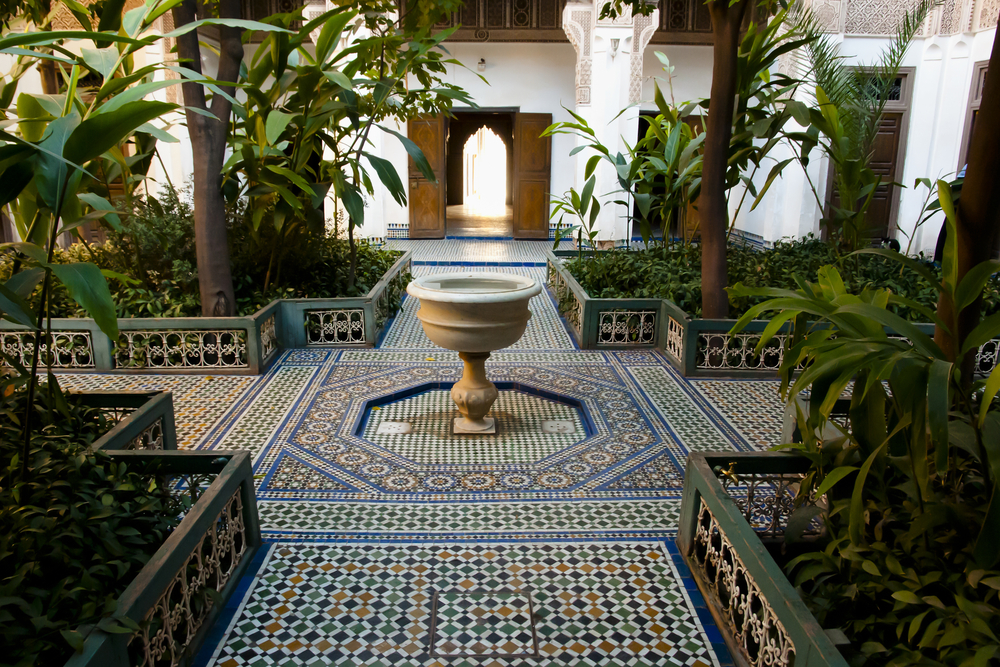
This architectonic gem includes 150 different rooms with intricate stucco designs, amazing carved doors and lintels, tiled fireplaces, and some of the most impressive stained glass windows in the country.
End the historic experience by checking out the Museum of Moroccan Arts, Dar Si Said, where you can easily spend a few hours admiring the rich exhibition of art objects including sculptures, vases, paintings, intricate carpets, golden objects, and a lot more.
End the day by going back to the center of nightlife in town, the area around Place Jmaa el Fna. However, instead of dining at the market, check out one of the different rooftop restaurants in the area offering skyline views of the city from their cozy little terraces. In any of them, you will be able to enjoy a simple but satisfying dinner with plenty of local delicacies.
My favorite place in town is M Rooftop by Medina Heritage, a fantastic place with a garden-like atmosphere, beautiful tiled floors, and comfy seating. Food ranges from simple sandwiches and snacks to traditional famines with meatballs, chicken, lamb, and plenty of flavourful cous cous.
After the meal, order a glass of Moroccan tea and then slowly head back to your riad for the last night in town.

Enjoyed reading about how to spend 3 Days in Marrakech? Pin this itinerary now, read it again later:

Gabi Ancarola is a journalist and travel writer who has lived over 20 years in Italy, and has been living in Crete for the last five years. She hosts culinary tours, translates and writes for her Crete travel blog The Tiny Book. She’s written for Greek Reporter and published several travel guides about Greece.