
Where to See Monet in Paris (and beyond)
Last Updated on 28th June 2024 by Sophie Nadeau
This post may contain affiliate links. Please check out my privacy policy for more information.
If you’ve landed on this article, then chances are that you’re a fan of Claude Monet, the iconic impressionist painter whose famed gardens at Giverny and iconic waterlily paintings continue to awe and charm the world to this day. There are actually a myriad of spots in France where you can follow in the footsteps of Claude Monet to this day. Here’s where to see Monet in Paris and nearby…

Who was Claude Monet?
Claude Monet is the figurehead of impressionism and his works have become as emblematic of France as macarons or the French flag itself. Born in 1840, Monet would spend over 60 years painting works that embodied true genius of the late 19th century.
Monet would paint the world as he perceived it, often depicting the landscape, leisure activities of Paris and intimate portraits of his wife Camille. Camille on her deathbed is one of Monet’s more powerful paintings and was created by the artist in 1879.
An initiator of the Impressionist Style that forever transformed painting as it was known, Monet’s unique vision and use of colour made a lasting impact on fine art and will forever continue to influence and inspire generations of artists to come.

Where to see Monet’s works in Paris and the rest of France
Musée d’Orsay
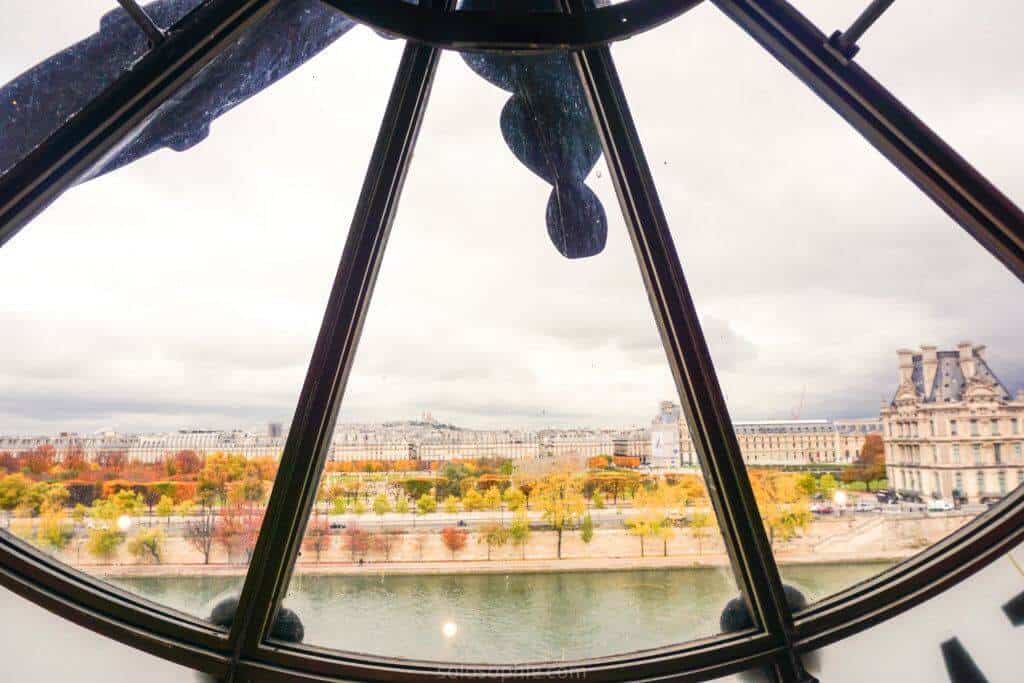
Set against the backdrop of a former train station, the world-renowned Musée d’Orsay (a former train station that has been transformed into one of the most important museums in Paris) stands as home to a remarkably large sized collection of works from the master of colour and light himself.
Walking through the galleries in the museum you can find yourself admiring some of Monet’s most famous works, including the deeply moving portrait of his wife and muse, Camille Monet sur son lit de mort (translated Camille Monet on her death bed).
The collection also displays Monet’s captivating portraits of daily Parisian life, architecture and depictions of natural landscapes. For the best experience (and to avoid waiting extra time than needed in general admission queues), we recommend booking your museum ticket in advance.
There are a few stand-out pieces in the Musée d’Orsay that shouldn’t be missed:
- Gare Saint-Lazare (Saint-Lazare train station) 1877
- Nymphéas bleus (part of his Waterlilies series) 1919
- Haystacks collection 1891
- Poppy Field 1873
- Le Dejeuner sur L’herbe 1863
- Rouen Cathedral series 1890s
Musée de l’Orangerie
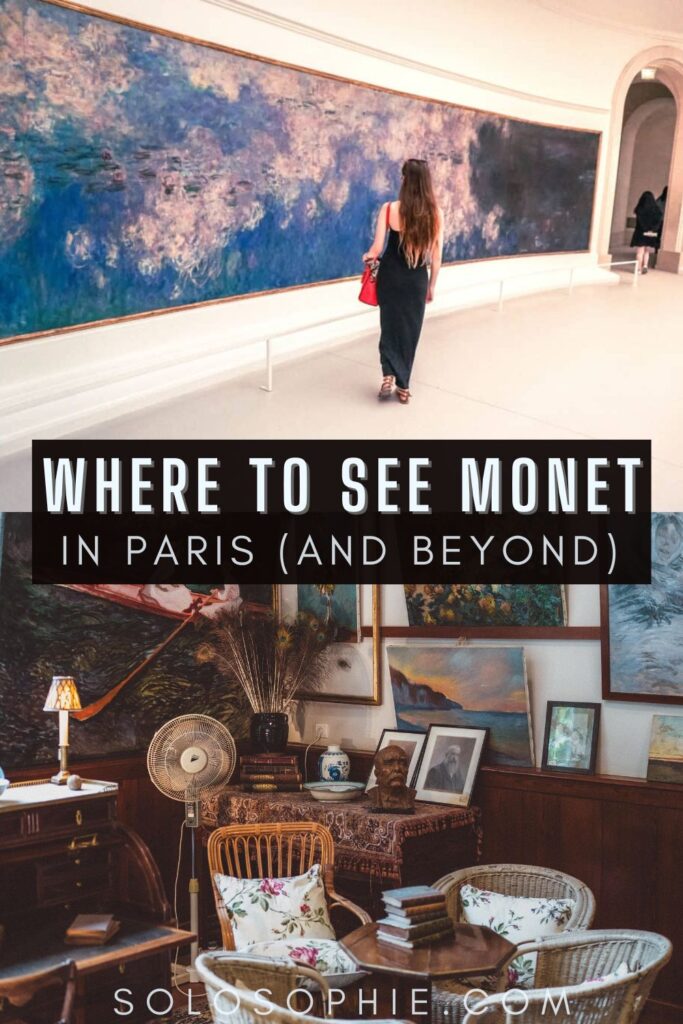
Close by to the Musée d’Orsay, in the heart of the Tuileries gardens, are the iconic Water Lillies by Monet.
Where sky meets water, visitors can find themselves completely absorbed by the lily ponds that provided over 30 years of inspiration to the artist. Monet’s vision was to have the paintings curve along the wall of a round room, to mimic nature, having no edges or corners.
Initially criticised and rejected in the art community, blaming Monet’s poor eyesight, the paintings were only seen by the public after his death in 1926, with Monet never knowing how monumental this series would become.
“Apart from painting and gardening, I am good for nothing. My greatest masterpiece is my garden.”-Claude Monet.
Open to the public every day except Tuesday, Musée de l’Orangerie is a must-see for lovers of Monet and nature! Purchase your Orangery Museum tickets here in advance. Read on to discover how to visit the very gardens that Monet cultivated to create these masterpieces.

Petit Palais
So-called thanks to its position close to the Grand Palais (with the Petit Palais obviously being the smaller of the two institutions) Petit Palais is home to one of the greatest free-to-visit art collections in Paris.
Among the collection, you can see Monet’s Sunset on the Seine at Lavacourt, Winter Effect, a beautiful depiction of the ice thawing on the River Seine. What’s more is that access to the permanent collections are free, making this one of the best free things to do in Paris.

Musée Marmottan Monet
Established in 1934, the museum of Marmottan Monet is set within the former hôtel particulier of Paul Marmottan (a kind of mansion house), hence its name. The building itself was constructed in the
The museum is in the 16th arrondissement in a hyper residential area called Passy actually boasts the largest collection of Monet works in France, meaning that it’s a must-see for all art aficionados.
While the museum was founded in the 1930s, it did not truly rise to fame until after 1996, following a generous donation of Monet paintings by Michael Monet, who was the iconic artist’s second born son and only heir. Today, the museum is home to a staggering 300+ works of art by Monet.
Here you can visit Impression, Sunrise, the very painting where the term impressionism stemmed from! Buy your skip-the-line museum ticket here in advance.

Rodin Museum
Somewhat of a hidden gem when it comes to following the trail of Monet in Paris is the Rodin Museum. This beautifully appointed cultural space is located in the 7th arrondissement of the city and is dedicated to the life and works of Auguste Rodin.
The two artists, Monet and Rodin, were born two days apart and were bound by a lifelong friendship and admiration for one another.
In this beautifully housed pocket of art you can see of course Rodin’s fantastic sculptures, while the walls are filled with Impressionist paintings, some of which are Monet’s.
Visitors can also enjoy sipping a coffee or a strolling in the tranquil gardens of the museum, filled with sculptural treasures! During the summer months, on select dates, there are even late night openings where you can enjoy the museum followed by a picnic on the lawn. Buy your Rodin Museum ticket here in advance.

Take a day trip to Giverny!
For any art lover, Monet’s work probably needs no introduction. Towards the end of his life, Monet moved to Giverny to enjoy his artistic successes, where he would tirelessly work to establish the most magnificent of gardens. These gardens would be home to the ponds of water lilies, inspiring Monet for years to come.
Known as nymphéas in French, now paintings of the iconic waterlilies at Giverny are located in the Orangerie museum of Paris. Today, you can explore Monet’s former home and gardens. Just make sure to bring your camera- it’s that picture perfect!
The best time to visit the garden is undoubtedly during July when the lilies are in peak bloom. Other times of the year when a visit is preferable is in April/ May when the wisteria is out or in the fall when the entire place is transformed into a veritable autumnal wonderland with gold hues and burnt umber shades to match.

Île des Impressionistes
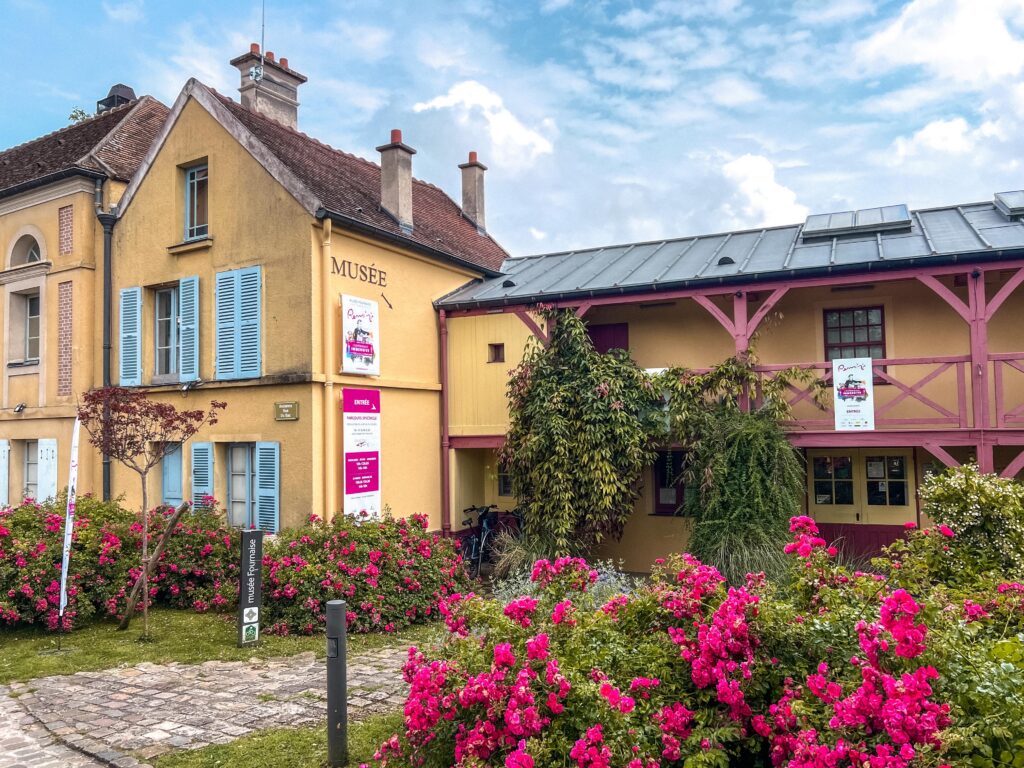
If you’re looking to head a little off the beaten path when it comes to discovering Monet’s old haunts, then you’ll want to check out the Île des Impressionistes, which is actually part of the town of Chatou, to the west of Paris.
As well as restaurants, a museum, and a park where numerous summer festivals take place, you can walk in the footsteps of the artists and follow the trail along the riverbank from Chatou to Croissy-sur-Seine, this takes around 1.5 hours in total.
Following the route will lead you to different locations across the island, and you can spy out signposts with some of Monet’s most famous masterpieces printed along with a brief description about them.
Enjoyed reading about where to see Monet in Paris and France? Pin this article now, read it again later: