How to Spend the Perfect 3 Days in Seoul Itinerary
Last Updated on 23rd February 2025 by Sophie Nadeau
This post may contain affiliate links. Please check out my privacy policy and disclosure for more information.
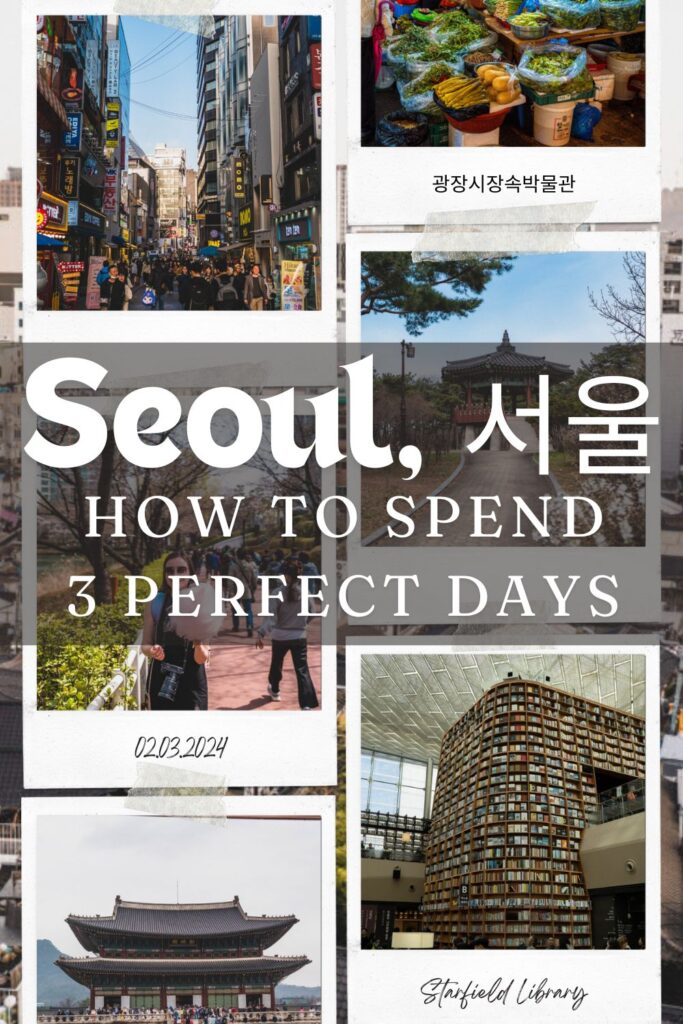
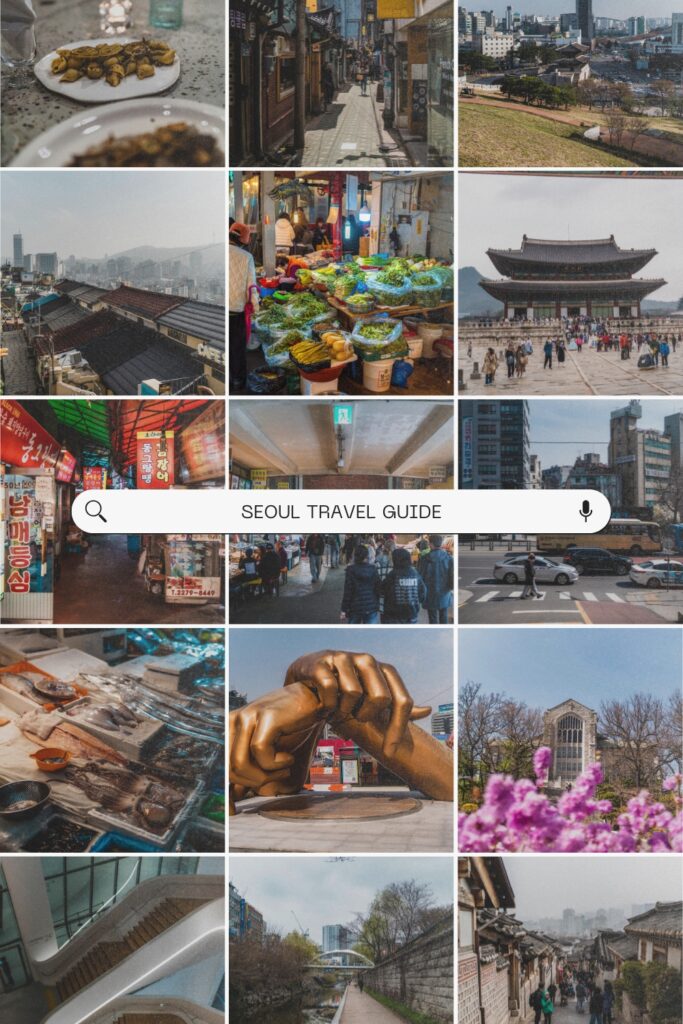
Brimming with culture and home to five historic palaces, Seoul is South Korea’s vibrant capital city. A place where modernity meets tradition! From mountainside villages, to local markets and trails that lead you along the old city walls. Here’s your guide on how to spend 3 perfect days in Seoul itinerary, as well as top tips and what to know before you go!
Contents
What is Seoul known for?
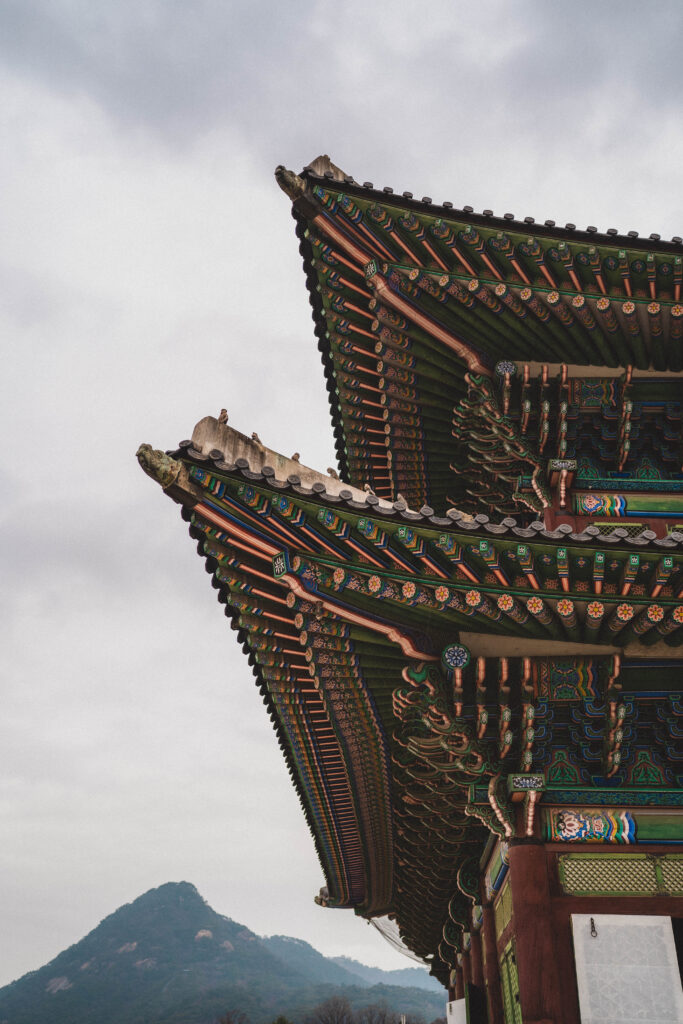
South Korea’s capital city, Seoul, is considered a megacity and has a population of almost 10 million people. The city is characterised by it’s fascinating blend of futuristic skyscrapers that tower high into the skyline in contrast to the influences of Chinese architecture and the traditional Korean structures of sloped tiled roofs and sacred spaces.
Known as the birthplace of K-pop (short for Korean popular music), the city is a cultural hub for music and entertainment, and more famously, has been intertwined with the 2012 song, Gangnam Style, since its release.
Seoul is also known for its serene traditional teahouses, delicious cuisine and inviting culture!
Is 3 days enough time in Seoul?
Yes, I would say that three days is a sufficient amount of time to get an overview of the city. In this amount of time, you can visit some palaces, go shopping, and experience some of the food that South Korea is so famous for! If you also want time to go on day trips and hikes in the nearby area, then I suggest staying five or six days.
Getting around Seoul
Google Maps is not optimised for South Korea, so you won’t be able to use it for walking around even if you want to! While you can use Maps for public transportation, there will be no walking directions. You’ll therefore want to download Naver Maps, which is the local maps app.
I found that the easiest thing when trying to find specific locations was to actually copy and paste the address in Korean into the app. Unfortunately, although there is an English version of Naver Maps, typing English words into the system didn’t always yield the results I wanted/ needed.
The subway is extensive and you’ll be able to use it easily during your stay. We personally bought single tickets for each of our journeys. How this works is that you buy a single ticket at a machine which includes a reusable pass charge.
At the end of your journey, once you’ve left the subway, you can use the deposit machine and you’ll get your KRW back. Unfortunately, you can only pay with cash at the underground machines.
Paying for things in Seoul
For the most part, you can pay for everything in Seoul using a credit or debit card. And, to be honest, I recommend you do this because getting cash out is somewhat of a nightmare when you consider that it’s hard to find a place to withdraw money, you can only withdraw small amounts at a time, and you have to pay a fee to withdraw cash.
Taking money out from an ATM can be a challenge as many machines don’t accept foreign bank cards. Your best bet is to find an international bank which has an ATM such as Citibank (we found a Citibank ATM in an international hotel) or HSBC.
My personal recommendation would be to keep a small amount of cash on you at all times to pay for incidentals like snacks at food markets (though many accept credit card) and pay for the subway. Otherwise, always use your card if possible.
Day 1 in Seoul Suggested itinerary
Gyeongbokgung Palace, 경복궁
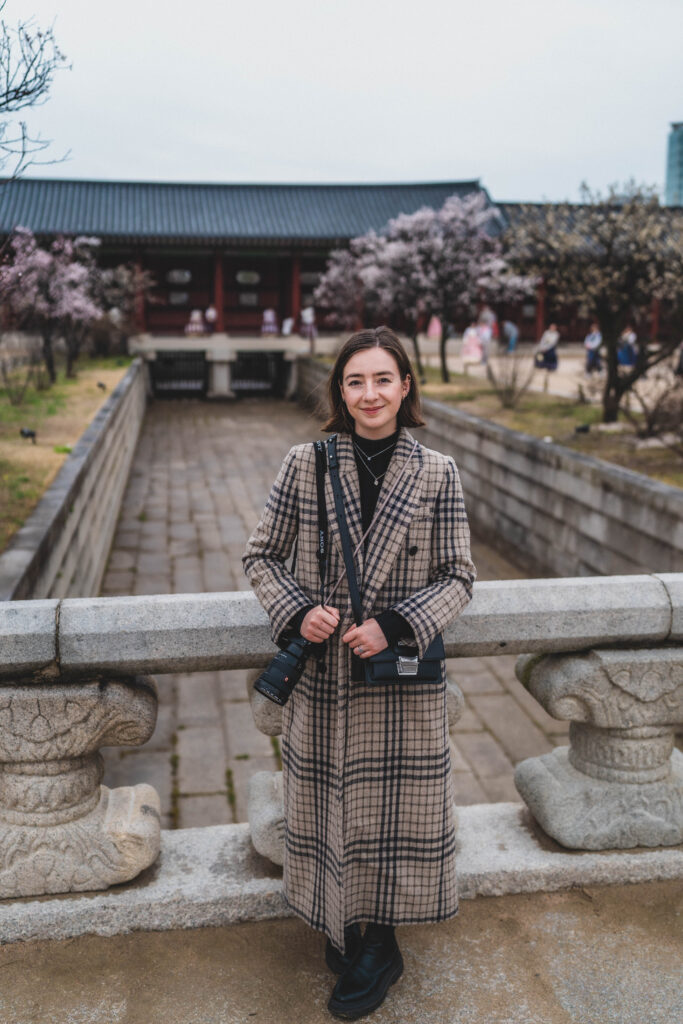
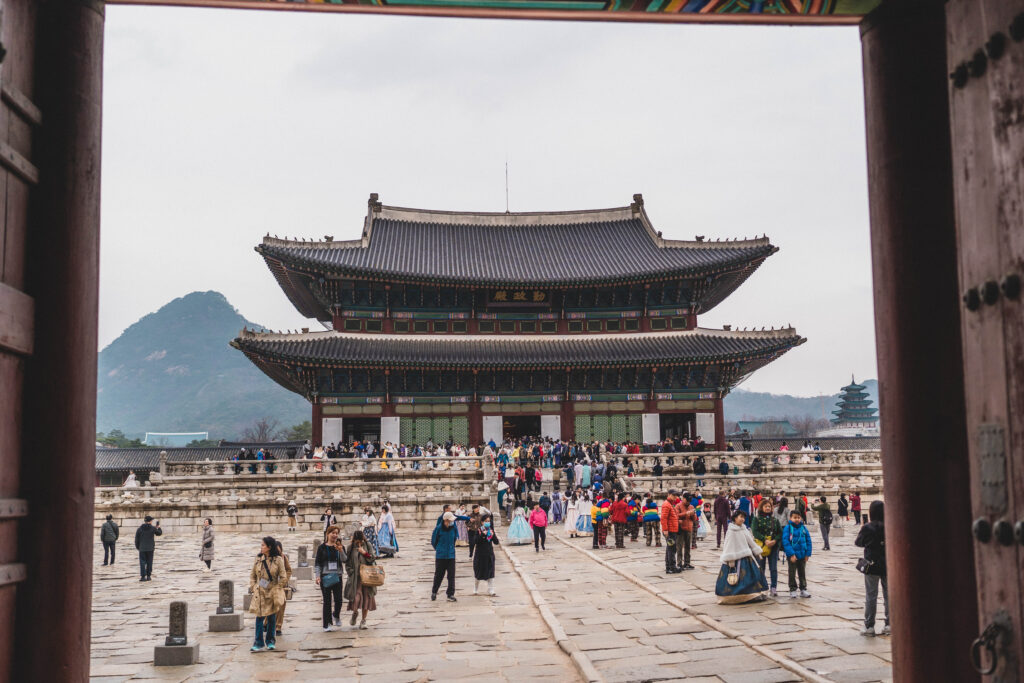
Start your day with a visit to Seoul’s largest and oldest palace, Gyeongbokgung. Built in 1395 in the northern part of the city, it is the largest of the Five Grand Palaces that were built by the Joseon dynasty. Gyeongbokgung served as the main residence of the royal family and the seat of government.
The original structure of Gyeongbokgung palace was reduced to a pile of ash after the Japanese invasion in 1592. The grounds were left abandoned for over two centuries, in the 19th century, the palace’s 7,700 rooms were restored…only to be destroyed again by yet another Japanese invasion.
By the early 20th century, work started on the walled palace complex to restore it to its original form.
The main entrance to the palace is through the grand and impressive main archway, Gwanghwamun Gate. Once inside the palace grounds, you will be greeted by a variety of structures that reflect different architectural styles, the buildings are characterised by their curved roofs and richly decorated facades.
What makes a visit to this palace so special is the amount of visitors who are dressed in hanbok (traditional Korean clothing) which adds an element as if stepping back in time when visiting the grounds. The reason so many people are in these clothes is because if you rent a hankbok, you get free entrance to Gyeongbokgung.
Within the grounds there are a couple of museums which detail interesting insight into Korean history. One of the most popular highlights when visiting is to see the changing of the guard ceremony, which happens twice daily at 10 AM and 2 PM.
Stop for a quick snack and tea break in the Jagyeongjeon Hall Tea House, which offers visitors the opportunity to sip on tea in a palace!
You’ll want to set aside at least 1.5 hours to explore the palace completely, and a little more time to see the changing of the guards. As mentioned, it’s free to enter if you rent a hanbok! The palace is closed on Tuesdays.
Gmanim restaurant
Stop for lunch at this delicious vegan restaurant. There are not very many covers (fewer than 20) at this cosy spot between the Palace and Bukchon Hanok Village. You can choose from several delicious dishes on the menu, all of which are cooked from scratch by the friendly owner.
Bukchon Hanok Village, 북촌한옥마을
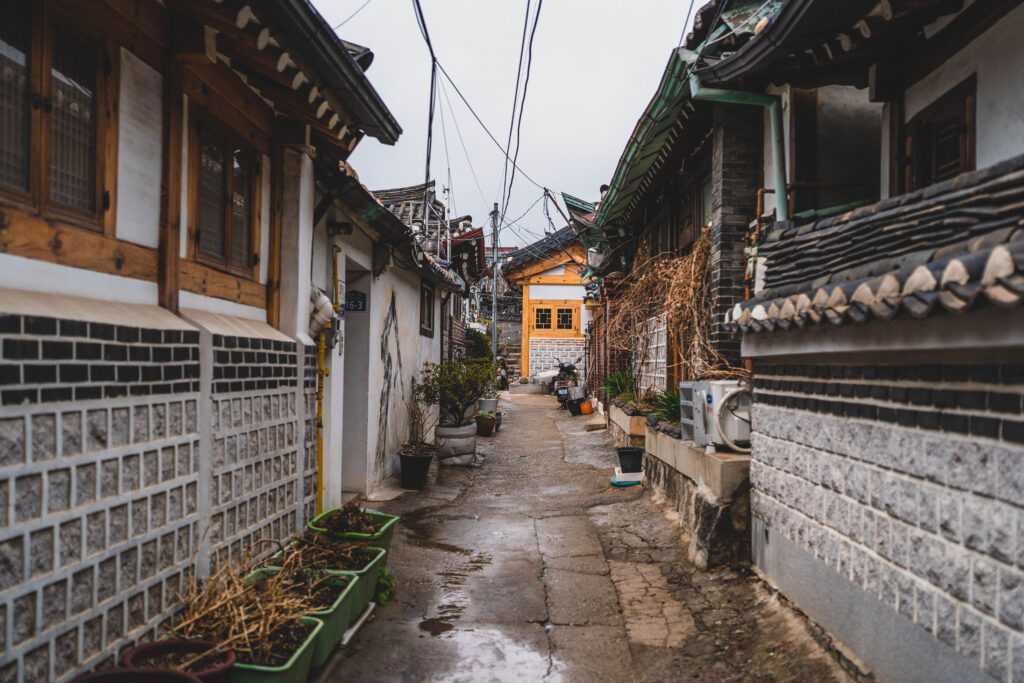
After lunch, head to the small residential neighbourhood in the Jongno District, which is known as Bukchon Hanok Village. The village is situated just to the right side of Gyeongbokgung Palace.
The name Bukchon translates literally as ‘northern village’. This charming little pocket of the city is filled with hanok, which are traditional Korean houses that first came about in the 14th century.
The best way to experience and explore the village is to simply wander around and get lost down the maze of narrow streets. Many of the houses operate as teahouses, restaurants and guesthouses which allows visitors to experience the interior of traditional Korean dwellings.
However, it’s important to note that many of the hanok are people’s homes, so be respectful when looking around and visiting this area.
Ihwa Mural Village, 이화동벽화마을
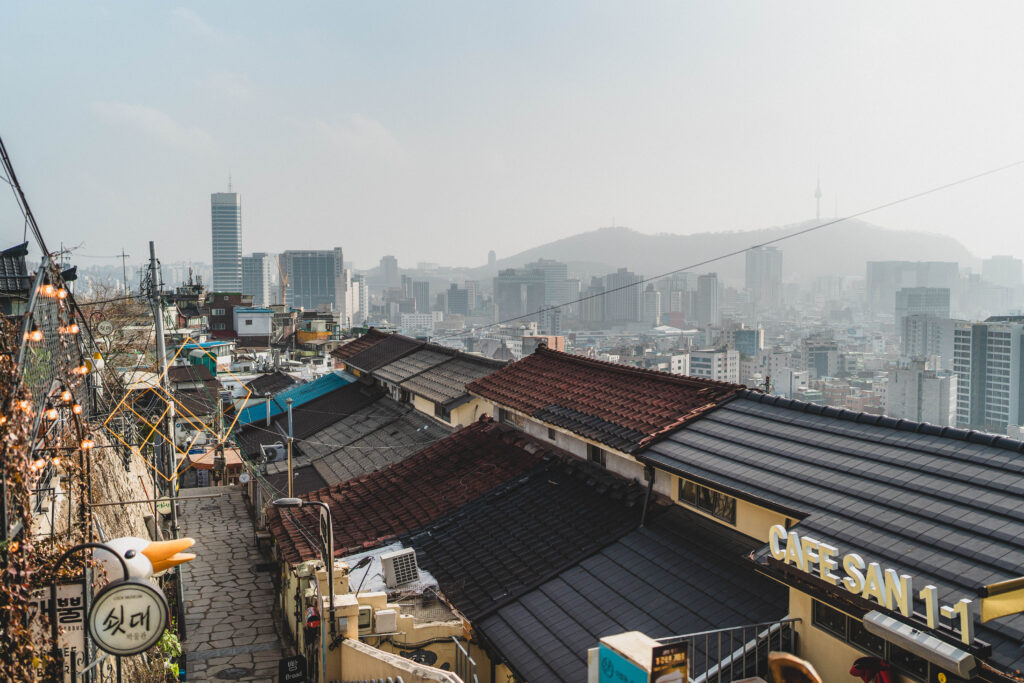
Next, head to the vibrant mountainside village in the Jongno District, Ihwa Mural Village. This is one of Seoul’s daldongnae or ‘moon villages’, a name given due to its hilltop location which is thought to offer a better view of the moon!
The village was actually set to be demolished as it was considered old and nothing special. That was until in 2006 when a group of local artists came together to create wall murals and art throughout the space to make it more attractive and draw visitors in to the village.
Today, Ihwa is a place of creativity and colour, with over 60 murals decorating the village. There are constantly new ones popping up or covering the old, so no two trips to Ihwa is the same! If you want to stop for refreshments with a particularly amazing view, then you can check out Cafe Gaeppul.
Naksan Fortress Wall Trail, 서울 성곽
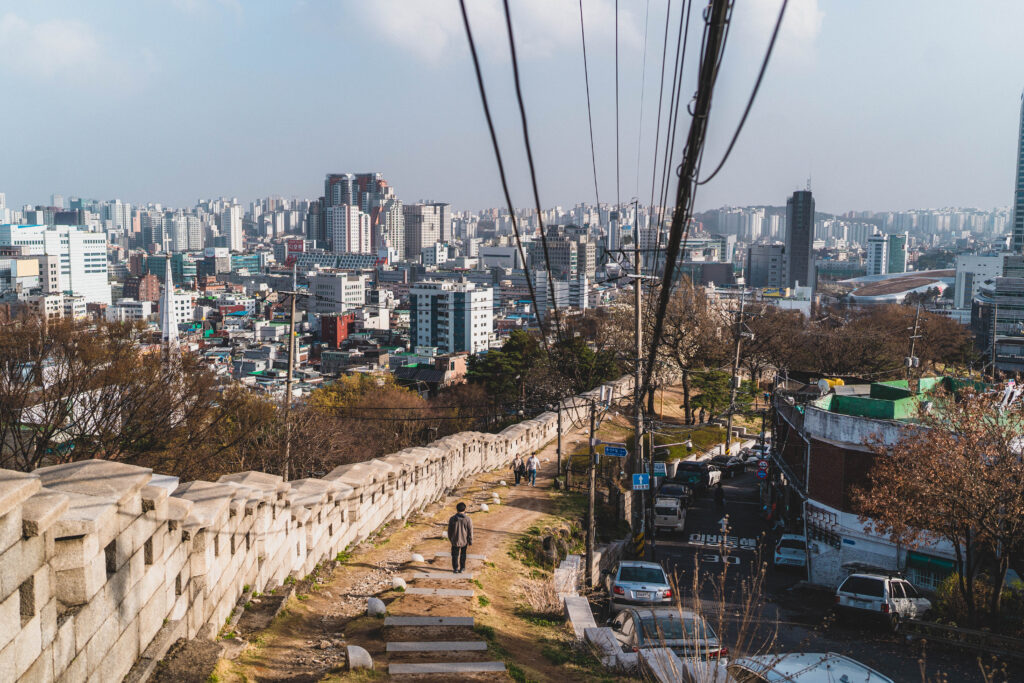
From Ihwa, you can make your way back to street level by following the Naksan Fortress trail. Hanyangdoseong or better known as, The Seoul City Wall, is a defensive wall which was built between 1395–1396 to defend the area from downtown.
The Fortress Wall envelopes Seoul in an almost 20 kilometre loop, so to walk it’s whole route would take the best part of a day, But from Ihwa back down to the city you can enjoy stunning vistas over the city’s skyline as you walk along a path steeped in history.
It’s also worth noting, this path offers particularly beautiful views at nighttime when Seoul is lit up with a warm city glow.
Insadong, 인사동
Spend your evening in the vibrant neighbourhood of Insadong. This district is renowned for its abundance of traditional Korean crafts, antiques, arts and galleries. It’s also famed for its food stalls, which serve an array of delicious Korean cuisine that make for the perfect spot to grab dinner from!
Some suggestions of local delights to try include:
- Korean BBQ – This way of dining holds great cultural significance in Korea. Cook your own pre-marinated meat and fish on the grill in front of you and enjoy with rice and big lettuce leafs.
- Chimaek – A pairing of fried chicken and maekju beer.
- Kimchi Jjigae – A comforting kimchi stew-like dish often with pork or tofu.
A lot of Korean food is often prepared with a meat or fish broth, so be sure to check your dish before ordering. That being said, a lot of the staple dishes in Korea are vegetarian friendly, so there are plenty of options for vegetarians.
Day 2 in Seoul Suggested itinerary
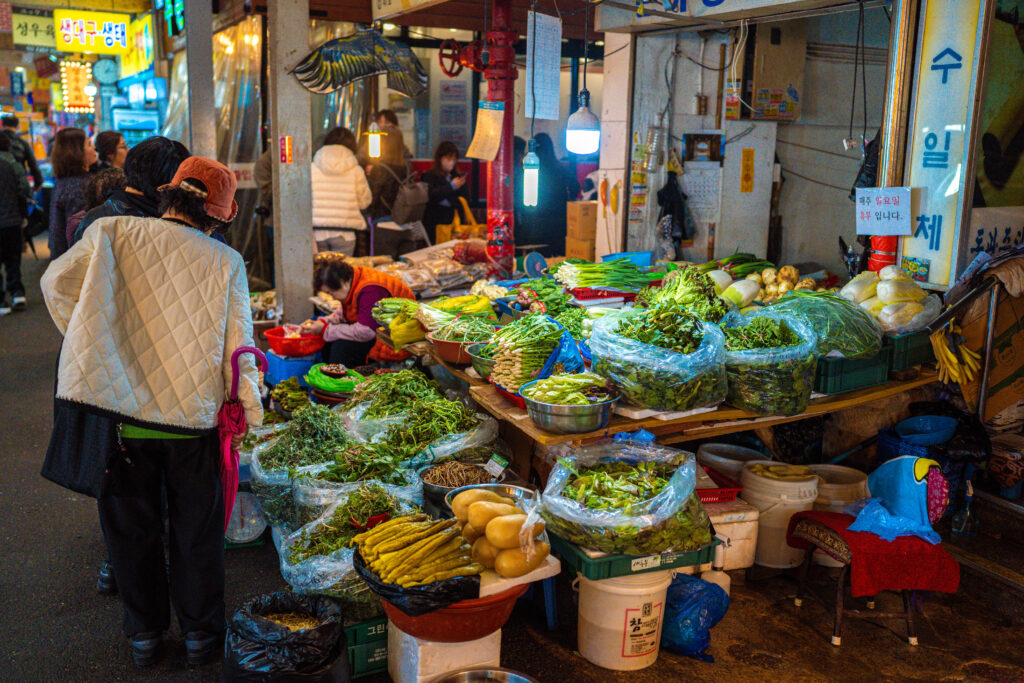
Gwangjang Market, 광장시장속박물관
Start the day right by seeing what Seoul has to offer and exploring this hidden market which is truly a feast for the senses! The first permanent market in Korea, Gwangjang Market was first established in 1905 and remains as the oldest daily market in all of South Korea.
Gwangjang translates as “to gather from afar and keep altogether”– a place which initially started as a small trading centre, has since thrived into a vibrant marketplace of over 5,000 different stalls selling local delights and plenty more. Some of the best foods to try in the market include:
- Bindaetteok – Mung bean pancakes, typically served with a spicy dipping sauce.
- Tteokbokki – Spicy rice cakes, this is a particularly popular Korean street food!
- Gimbap – Korean seaweed rice roll, filled with a variety of tasty fillings.
- Kalguksu – A light and refreshing soup dish of handmade noodles, broth and other ingredients (this is generally considered a seasonal dish and is mostly seen during the summer months).
- Eomukguk – Fish cake soup, a hot and comforting broth which is one of the most classic Korean street food dishes.
One of the best things about visiting the market is seeing all the delicious food being made fresh right in front of you! In the market you’ll also find several stalls selling beautiful traditional fabrics, hanbok, upholstery, imported goods and many other market treasures, beyond what you can imagine.
Gwangjang Market is open daily from 9 AM – 10:30 PM.
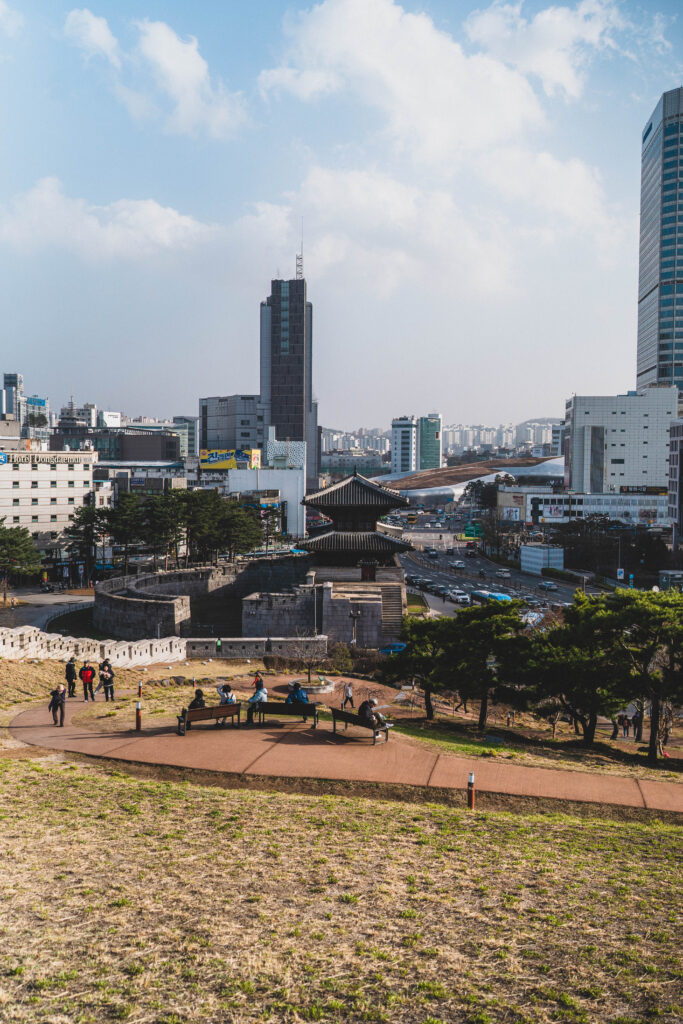
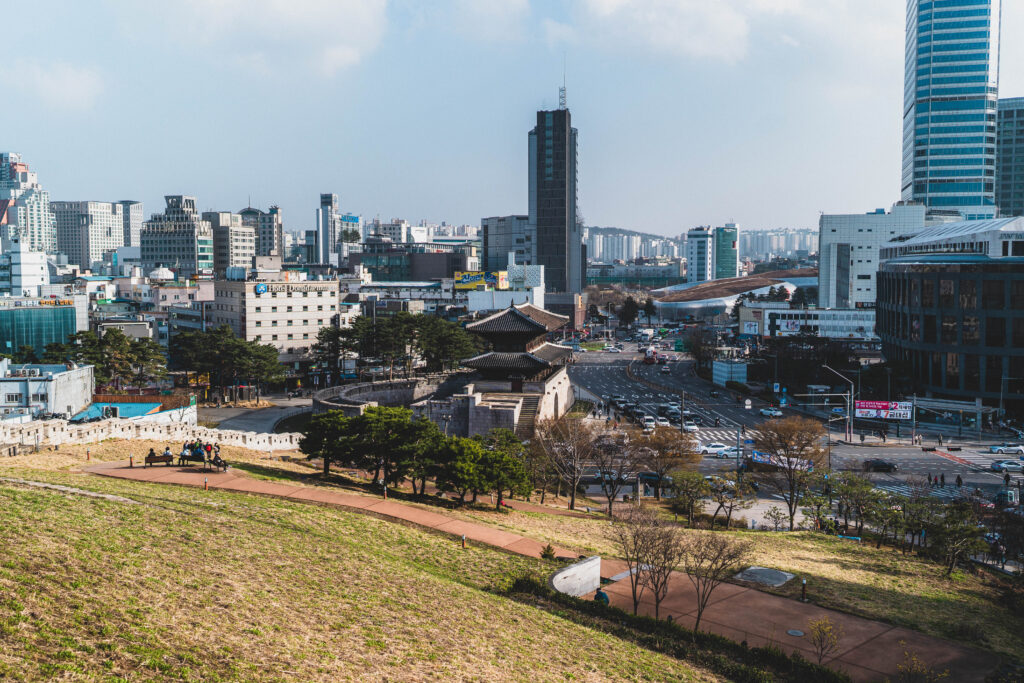
Heunginjimun Gate, 흥인지문
More commonly known as Dongdaemun Gate (Great Eastern Gate), it is one of the Eight Gates of Seoul in the city’s Fortress Wall. Originally built in 1396, the structure seen today was newly built in 1869.
Grand and impressive, the elaborately decorated gate towers at two-storey high with its roof curling at the edges, distinctive of East Asian architecture. It’s a beautiful piece of history and a cultural landmark, as such it has been designated a National Treasure by the Korean government.
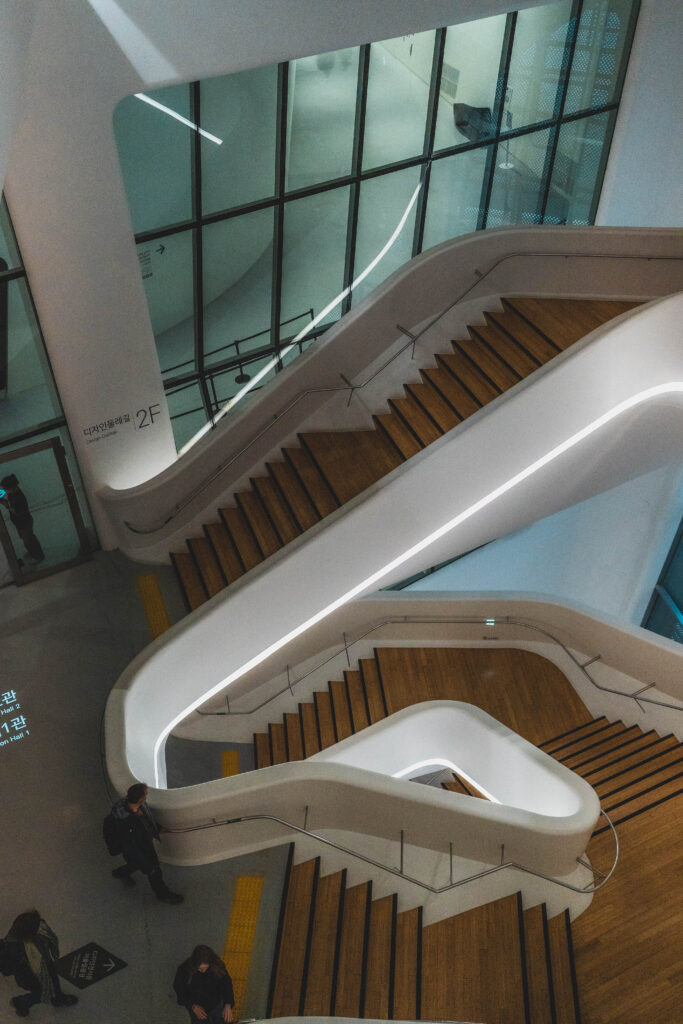
Dongdaemun Design Plaza, 동대문 디자인 플라자
Next head to the ultra cool building, the Dongdaemun Design Plaza. Referred to as the ‘spaceship’ by locals, this iconic landmark is one of the main reasons for Seoul earning its title as the World Design Capital in 2010.
Since its construction this cultural hub has become somewhat of a symbol of Seoul and a major tourist attraction, both for it’s unique design and the abundance of activities housed within. The first thing to do while visiting Dongdemun is to enjoy the architecture! Wandering around and marvelling at the unique design of this structure is the best way to experience it.
Inside can be overwhelming as there’s so much housed within the building. Home to over 30,000 shops, art galleries, eateries and plenty more, this is also a main filming spot for Korean TV shows. One of the best things found within is the Garden of Light, which is an installation/spectacle of LED lights that come to life as soon as the sun sets.
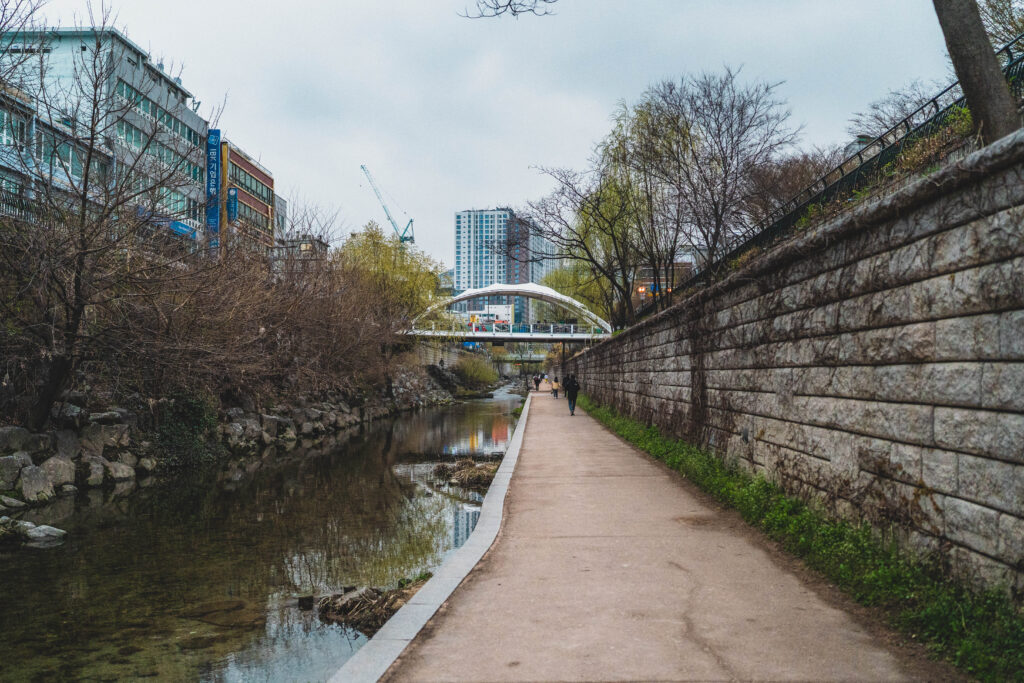
Cheonggyecheon Stream, 청계천
Take yourself over to downtown Seoul and enjoy a leisurely stroll along this natural stream where the water comes from the Suseongdong Valley. A public space filled with trees and bridges that line the water, making for a tranquil place away from the hustle and bustle of the city.
Historically, the stream was part of the city’s early sewage system, but after an urban renewal project, as of 2005 it has become a popular space for visitors to enjoy It was initially named Gaecheon, which translates to “open stream”, however its named changed to Cheonggyecheon (clean natural stream) when Korea was under Japanese rule.
Myeongdong street, 명동
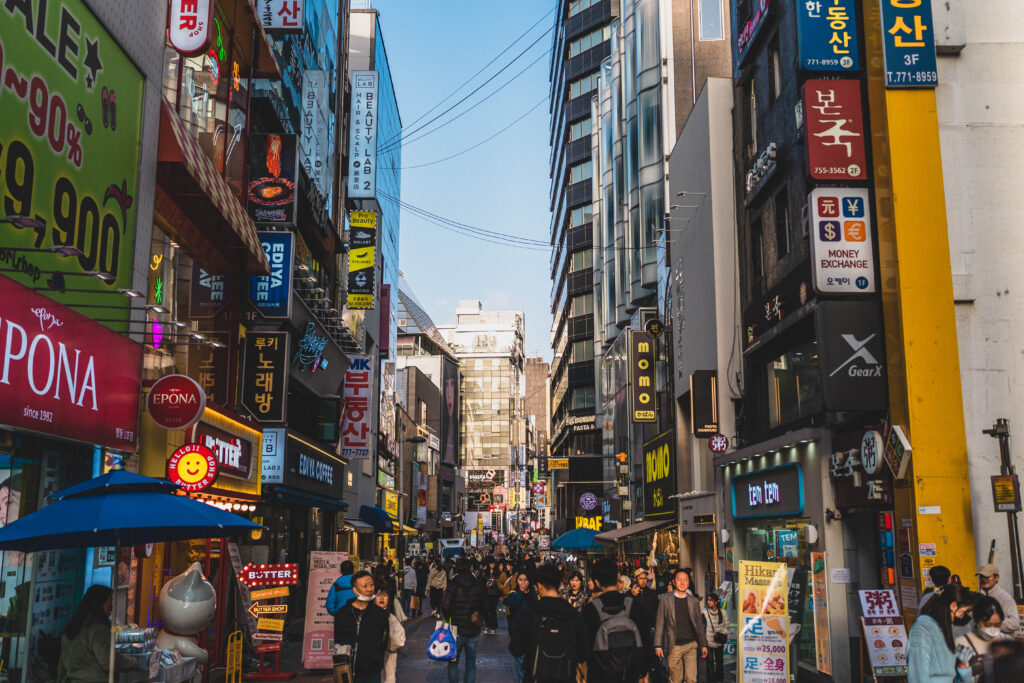
After a tranquil stroll, head to one of the busiest parts of the city! This is one of the main shopping districts of Seoul, a lively street that teems with shops, eateries and anything you can imagine. You’ll likely see popular brands you recognise as well as Korean brands. The area is popular for street food stalls, all serving delicious Korean food.
Myeongdong street can feel extremely busy, with people criss crossing from one way to another, however it is a pedestrian only street which makes it a bit easier when navigating through the crowds.
N Seoul tower, N 서울타워
After dusk, head to one of the best viewpoints in the city. Better known as Namsan Tower or Seoul Tower, this structure stretches 236 meters into the sky and stands as the second highest point of the city, it is considered a local landmark.
The tower was constructed in 1969 initially as a radio and television broadcast tower, but was later modified and opened as a public attraction in 1990. Today, a visit to one of its four observation decks offers captivating views over Seoul’s skyline.
Itaewon dong, 이태원
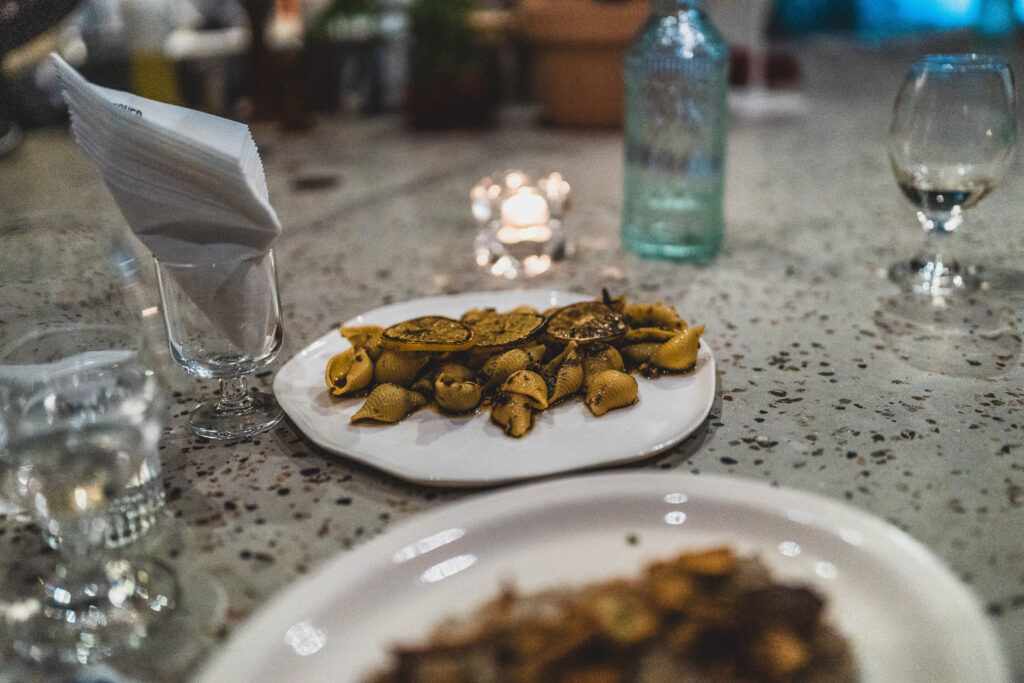
End your day by spending an evening in easily one of Seoul’s most popular districts, the vibrant neighbourhood of Itaewon, which is known for its dining scene and nightlife. We had dinner at the Monks Butcher Itaewon and thoroughly enjoyed the completely plant-based menu!
Day 3 in Seoul Suggested itinerary
Seokchon Lake, 석촌호수공원
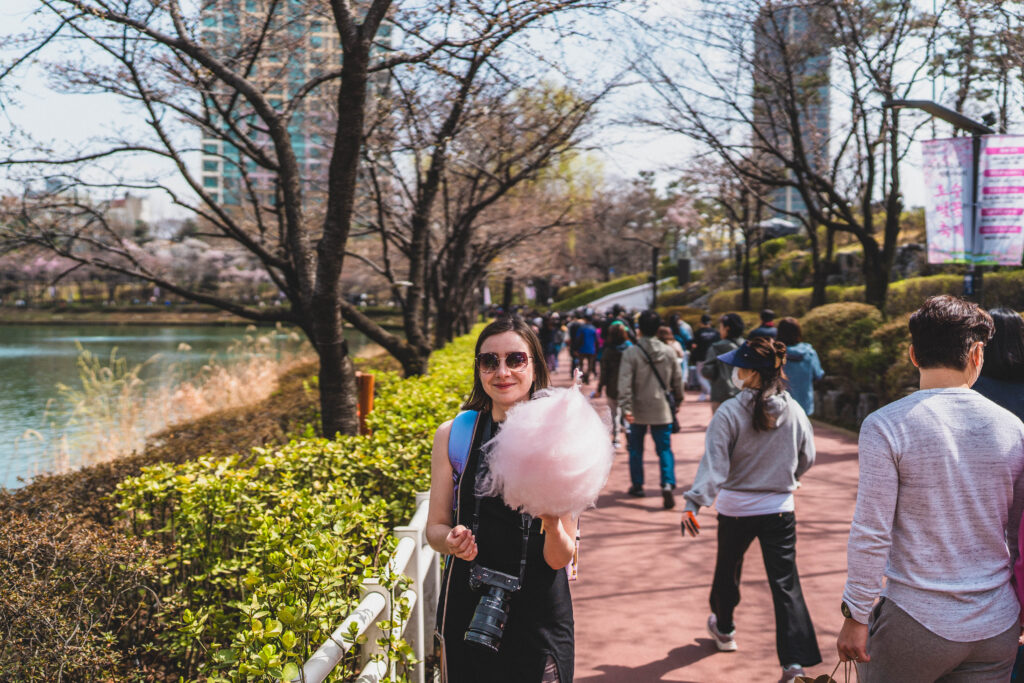
Start the morning in nature and take a leisurely stroll along one of Seoul’s most treasured places of tranquility. This artificial lake is calming and sits within the gorgeous green space of Songpa Naru Park.
The area is particularly beautiful to stroll around during cherry blossom season when the flowers are in full bloom!
Gagnam District, 강남구
Next, head to a district of the city which you may be familiar with the name of thanks to the super catchy song that got people dancing from all corner of the world. The district is characterised by gleaming skyscrapers, high end restaurants, stylish nightclubs and boutiques selling designer brands.
Gagnam translates to “South of the (Han) River” and is the third largest of the twenty-five districts of Seoul. It is one of the richest areas of the city and is often referred to as “South Korea’s Beverly Hills” because of it’s upscale nature.
Starfield Library, 별마당도서관
A particularly cool place to visit while in the Gagnam district is one of the most breathtaking and futuristic libraries you’ll ever see, Starfield Library. Opened in 2017, the library is set over two floors and its design is open and spacious, allowing visitors to feel as though they are immersed in a forest of books.
Tucked away in the heart of the huge COEX underground shopping mall is a literary haven. The library is dominated by its impressive 13-meter-high bookshelves and is home to over 50,000 books and 400 different types of magazines. And, it’s completely free to visit the library!

Gangnam Style Statue
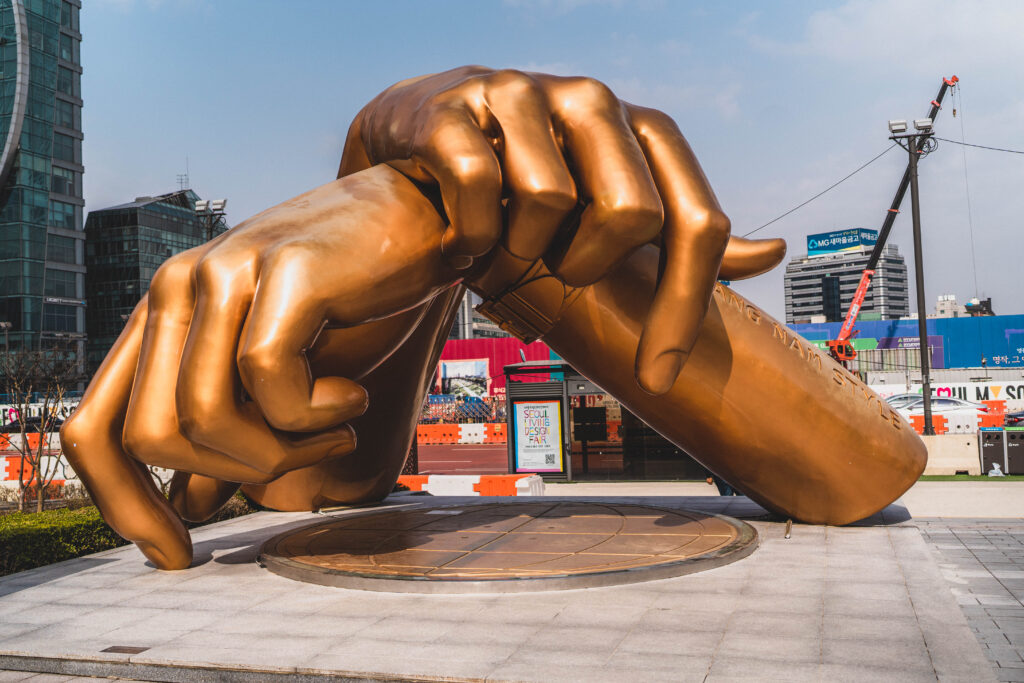
Take the east exit out of the COEX mall and here you’ll see an iconic bronze statue that’s dedicated to the triumph of Korean pop music. The two hands crossed over one another portray the signature dance move of the song that was quick to go viral, Gangnam Style.
It’s been over 12 years since rapper Psy released the song Gangnam Style (강남스타일) and today it’s one of the most played videos on YouTube, reaching a whopping 5 billion views… which seems wild considering the population of the world sits at 8 billion something!
The song initially set out to be a parody, aiming to mock the opulence and wealth of the young people who lived in the Gangnam district. Spreading like wild fire, Gangnam Style became a novelty on the Western charts, with everyone emulating the ‘horse riding dance’ Psy does across different scenes in the music video.
Today, visitors can see the statue that stands so boldly to remember the presence this song once had!
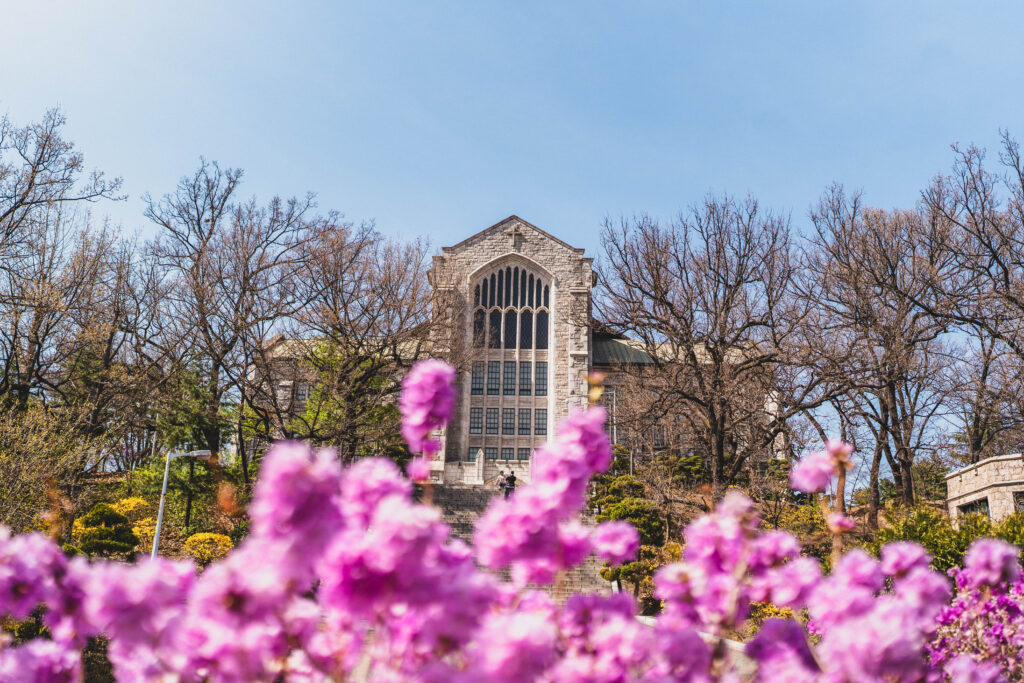
Ewha Womans University, 이화여자대학교
Then, head over and visit the grounds of Ewha Women’s University, which is a private women’s research university that was founded in 1886 and ever since has strived as a place for women to thrive in education.
The area surrounding the university is full of lovely cafés and shops and is a welcome hustle and bustle from the busier area of Seoul. You can’t visit much of the campus (most of it is closed to non-students) but you can enjoy the shops of the nearby streets and relax in the laid back atmosphere.
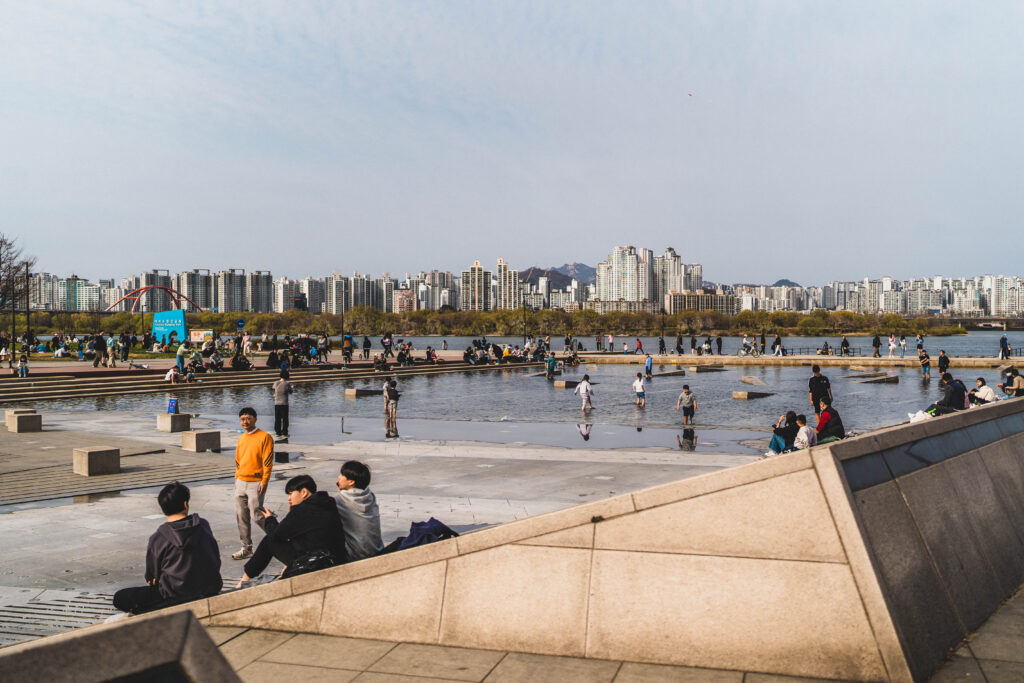
Yeouido Hanhang Park, 여의도한강공원
Spend the late afternoon strolling alongside the River Han and soak up panoramic vistas of the city as you people watch in one of the most beautiful parks in Seoul!
Yeouido Hanhang Park has outdoor swimming pools which visitors can take a refreshing dip in and throughout the year several cultural events take place in the park. Including, the Yeouido Cherry Blossom Festival in springtime, to celebrate the pink puffs, and the International Fireworks Festival in autumn.
Where to stay in Seoul
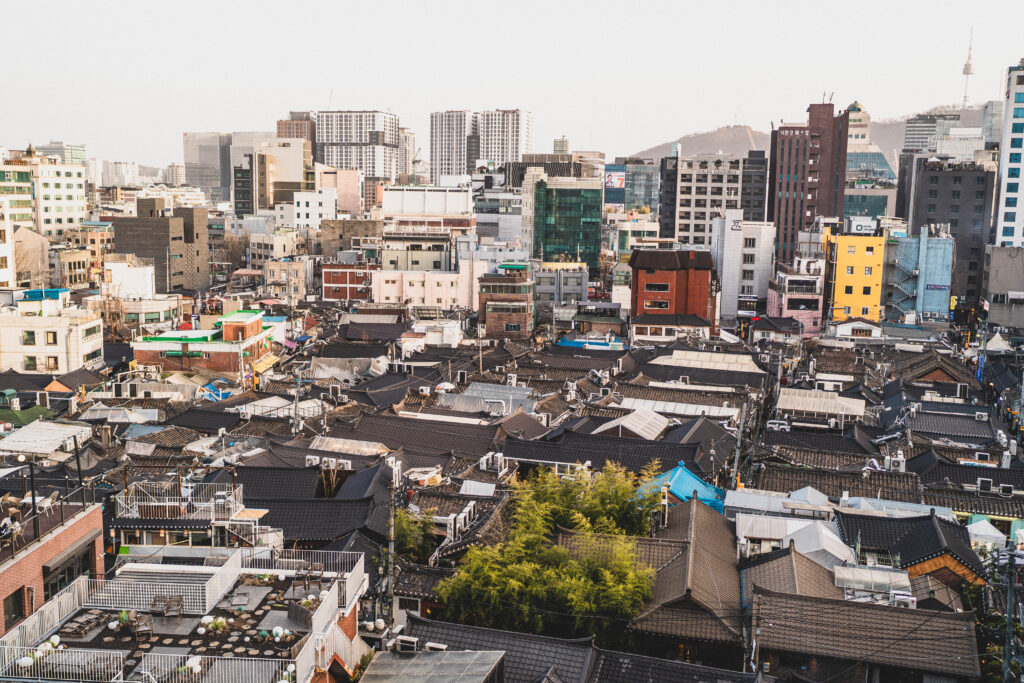
I personally recommend staying in the Insadong area as this will give you great base from which to explore the rest of the city. We personally stayed in the ibis Ambassador Seoul Insadong and, while it was a bit dated, it was comfortable enough and our room had amazing views of the rest of the district.
Here are some other suggestions of where to stay, close to the Insadong area (based on web-reviews):
Hotel Kuretakeso Insadong – Located minutes walk from Gyeongbokgung palace and the Jongno metro station. This hotel offers free WiFi, a small fridge and kettle in each room. Breakfast is also available at an extra charge. This hotel is a very affordable option. Check prices and availability here.
Nine Tree Premier Hotel Insadong – For a bit more of a luxury stay (but still relatively well priced) opt to stay at this 4-star hotel which is just a stone’s throw from Gyeongbokgung Palace and close to Cheonggyecheon Stream. The hotel offers free WiFi and clean, comfortable rooms. Check prices and availability here.
Watch the Seoul travel vlog
Enjoyed reading about how to spend 3 perfect days in South Korea’s capital, Seoul? Pin this article now, read it again later: